Description
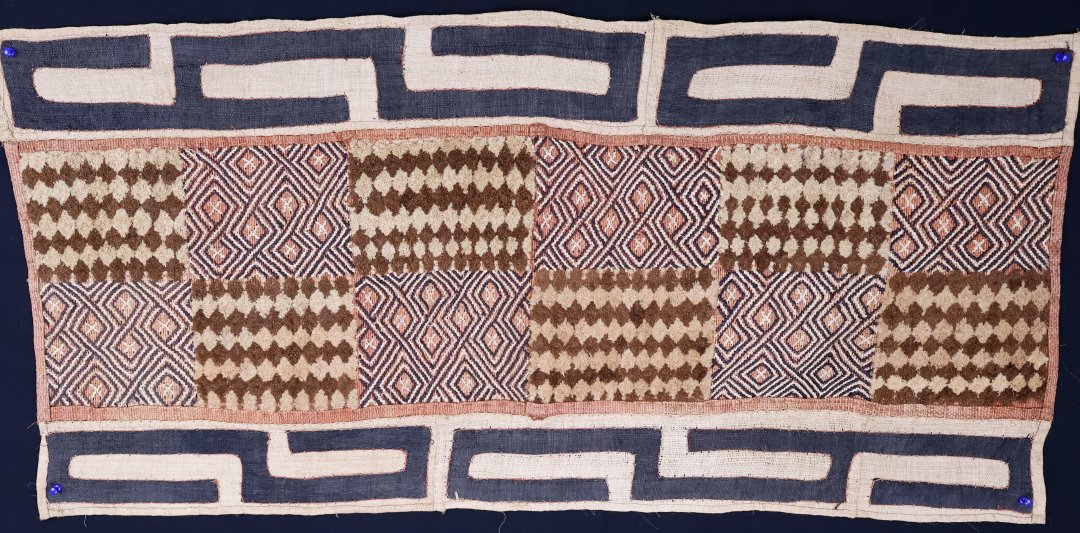
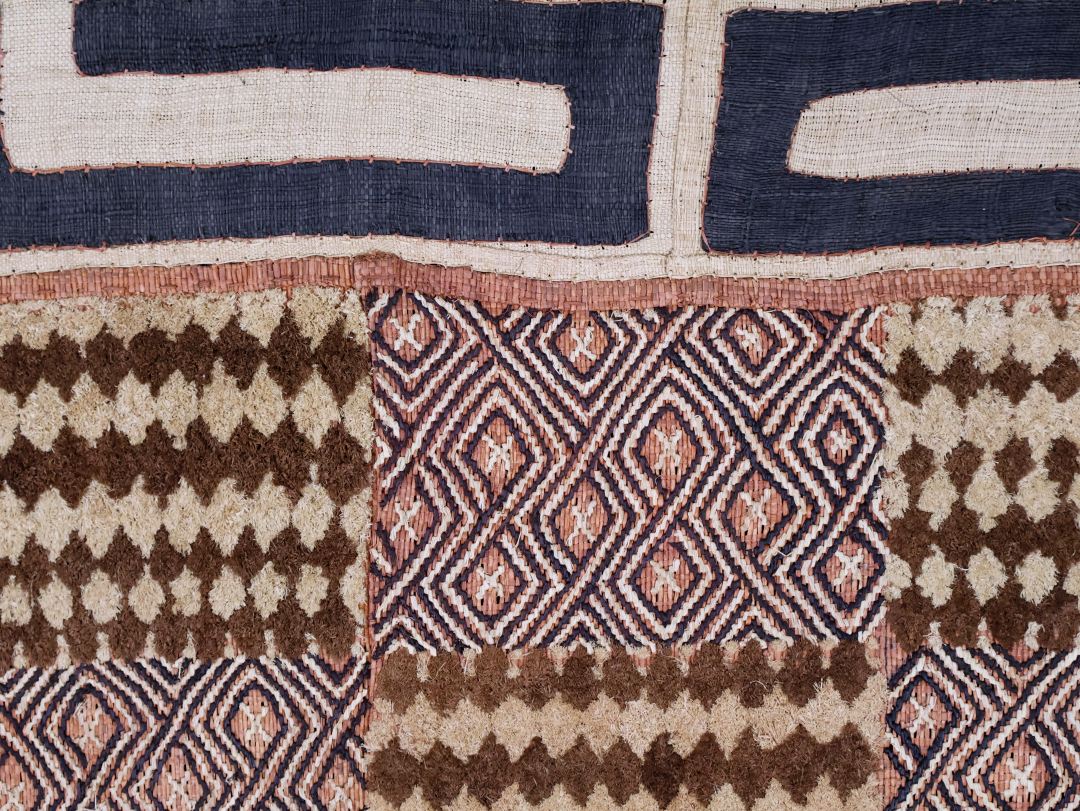
Kuba cloth is raffia‑fiber textile art from the Kuba Kingdom in today’s Democratic Republic of Congo, celebrated for its bold geometric patterning, complex surface texture, and deep cultural meaning. It is one of the most distinctive textile traditions in Central Africa, combining male weaving with female embroidery, appliqué, and cut‑pile work.
✧ What Kuba cloth is
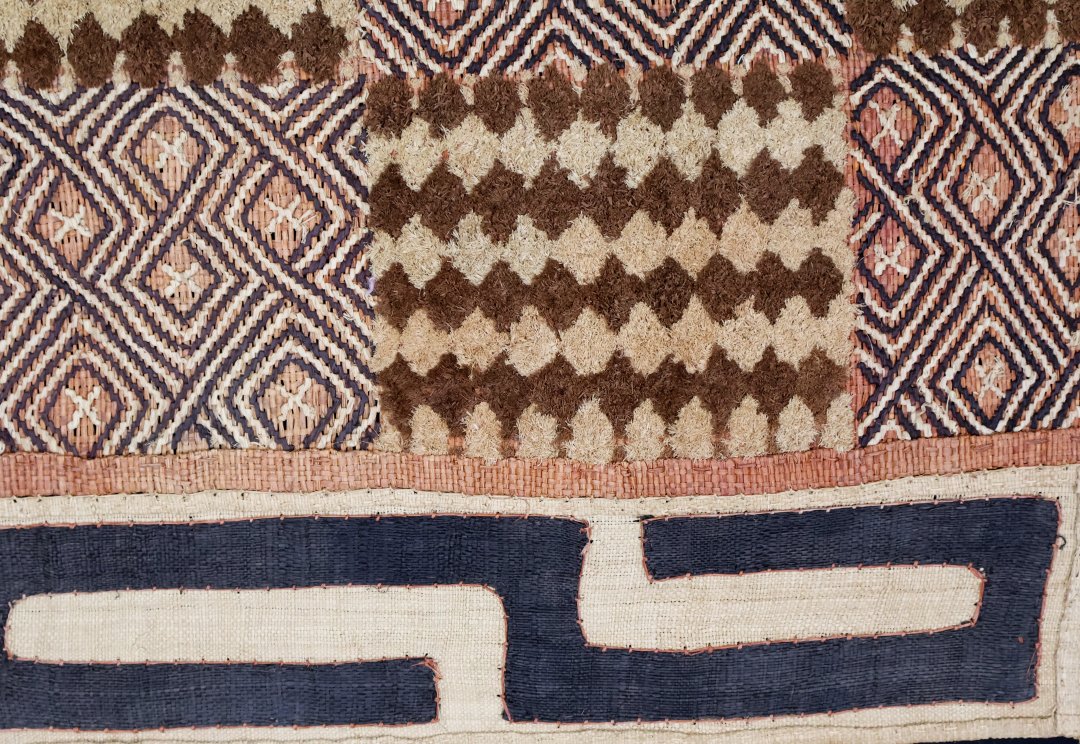
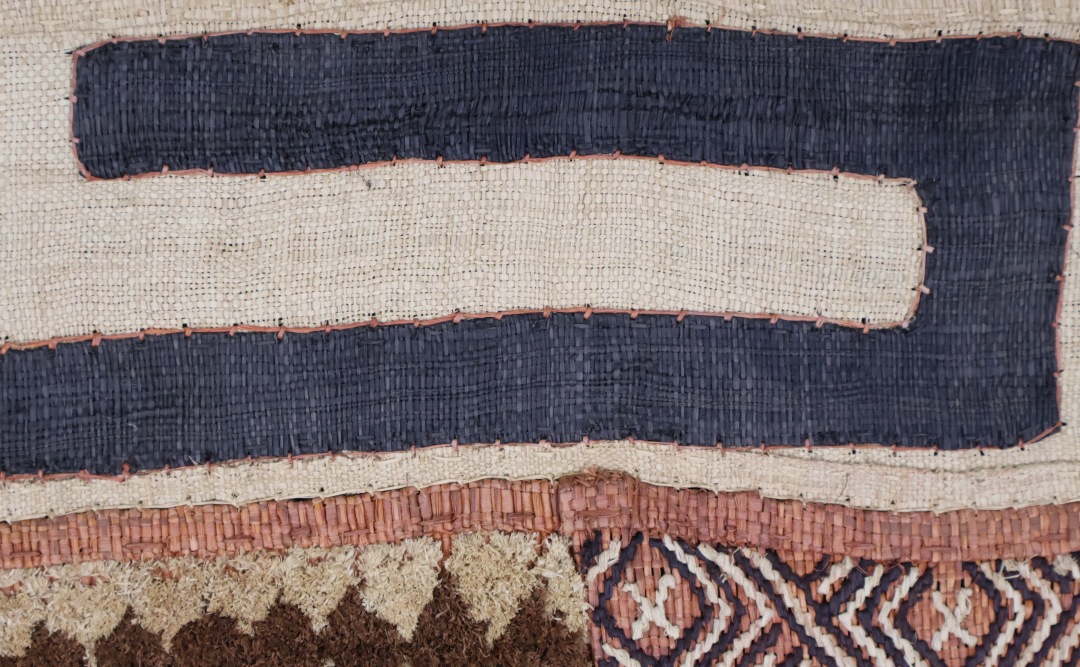
Kuba cloth consists of rectangular or square panels of woven raffia palm fiber, typically around 26 × 28 inches, produced on an inclined single‑heddle loom by men. The cloth is initially coarse, then pounded to soften, dyed with natural pigments, and passed to women for decoration.
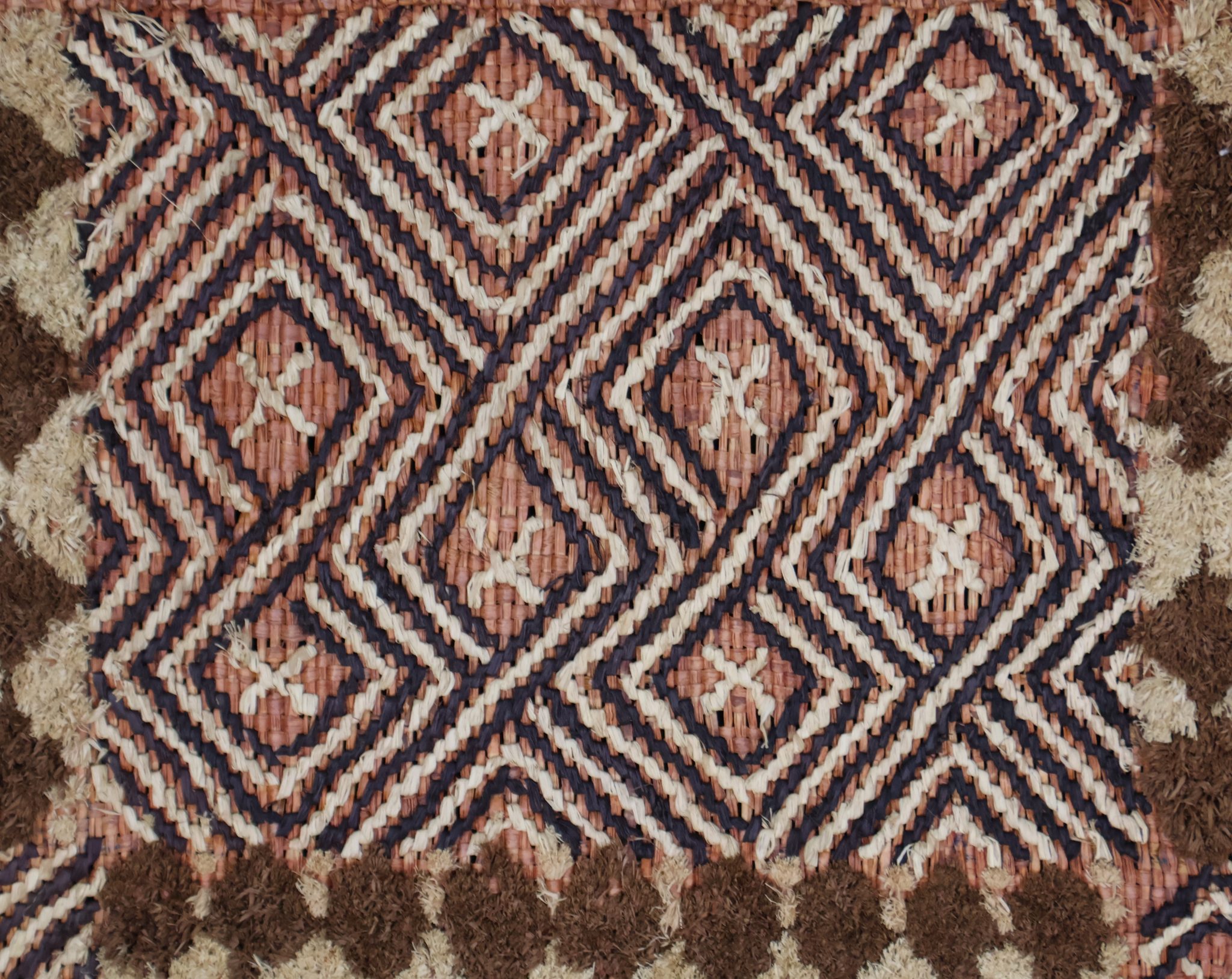
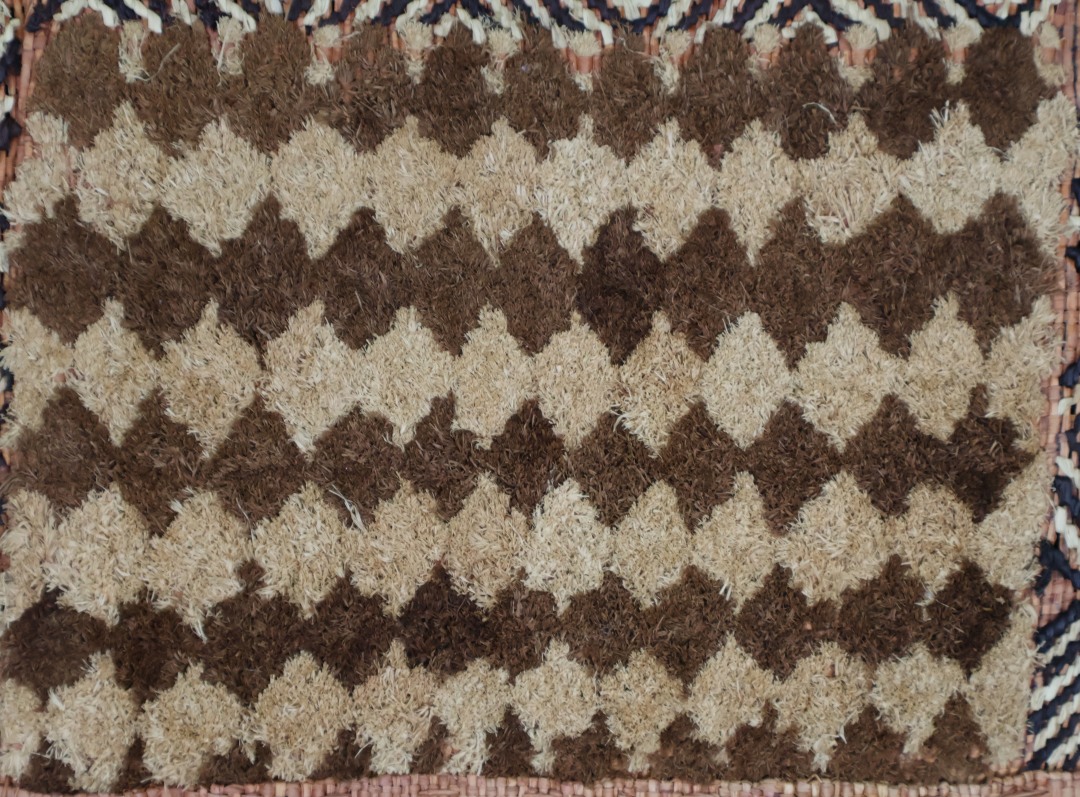
The finishing work—embroidery, appliqué, patchwork, and the famous cut‑pile “Kuba velvet”—creates the plush, tactile surface that collectors prize. A single placemat‑sized piece can take several days to complete.
✧ Visual language and symbolism
Kuba textiles are not merely decorative. In many Central African traditions, textiles function as visual language, carrying memory, identity, and spiritual meaning. Patterns may echo natural forms, cosmology, or social structures, and the improvisational quality—interruptions, asymmetries, shifts—reflects a worldview in which order and disruption coexist.
Rectilinear motifs often reference natural patterns and the interplay between the visible and invisible worlds in Kuba belief.
Kuba cloth emerged within the Kuba Kingdom, founded in 1625 by Shyaam a‑Mbul. The kingdom’s wealth—built on ivory and rubber trade—supported a flourishing arts culture, including sculpture, basketry, and textiles. Kuba cloth became a prestige item, used in ceremonies, as tribute, and as a marker of rank.
Large ceremonial skirts and composite panels were assembled from many smaller cloths, each worked by different hands—an embodiment of communal artistry.