Description
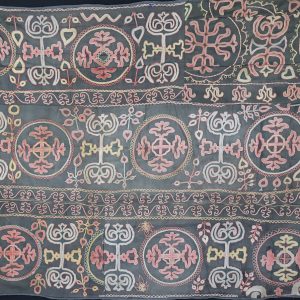
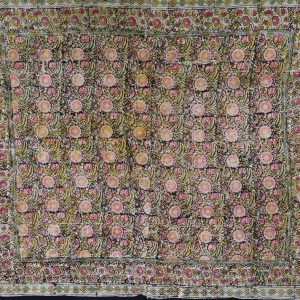
A Şarköy (Sarkoy) kilim is a distinctive flat‑woven textile from the Thrace region of Western Turkey and the southern Balkans, known for its fine weave, precise geometric motifs, and often exceptional natural dyes. These kilims are widely collected because they sit at the crossroads of Anatolian and Balkan weaving traditions, producing a look that is both crisp and highly decorative.
🧵 What defines a Sarkoy kilim
- Origin — Western Turkey (Şarköy) and neighbouring Balkan weaving centres such as Pirot and Manastir. Many antique dealers list them interchangeably as Sarkoy / Sharkoy / Şarköy / Pirot kilims.
- Weave — Very fine, tight flatweave, often more delicate than central Anatolian kilims.
- Design —
- Repeating geometric motifs arranged in orderly rows
-
- Frequent use of tree‑of‑life, hooked diamonds, and floral stylisations
- Borders with small, rhythmic patterning
- Colour palette — Rich natural dyes, sometimes including cochineal red, which is specifically noted in high‑quality antique examples.
- Age range — Many surviving pieces date from late 19th to early 20th century, though mid‑20th‑century examples also appear on the market.
-
-
🧭 Regional identity: Anatolia meets the Balkans
Sarkoy kilims are unusual because they blend:
- Anatolian structure and colour sensibility, and
- Balkan precision and symmetry, especially in Pirot‑style layouts.
Dealers often classify them as Balkan kilims even when woven in Western Turkey, reflecting the shared tradition across Thrace.
- Repeating geometric motifs arranged in orderly rows