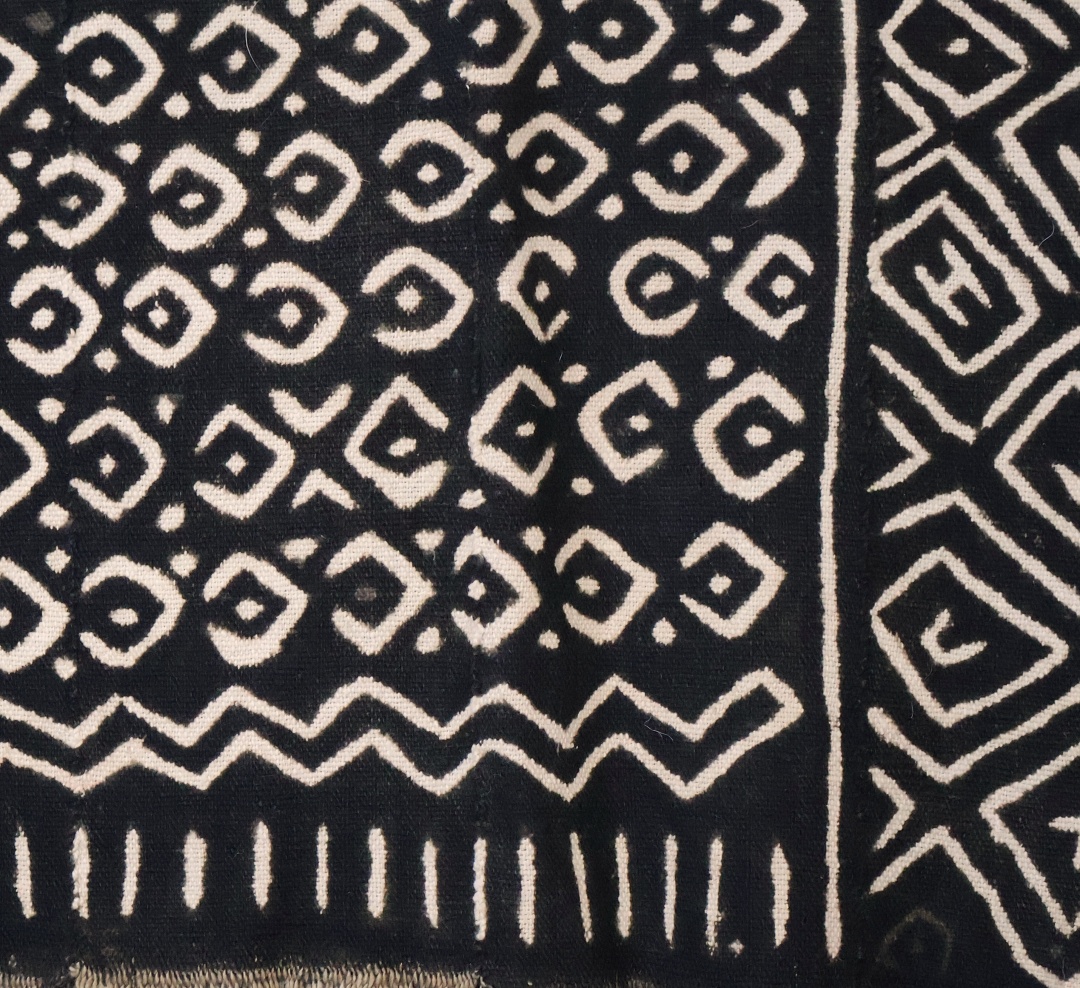
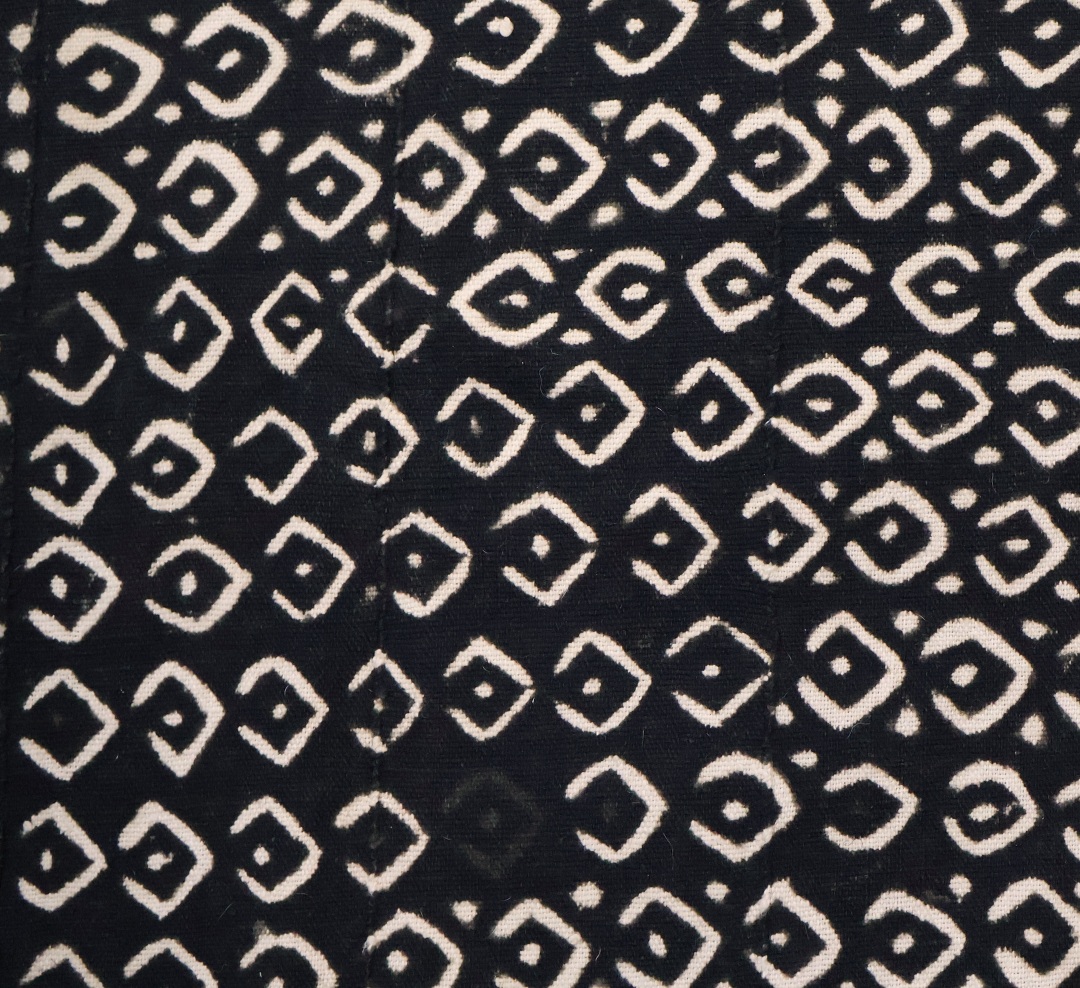
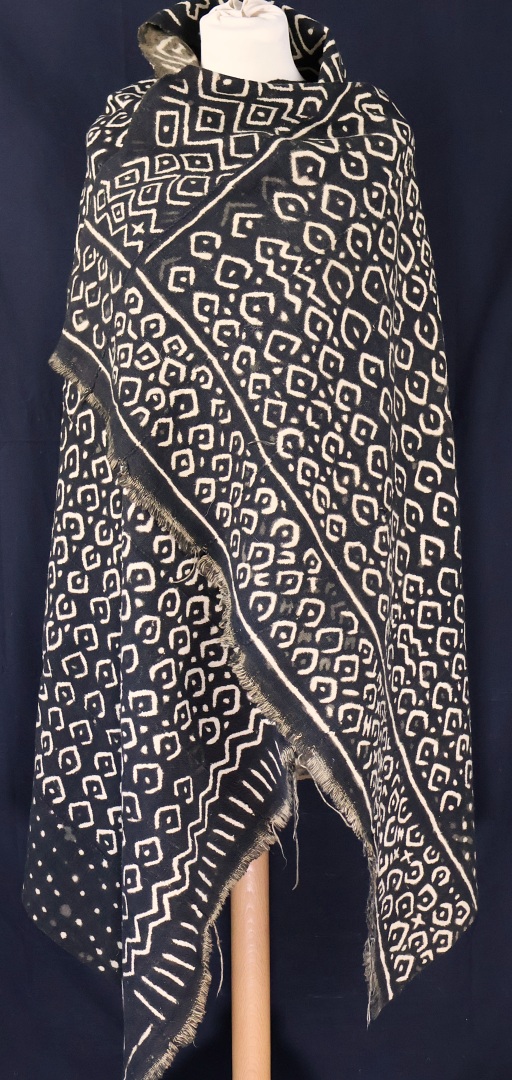
Description
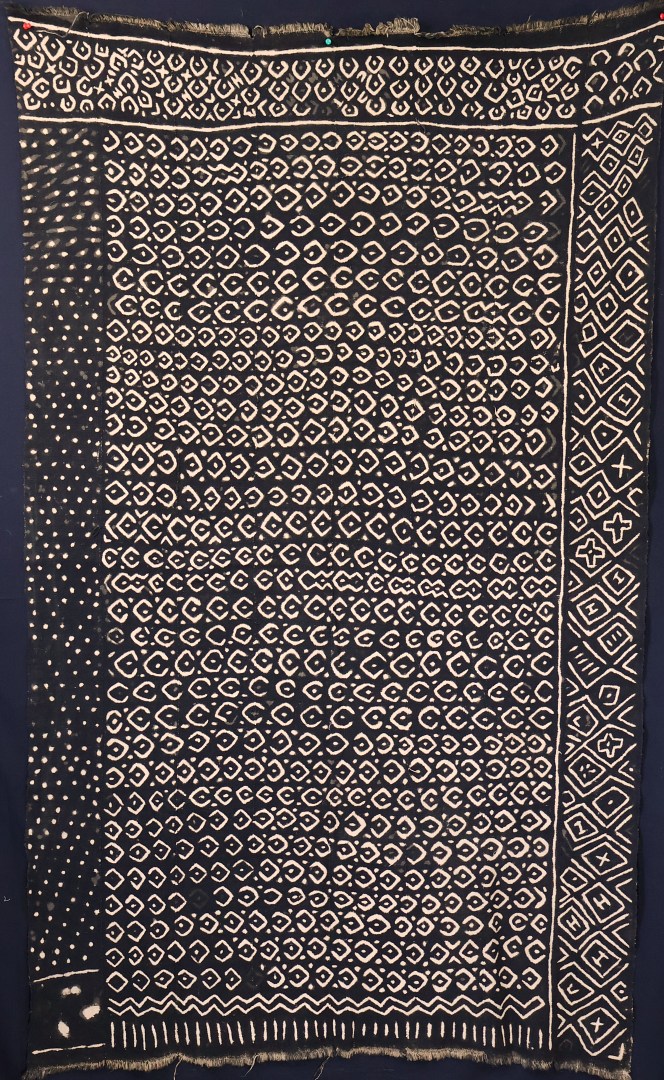
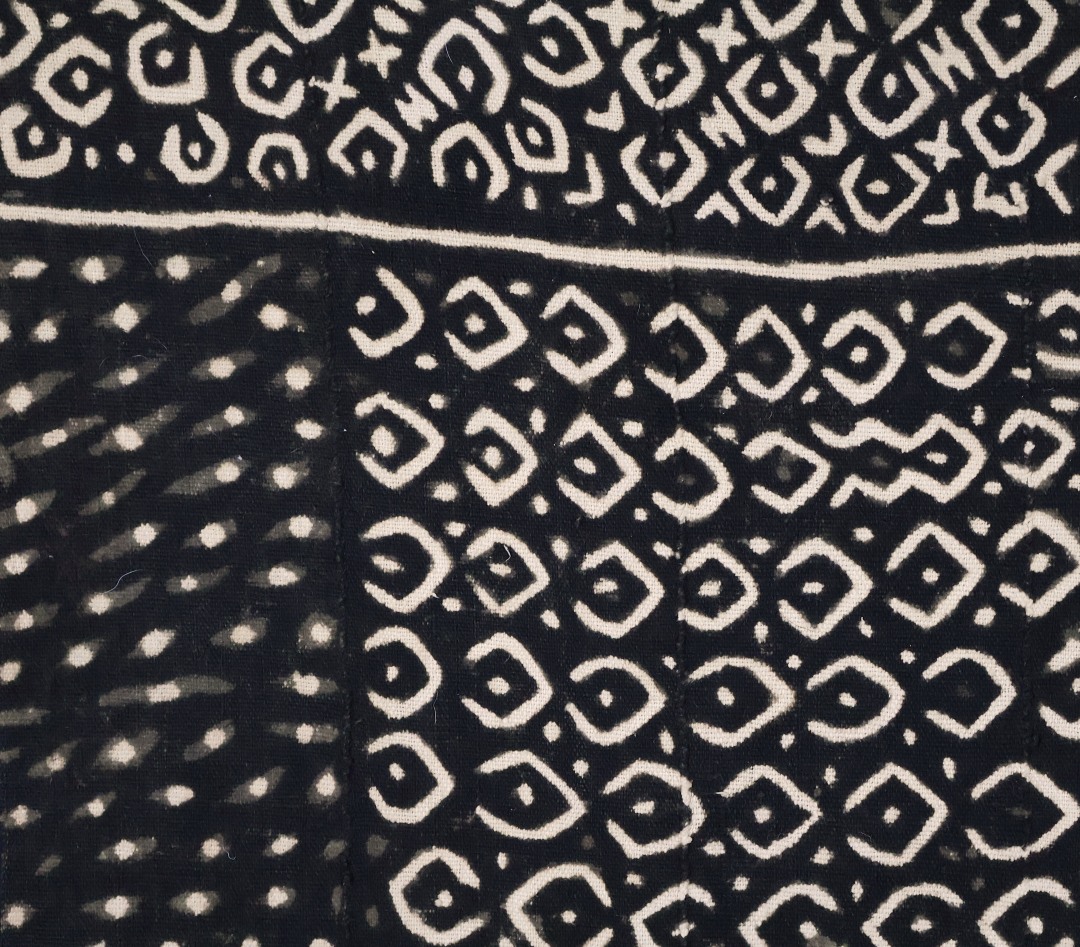
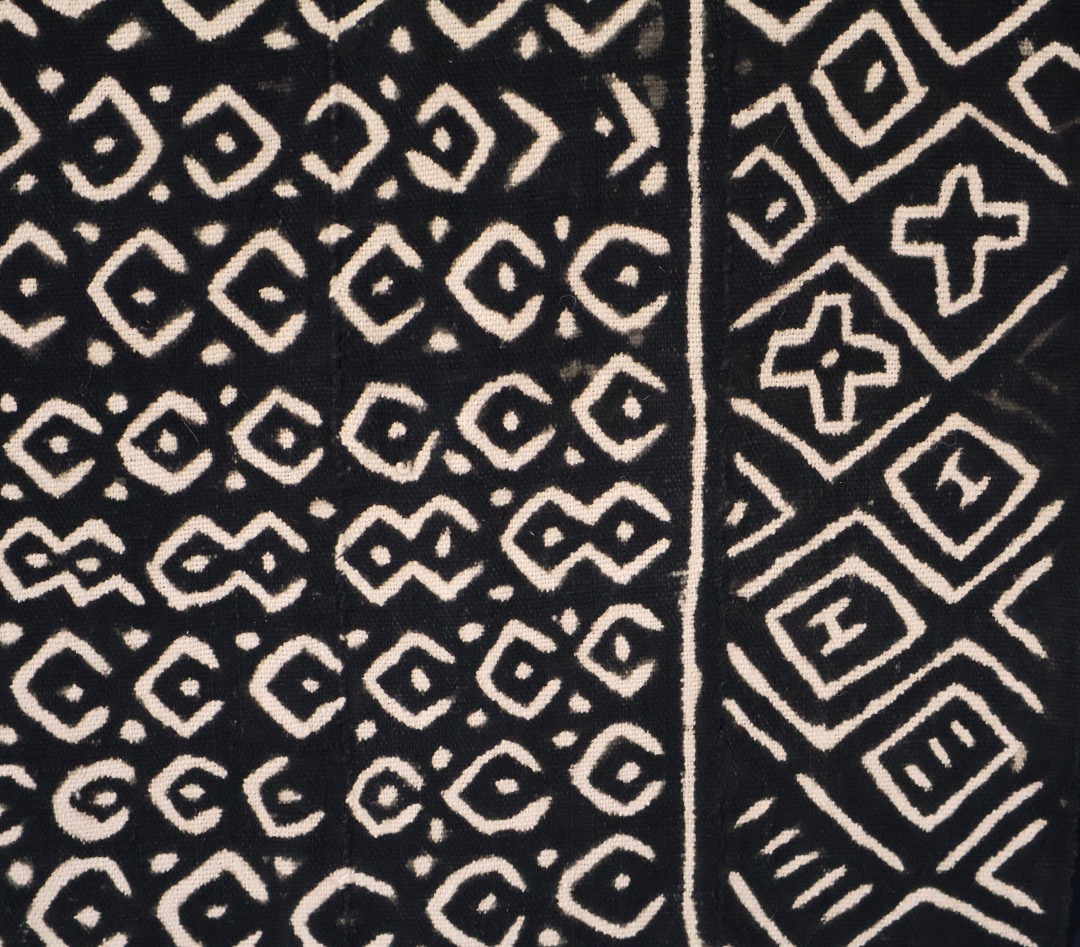
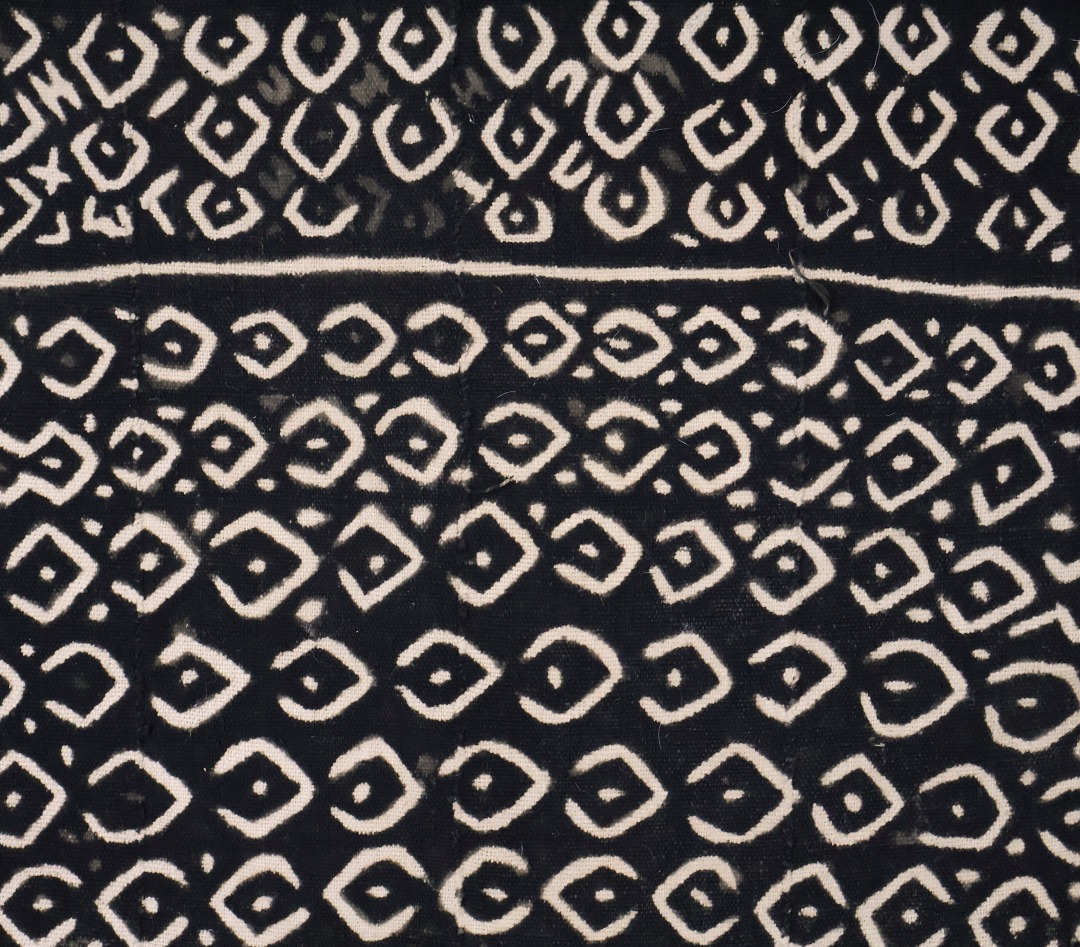
Mudcloth—more precisely bogolanfini—is a hand‑woven, hand‑dyed Malian textile made using fermented river mud and plant dyes, traditionally by the Bamana (Bambara) people of Mali. It is one of West Africa’s most symbolically dense and culturally important cloth traditions.
Mudcloth is a cotton textile constructed from narrow handwoven strips stitched selvedge‑to‑selvedge. The finished cloth is then painted with iron‑rich fermented mud, which reacts with plant-dyed fibres to create deep browns and blacks. This process is slow—often taking weeks—and historically gendered: men weave, women dye and paint.
- Region: Bélédougou and San, Mali—considered the heartland of bogolanfini production.
- Age: Possibly as early as the 12th century, though the fragile nature of the cloth makes exact dating impossible.
- Peoples: Bamana primarily, but also other Mandé groups (Dogon, Malinké, Sénoufo, Bobo‑Oulé).
Mudcloth is deeply tied to life‑cycle rituals—puberty, marriage, childbirth, and death. Women were wrapped in it after excision, wore it at marriage, used it to swaddle their first child, and were sometimes buried in it. Hunters also wore mudcloth tunics for protection and camouflage.
Techniques
- Hand‑spinning of local cotton (traditionally by women).
- Strip weaving on narrow looms (traditionally by men).
- Sewing strips into a larger cloth.
- Dyeing with plant extracts (often yellow or tan as a base).
- Painting with fermented mud, which chemically darkens the fibre.
- Bleaching or overpainting to create contrast and motifs.


