


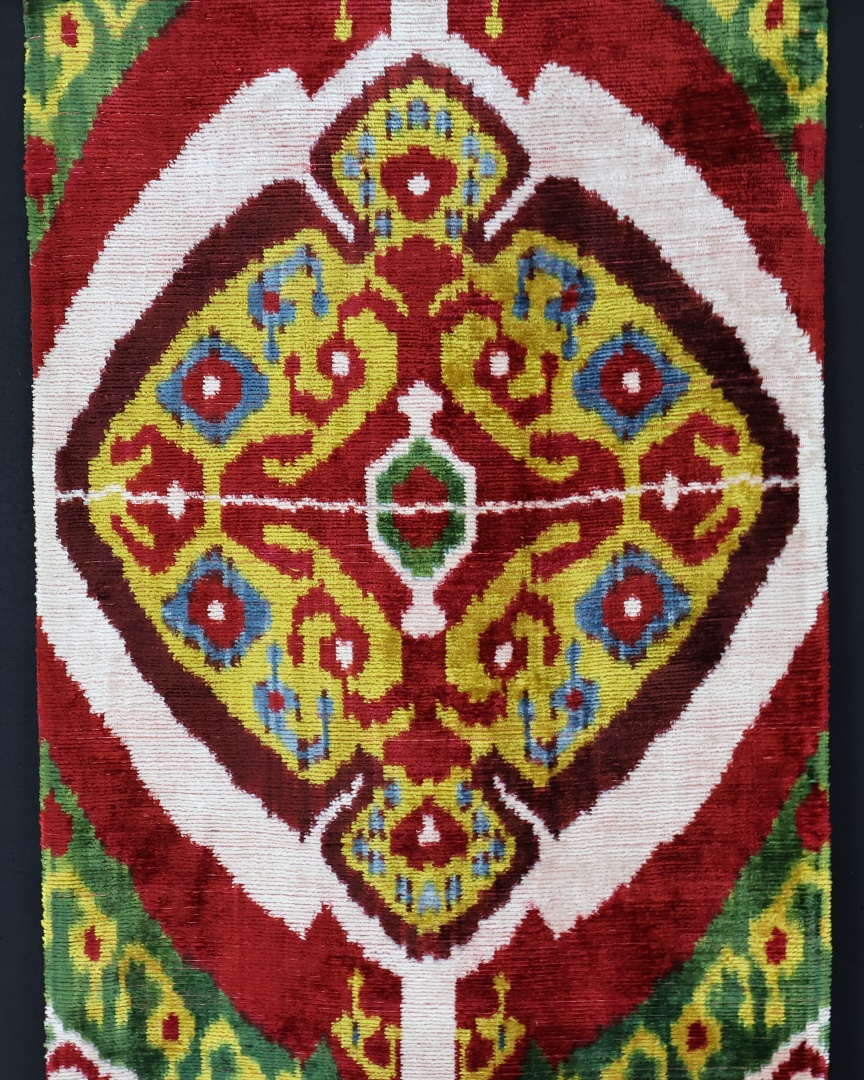


Description
Velvet ikat is one of the most opulent textile traditions in Central Asia, combining the resist‑dyed ikat technique with the plush, cut‑pile structure of velvet. The result is a fabric with blurred, jewel‑like patterns and a deep, tactile richness that few other textiles can match.
✧ What velvet ikat is
- A double‑cloth woven velvet in which the warp threads are resist‑dyed before weaving, creating the characteristic ikat “feathered” motifs.
- Traditionally woven in Uzbekistan (especially Bukhara, Margilan, and Fergana), where it is known as bakhmal.
- Made from silk pile on a cotton or silk ground, giving it both sheen and softness.
- Complexity of production: Artisans dye the warp threads in sections, align them precisely on the loom, and then weave two layers simultaneously before cutting to form the velvet pile. This requires exceptional skill.
- Cultural symbolism: Motifs often include diamonds, florals, chevrons, and amuletic forms, each tied to regional identity.
- Sensory richness: The pile gives depth and shadow, enhancing the ikat pattern’s movement and softness.
- Sustainability: Many workshops still use natural dyes and hand‑weaving, preserving heritage craft.Velvet ikat is widely used today for:
- Cushions, upholstery, and home décor
- Fashion, including jackets, robes, and accessories.
- Collectors’ textiles, especially antique Bukhara velvet ikats.


