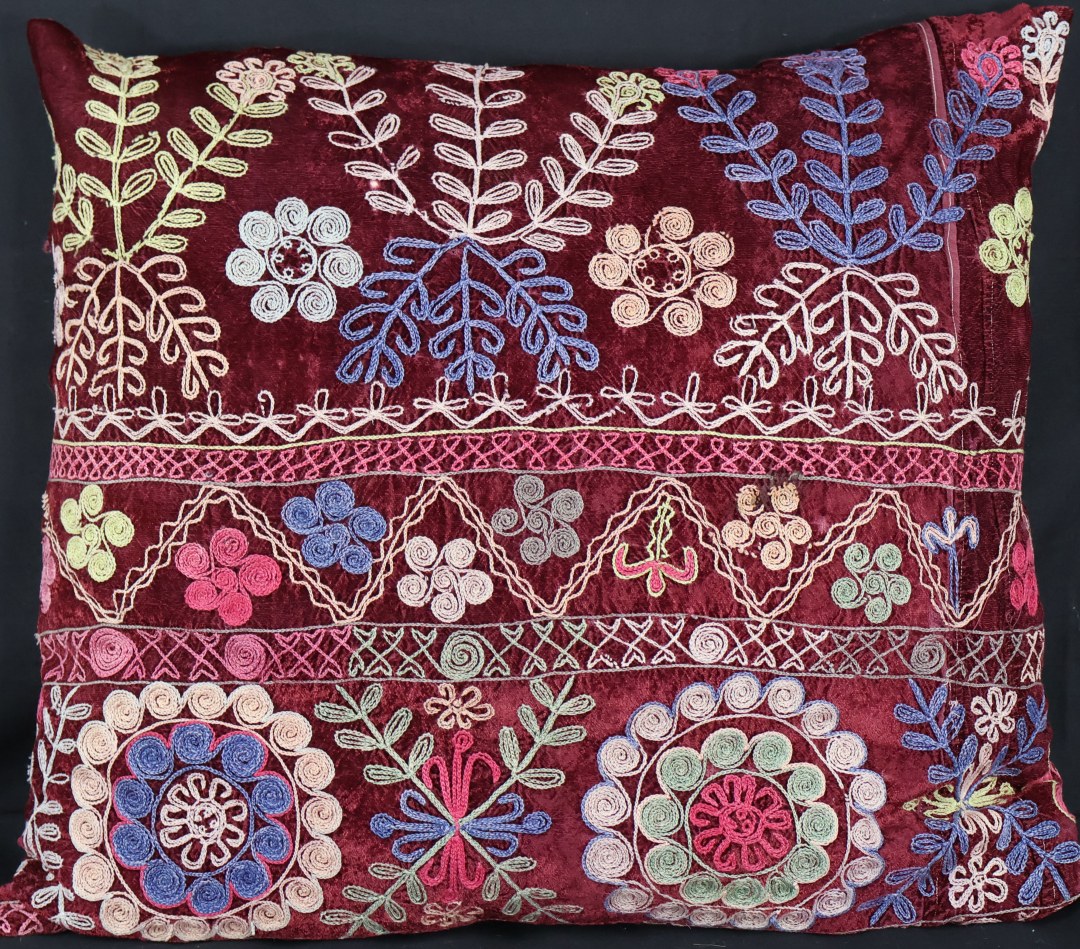
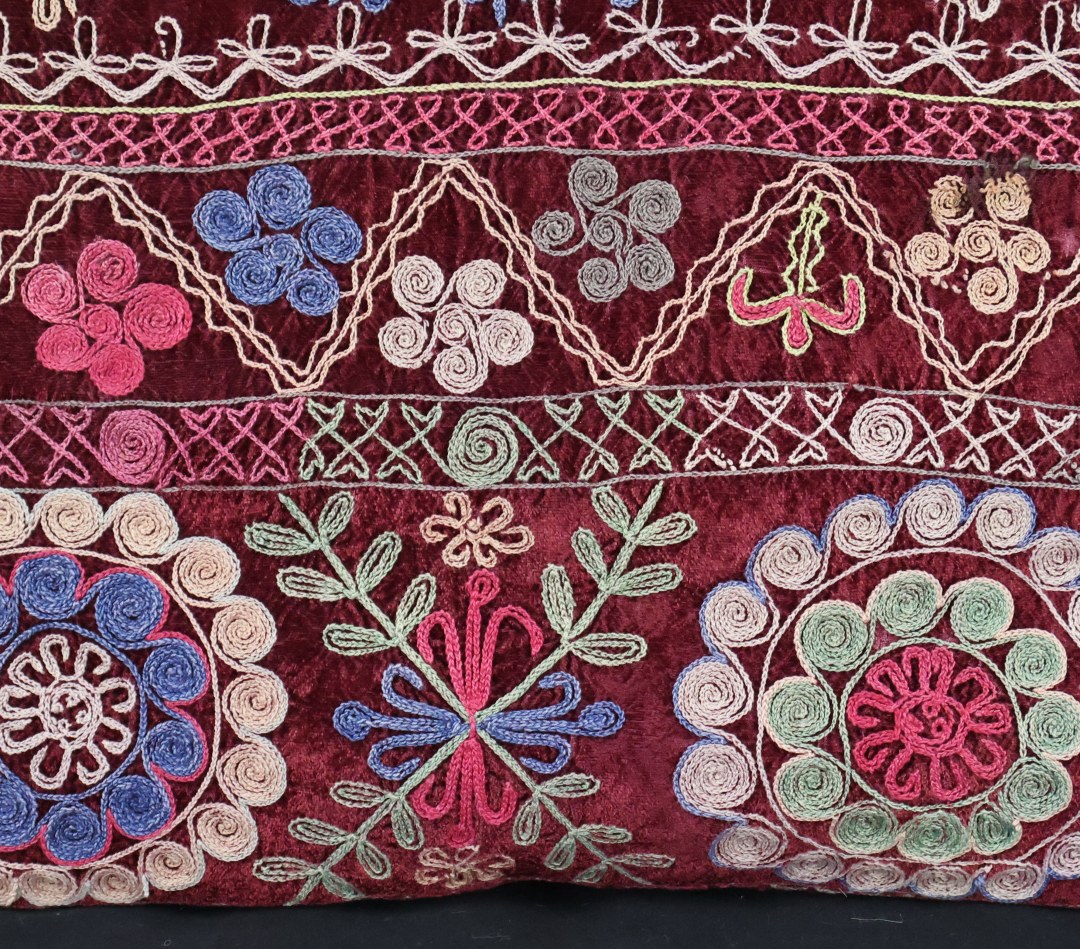
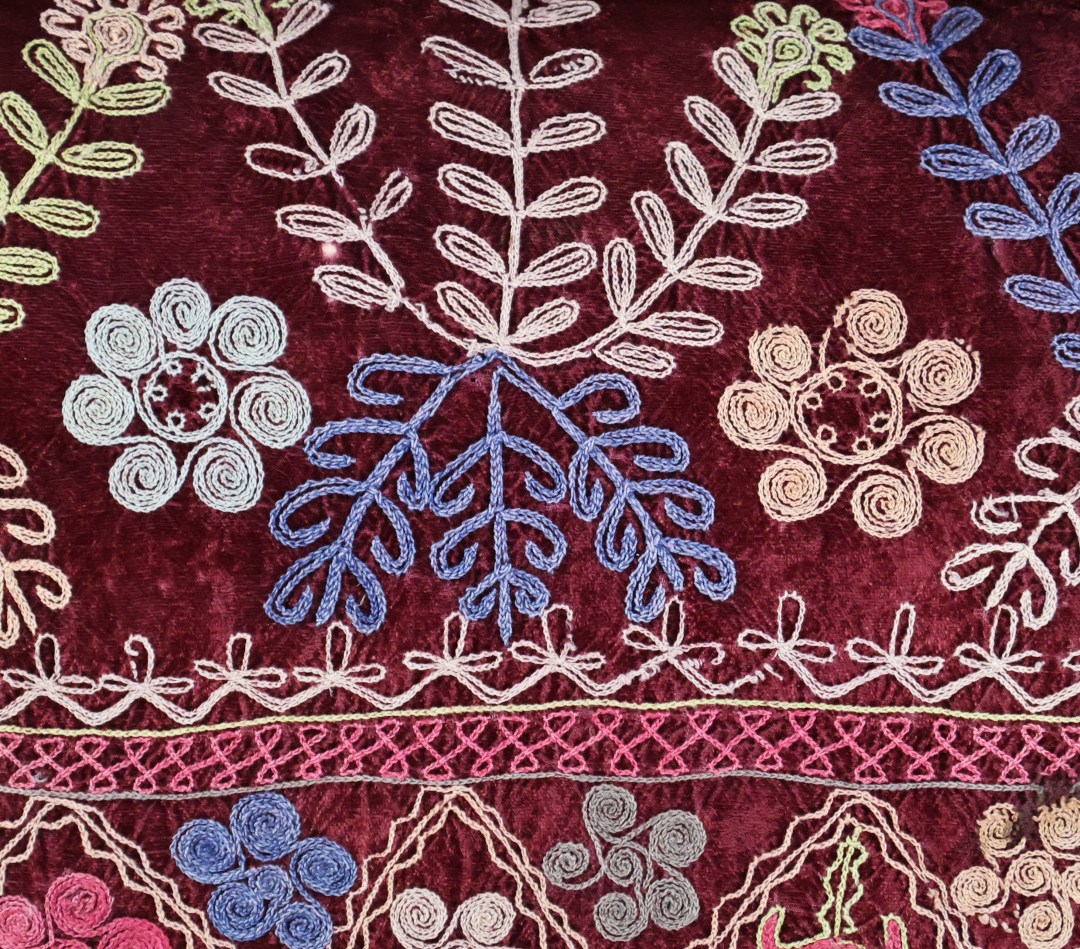
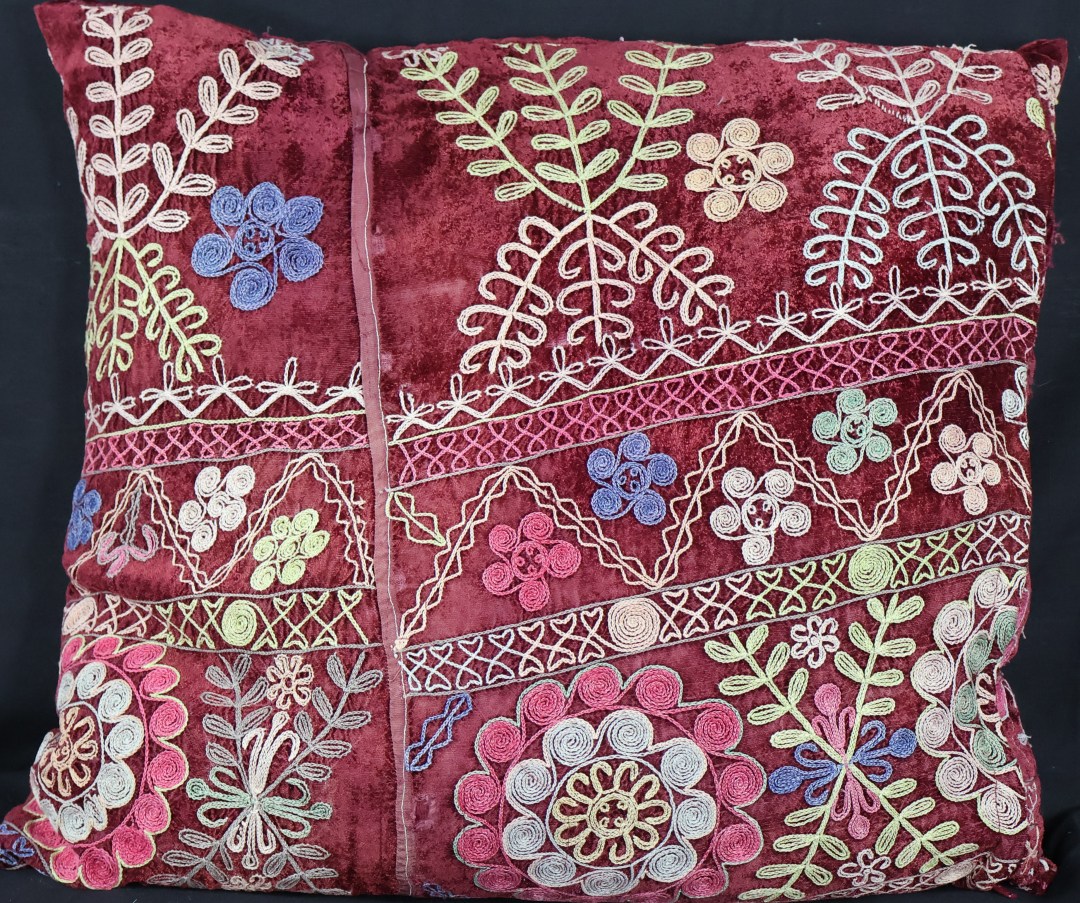
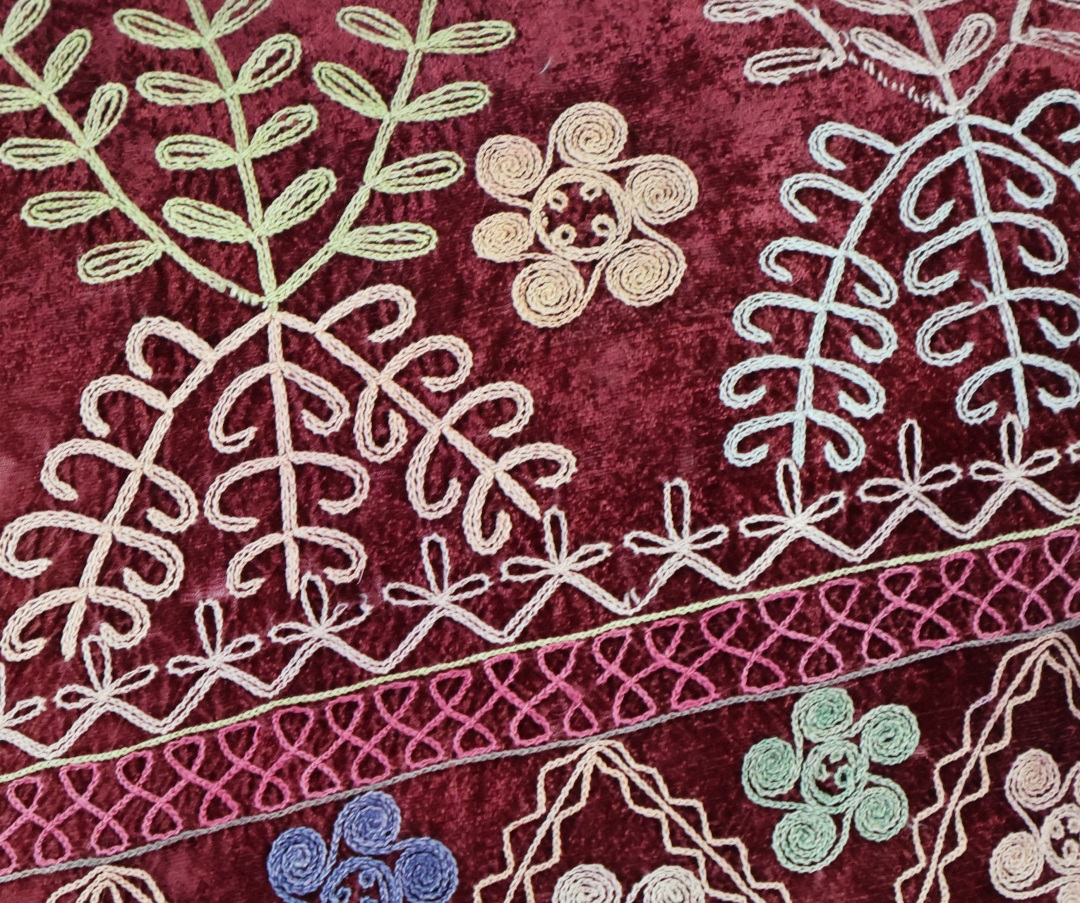
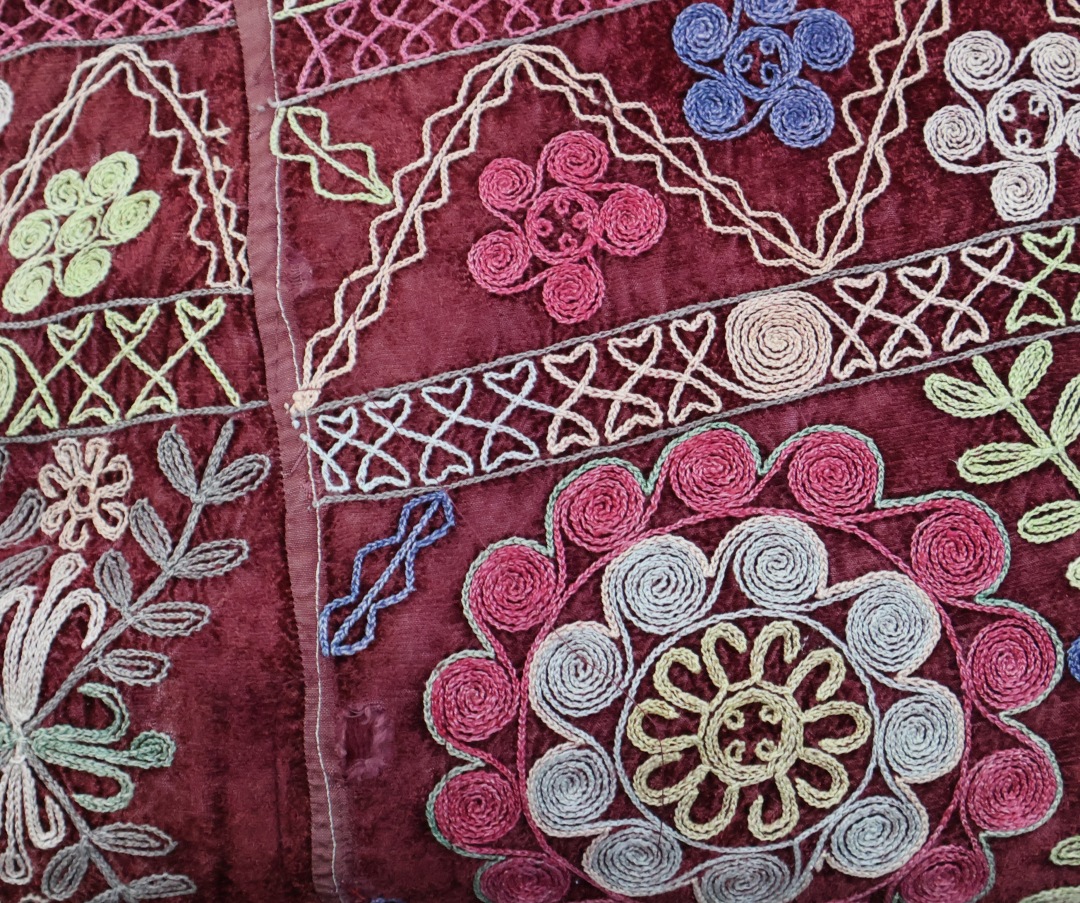
Description
Central Asian velvet embroidery refers to a family of luxurious textile traditions—especially from Uzbekistan, Kyrgyzstan, and Tajikistan—where silk or cotton velvet is richly embroidered with silk or metal threads to create ceremonial garments, tent hangings, and prestige textiles.
Below is a structured, in‑depth guide tailored to your textile‑collector’s eye, Peter—focusing on technique, regional distinctions, symbolism, and how to identify authentic pieces.
Central Asian velvet embroidery is the practice of stitching onto pile-woven velvet, often silk velvet, using silk floss, couching with metal-wrapped threads, or chain stitch. It appears in:
- Uzbek chapans (robes) with gold couching (zarduzi)
- Kyrgyz tent bands and hangings embroidered on black or red velvet
- Tajik ceremonial textiles with dense floral motifs
- Urban Bukhara workshops, famous for gold embroidery on velvet garments and caps
These traditions sit within the broader regional embroidery heritage described in the Encyclopedia of Embroidery from Central Asia .
✦ Key Techniques
- Zarduzi / Gold couching — metal-wrapped threads laid on velvet and couched down; dominant in Bukhara and Samarkand.
- Silk chain stitch — used in Kyrgyz and Tajik velvet hangings, often in swirling, ram’s-horn or floral motifs.
- Tambour work — fine hooked needlework producing fluid lines.
- Silk satin stitch — less common on velvet but used for small details.
Velvet’s pile absorbs light, so artisans choose high-contrast threads—gold, yellow, turquoise, pink—to make motifs glow.
Across Central Asia, embroidered velvet carries meanings tied to status, protection, fertility, and prosperity.
- Pomegranates → fertility and abundance
- Ram’s horns → strength and protection
- Floral sprays → beauty, renewal, blessing
- Circular medallions → cosmic order, unity
These symbolic layers reflect the cultural significance of embroidery in the region’s social life


