

Description
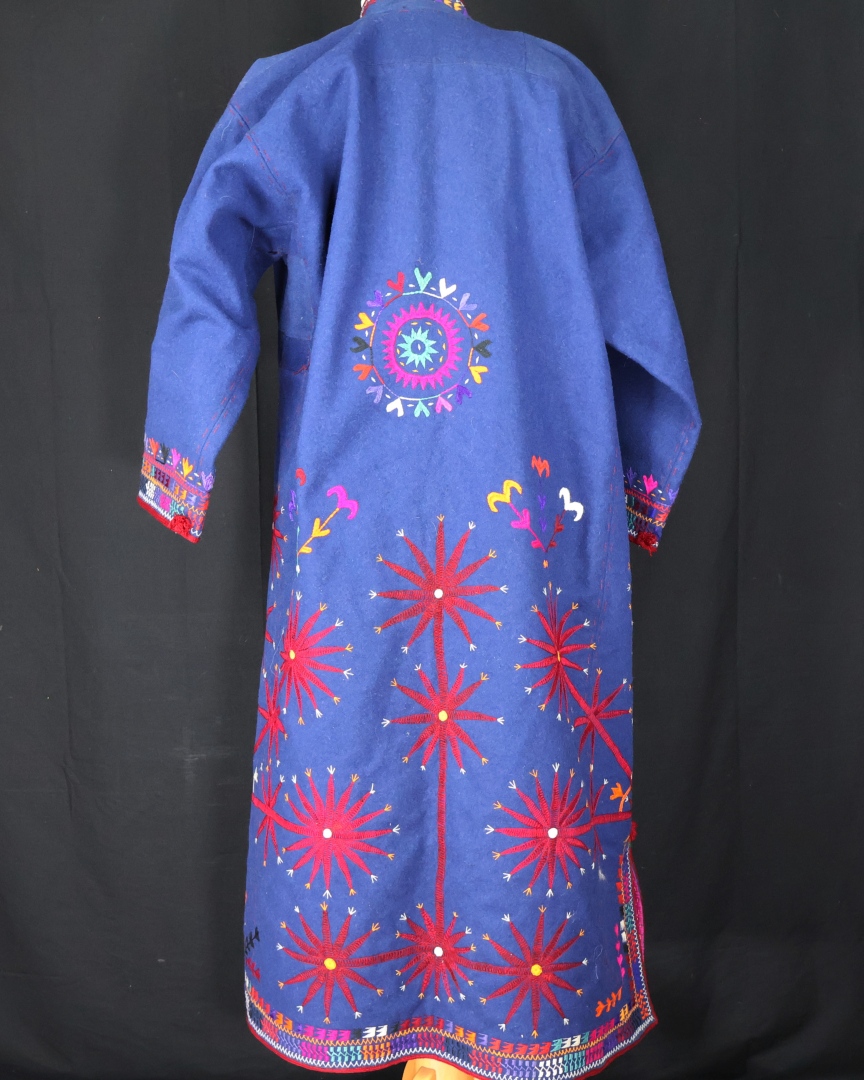
An Afghan chapan is a distinctive Central Asian coat—a symbol of status, warmth, and craftsmanship, and one of the most recognisable garments in Afghan menswear.
What it is
A chapan is a long, padded coat worn over clothing, especially in winter. It’s traditionally worn by men across Afghanistan and neighbouring regions such as Uzbekistan, Tajikistan, Kazakhstan, and Kyrgyzstan. It’s instantly recognisable for its striped silk or cotton outer fabric, quilted interior, and broad, wrap‑around silhouette.
Cultural significance
• In Afghanistan, the chapan carries social and symbolic weight—it conveys dignity, maturity, and respectability.
• Former Afghan president Hamid Karzai famously wore richly coloured chapans, making the garment globally iconic.
• It is associated with warmth, hospitality, and status, and is often worn during formal gatherings or cold‑season ceremonies
• Traditionally made from handwoven striped fabrics, often with silk warp threads that give the garment its sheen.
• The interior is thickly quilted, sometimes with cotton batting, making it extremely warm.
• Colours vary by region, but deep greens, purples, golds, and blues are common.
Place within Afghan textile traditions
The chapan sits alongside garments like the shalwar kameez and regional embroidered coats, each carrying its own symbolic meaning. Afghan clothing as a whole reflects the country’s ethnic diversity, Silk Road influences, and deep textile heritage.