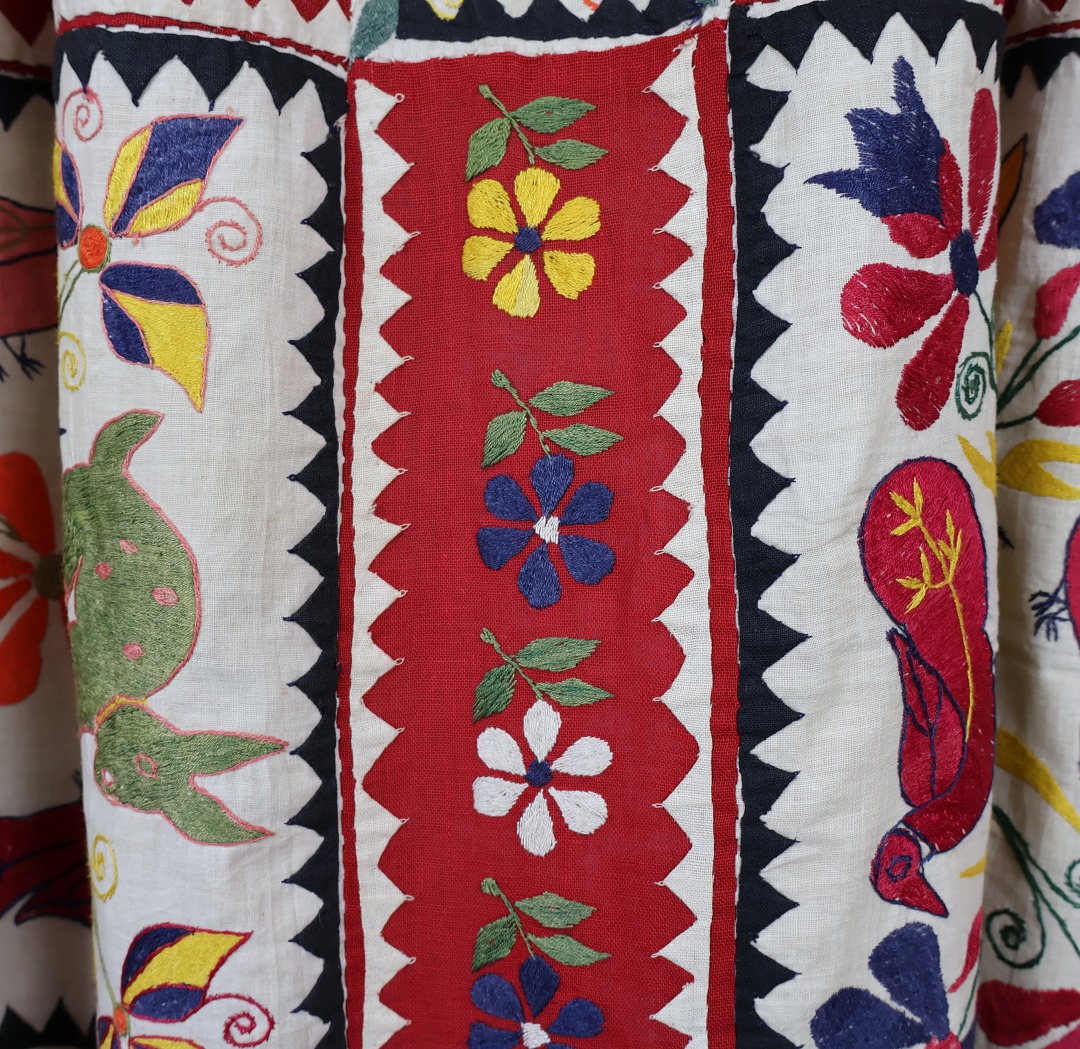
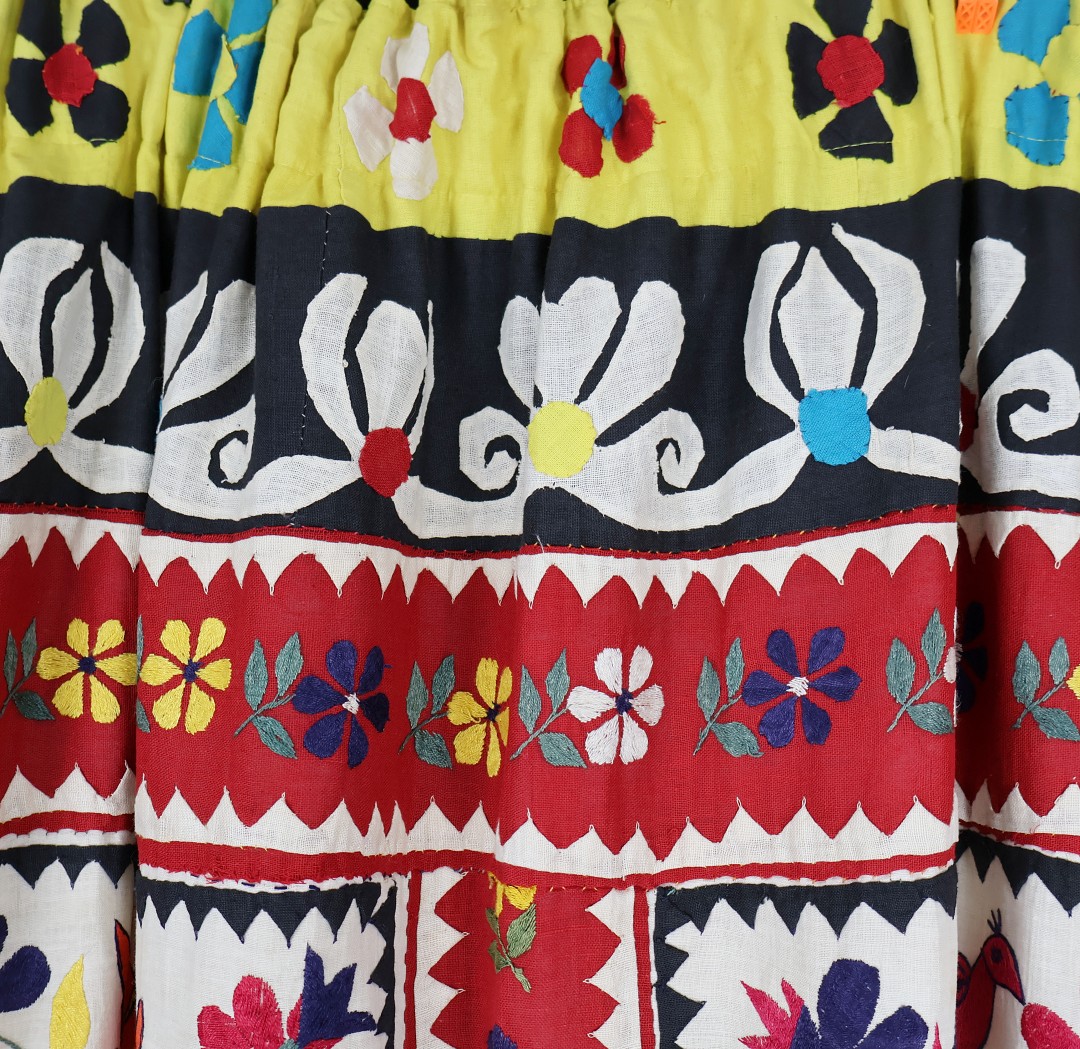
Description
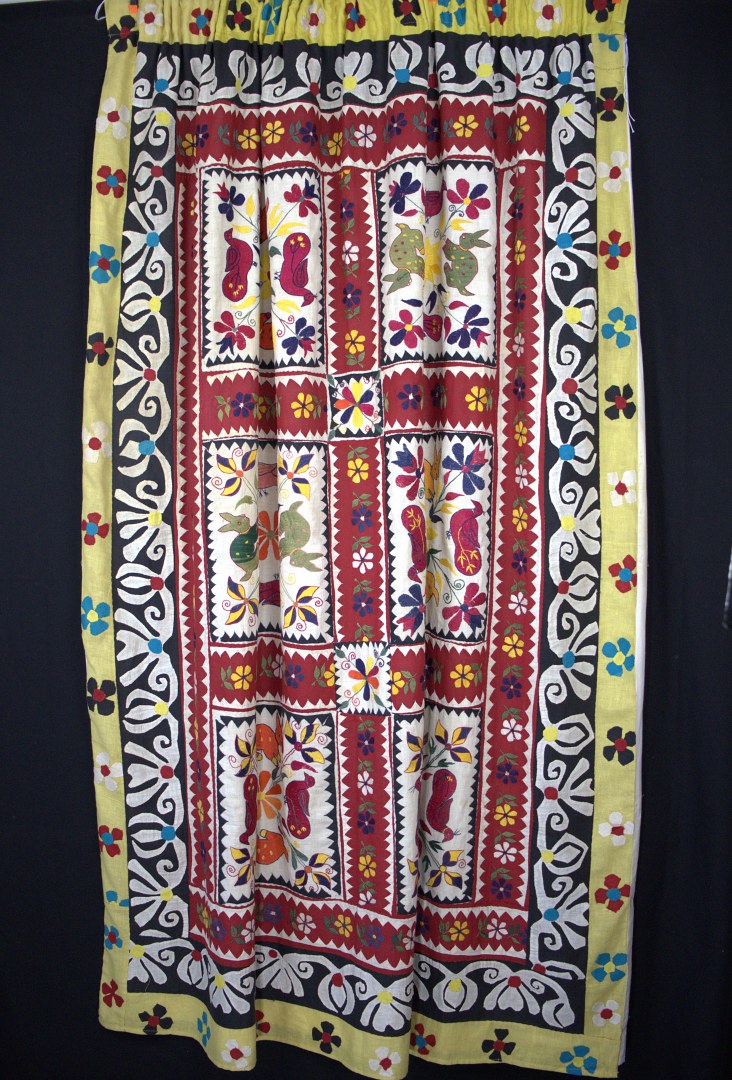
Rajasthani appliqué is best understood as a vibrant, community-rooted craft combining geometric precision, symbolic motifs, and layered fabric techniques—most famously seen in Barmer appliqué and the broader katab tradition.
Rajasthani appliqué refers to a family of textile techniques in western India where shaped pieces of cloth are cut, layered, and stitched onto a base fabric to create bold, colourful designs. It is practiced across Rajasthan, but two traditions dominate:
-
Barmer appliqué (Barmer district, Thar Desert)
-
Katab appliqué (shared between Rajasthan and Gujarat, practiced by Meghwal, Rabari, Mahajan, Sodha Rajput, and Mutwa communities)
Both traditions share roots in Sindhi and western Indian patchwork, strengthened by migrations after Partition in 1947, when artisan communities resettled in Rajasthan.
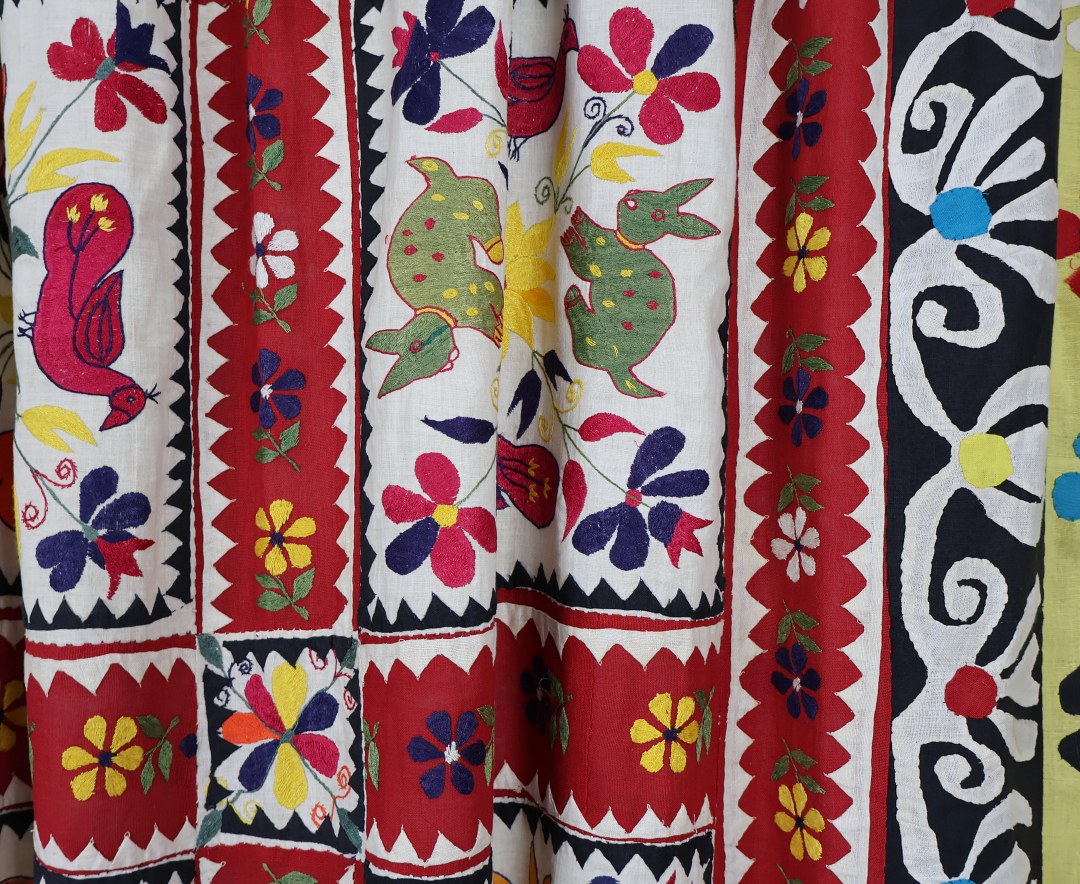
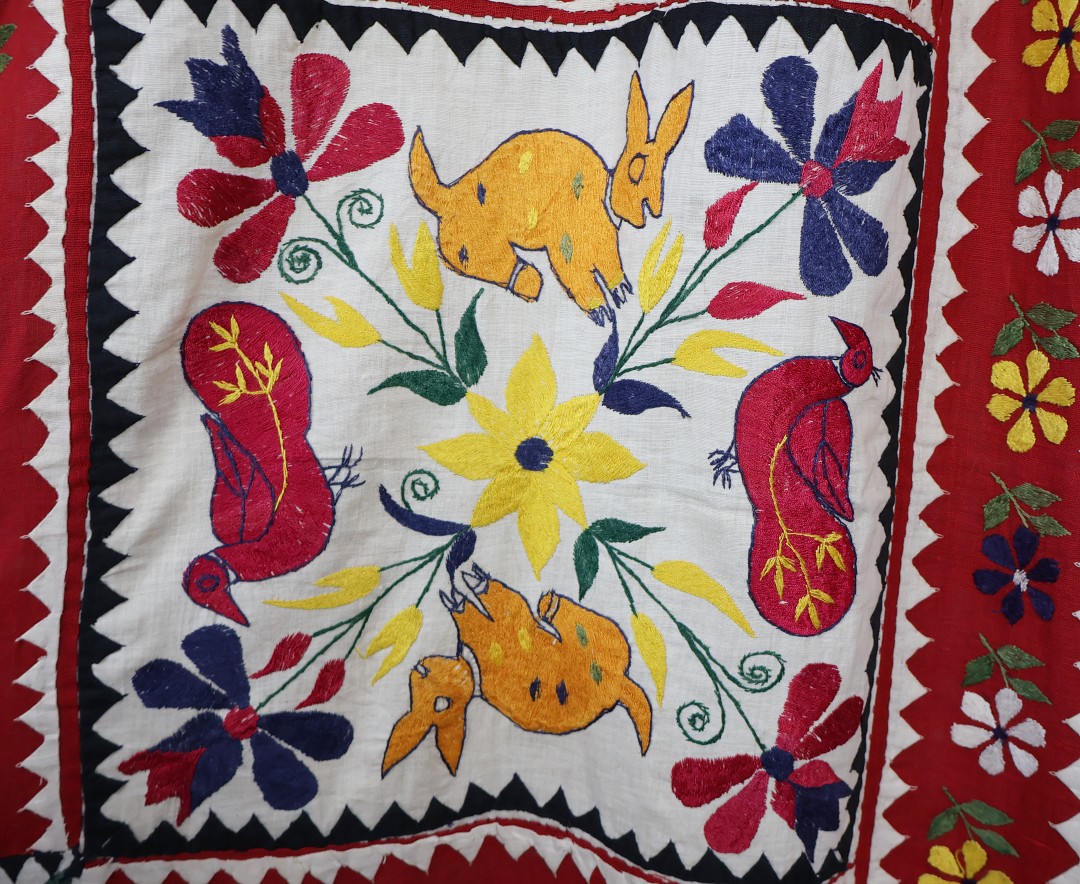
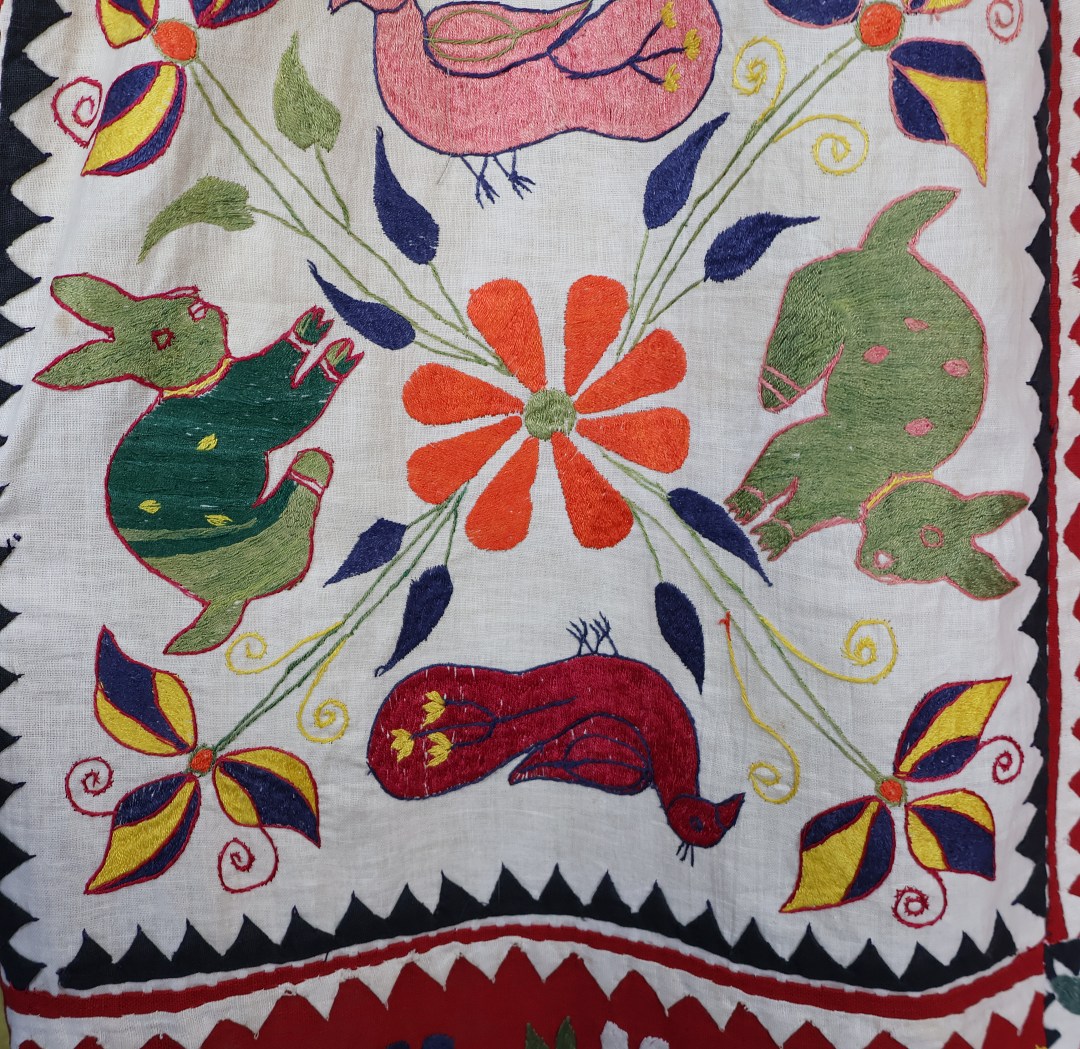
1. Patch appliqué Separate motifs—triangles, squares (chitkis), strips, animals, trees—are cut and stitched onto a base cloth. Edges are often covered with decorative embroidery.
2. Reverse appliqué Two or more layers of fabric are stacked; the top layer is cut away to reveal the colour beneath, then secured with stitching.
3. Layered katab Artisans sometimes stack multiple fabrics (mashru, bandhani, patola, ajrakh) and stitch them as a single raised unit—creating a textured, sculptural surface.
4. Adhesive setting (Barmer) Motifs are first pasted with kalab (wheat flour + gum + water), dried in the sun, then stitched—an unusual step unique to this region.
Rajasthani appliqué is highly geometric, but also rich in folk imagery:
-
Triangles, zig-zags, stars
-
Flowers and trees
-
Peacocks, parrots, camels, elephants, horses
-
Khejri tree (a sacred desert species)
These motifs often appear in torans, wedding canopies (chandarvo), ralli quilts, and dowry textiles.


