

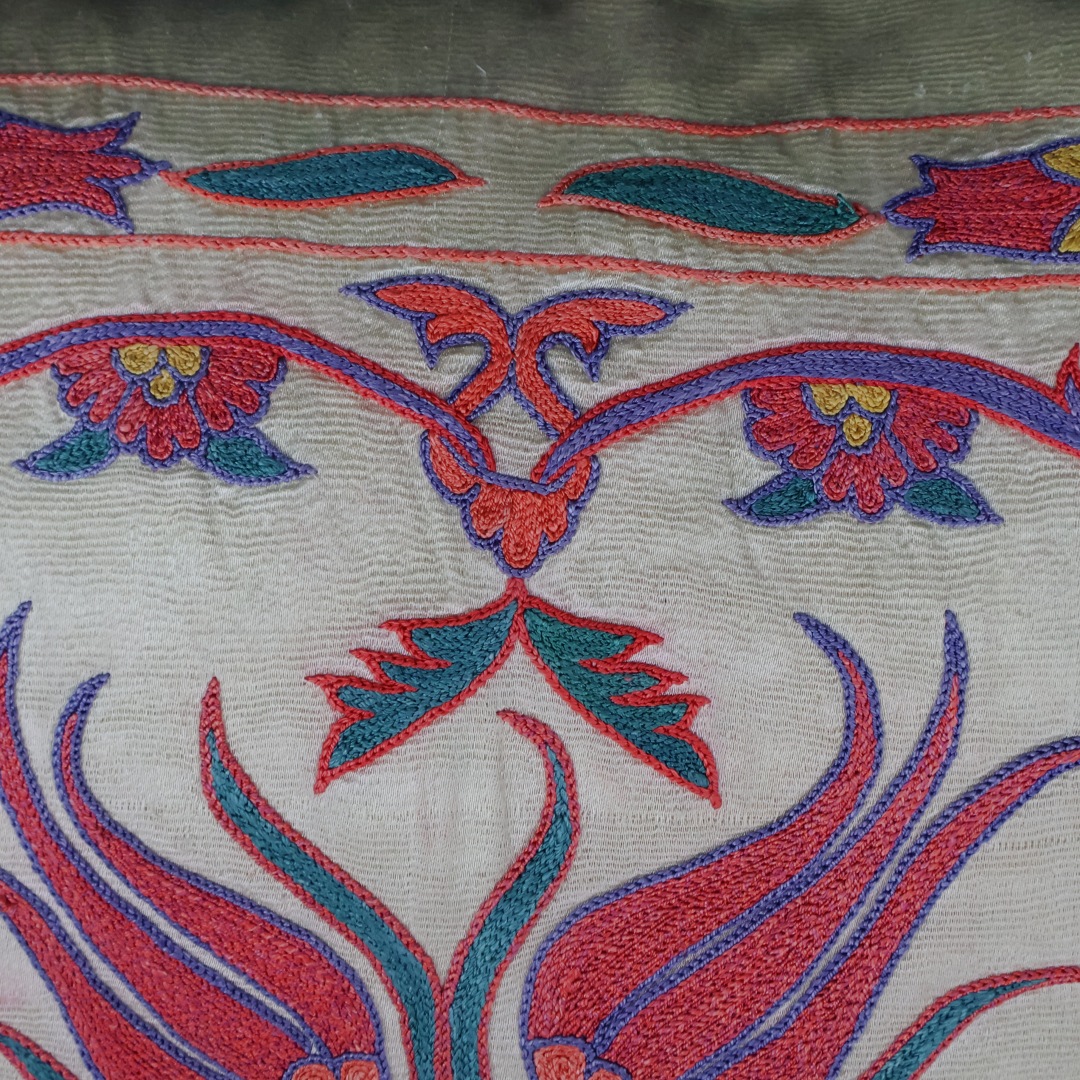


Description
What Defines the Ottoman Tulip Motif?
• Three curved, tapering petals forming a narrow “waisted” silhouette.
• Long, elegant proportions, often with pointed tips.
• Stylised but botanical, especially after the influence of the court artist Kara Memi, who helped establish the “Floral Style” in the 16th century.
• Frequently paired with:
• Saz leaves (serrated, sweeping leaves)
• Carnations
• Hyacinths
• Arabesque vines
This combination created the lush, rhythmic floral language seen in Iznik ceramics and silk textiles.
Imperial Symbolism
• Under Suleiman the Magnificent, the tulip became a defining emblem of Ottoman identity.
• It appeared across mosques, palaces, manuscripts, and luxury textiles—an aesthetic policy rather than mere decoration.
• The tulip suggested beauty, order, divine harmony, and cultivated refinement.
Spiritual Resonance
• The Turkish word for tulip, lâle, uses the same letters as Allah, giving the flower a sacred dimension.
• This made the tulip a subtle devotional symbol in art and architecture
The Ottoman tulip is more than a flower: it’s a distilled expression of Ottoman aesthetics—symmetry, elegance, spirituality, and disciplined beauty. Its instantly recognisable silhouette continues to inspire modern Turkish ceramics, fabrics, and graphic design.


