




Description
Kohistan embroidery is one of the most distinctive textile traditions of northern Pakistan and Afghanistan, known for its dense stitching, vivid colour contrasts, and elaborate beadwork. It sits at the crossroads of Indus Kohistan, Swat, Nuristan, and the tribal highlands, and its textiles often reflect layers of cultural exchange, migration, and clan identity.
Kohistani work is immediately recognisable for a few core features:
• Kolai stitch (superfine weft–warp wrapping) — A hallmark technique where coloured thread wraps around individual warp or weft threads so tightly that the base cloth disappears. This is considered the finest and most prized form of Kohistani embroidery.
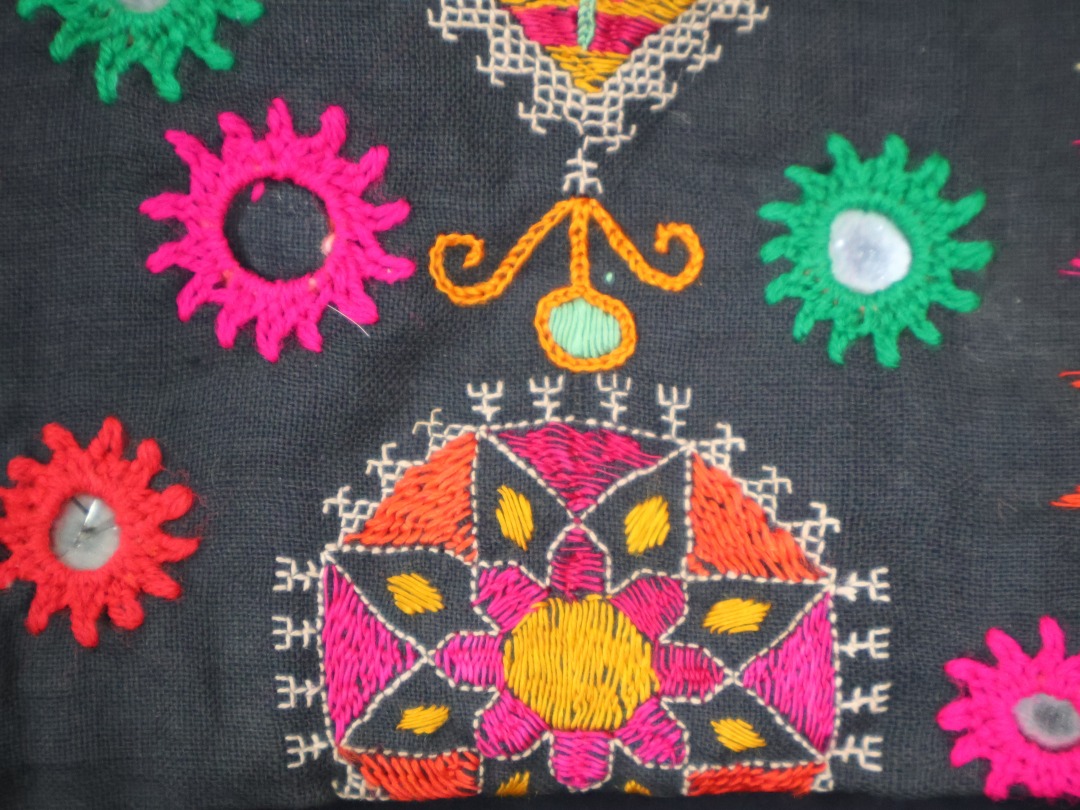
• Geometric medallions and dense patterning — Central squares, diamonds, crosses, and star motifs dominate, often arranged in strict symmetry.
• Heavy beadwork — White, red, blue, and metallic beads form fringes, borders, and tassels. Beaded fringes ending in tiny “flowers” are especially characteristic.
• Layered construction — Shawls and panels are often double-layered to trap warmth in the mountain climate.
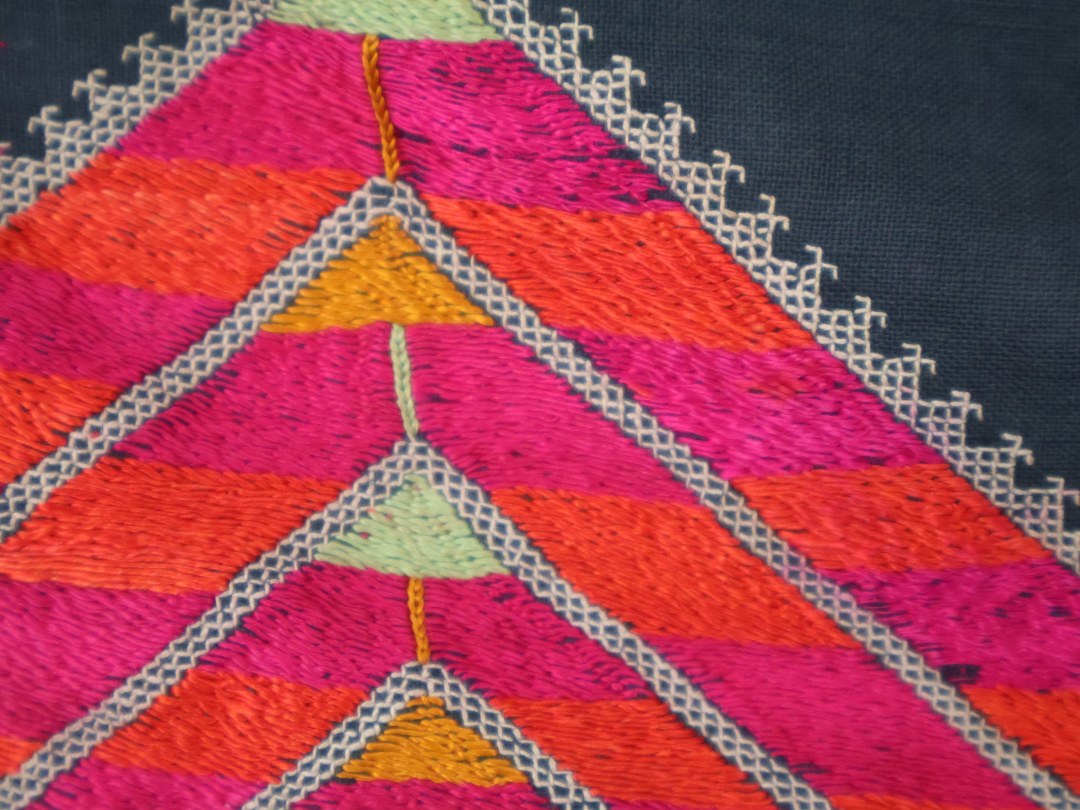
• Vibrant palette — Deep black grounds with saturated reds, greens, yellows, and whites. Silk thread is common in older pieces.


