



Description
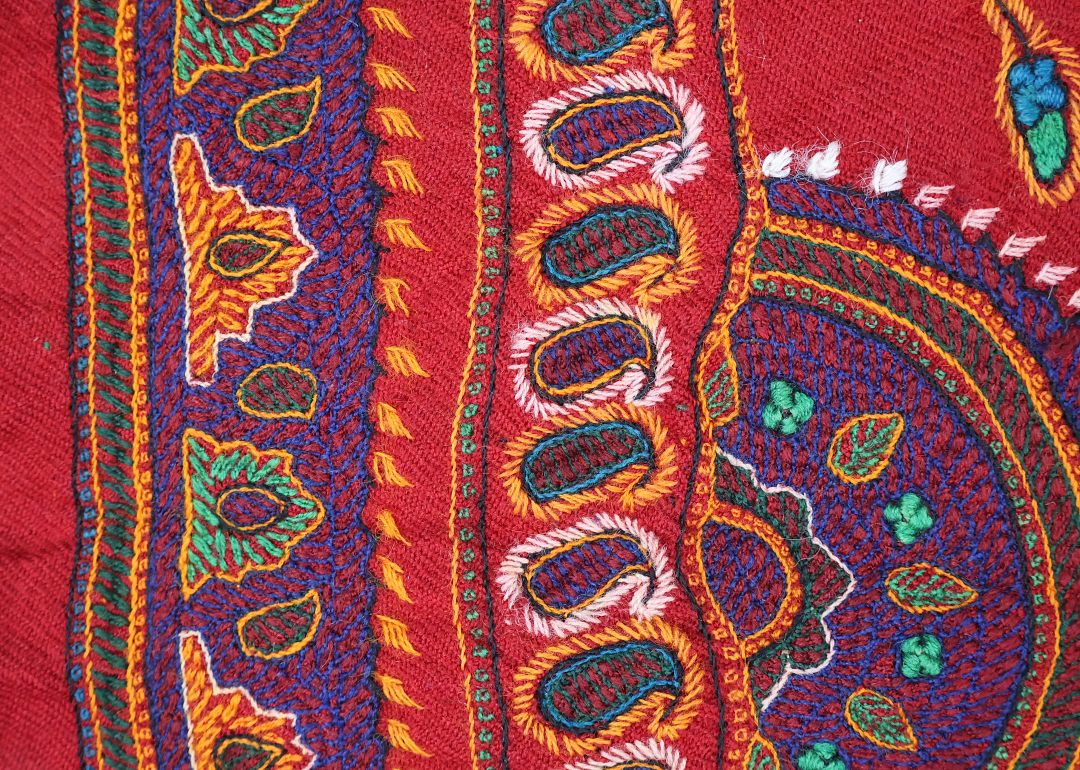
most distinctive regional textile traditions, celebrated for its dense wool stitching, glowing colours, and motifs that echo both Persian carpets and Kashmiri shawls. It includes two closely related forms: classic Kerman embroidery and the more widely known Pateh (Pateh‑duzi), both worked in Kerman province in southeastern Iran
What Defines Kerman Embroidery?
• Wool-on-wool construction
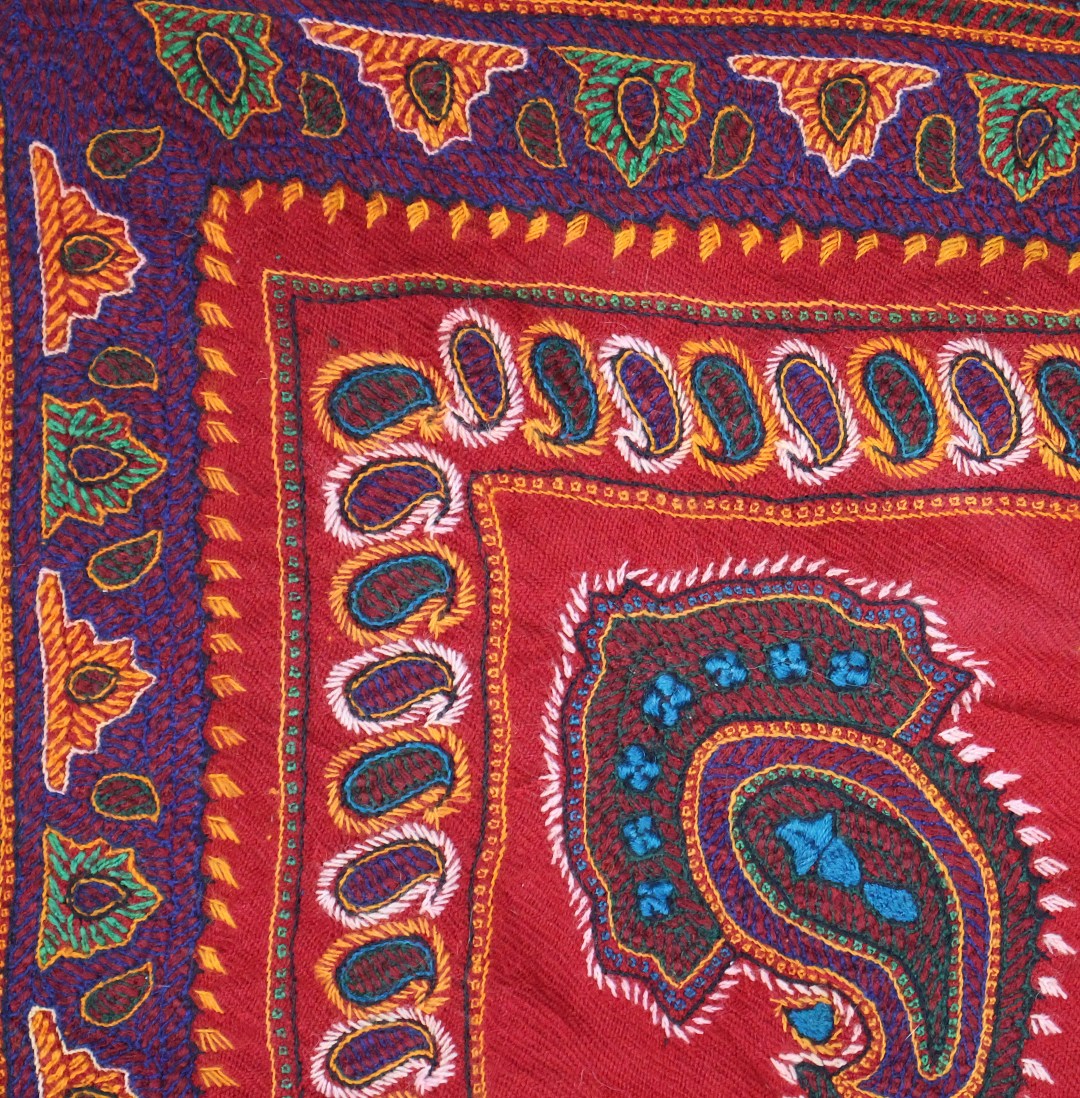
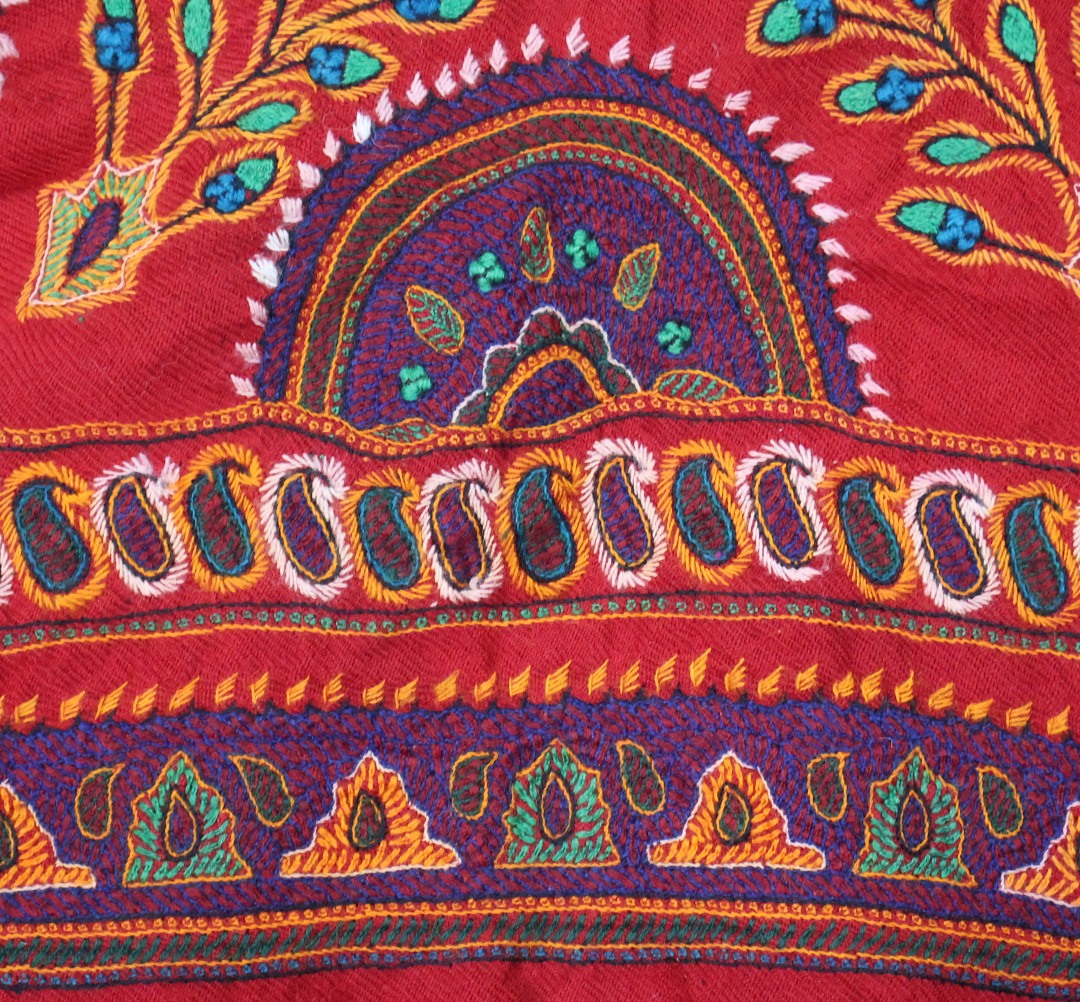
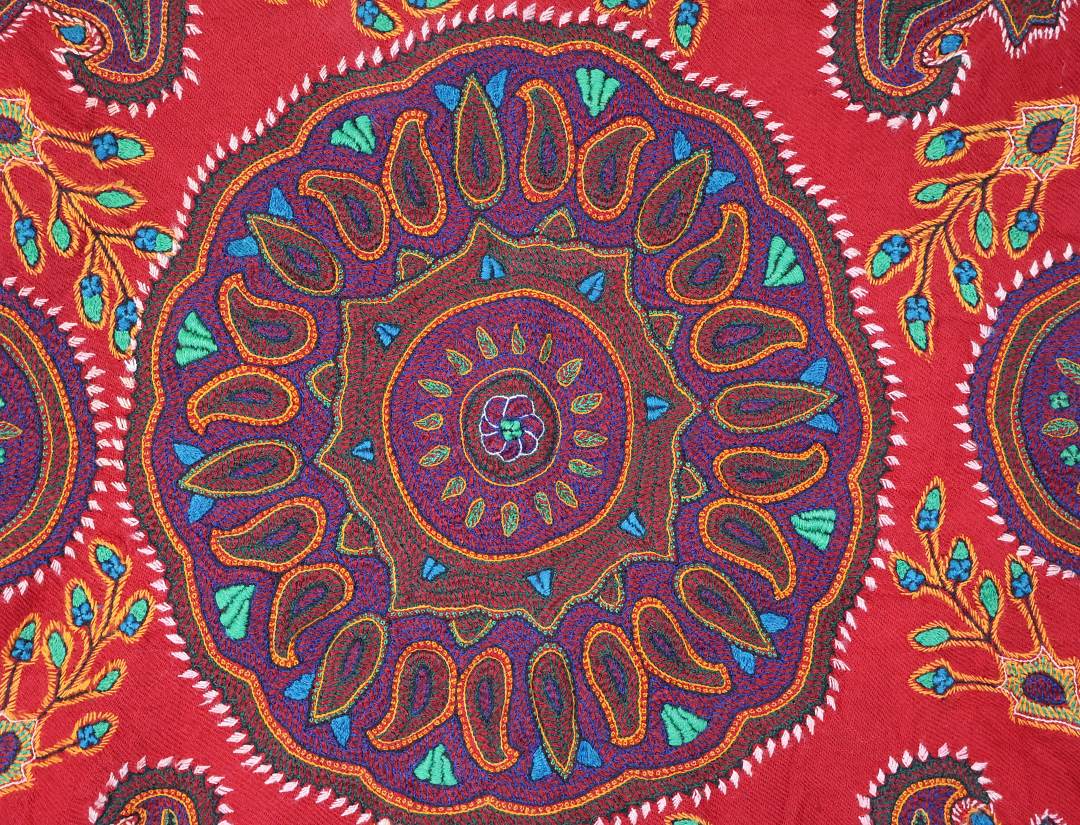
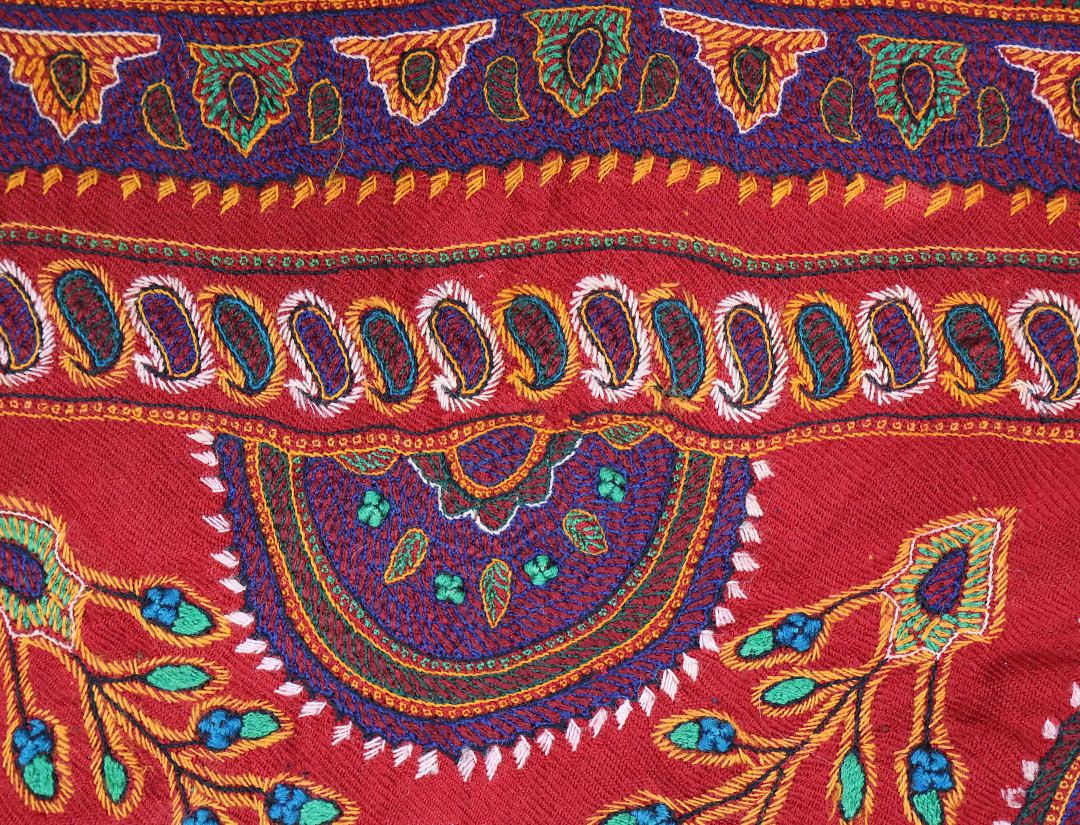
The ground cloth is usually a wool twill, often in red, but also black, blue, or white.
• Motifs with deep symbolism
Common designs include buteh (paisley), stylised flowers, cypress trees, sun motifs, and occasionally mihrab arches.
• Rich, textured stitches
Artisans use blanket stitch, double buttonhole, satin stitch, stem stitch, straight stitch, and tent stitch, often in multi‑coloured worsted yarns.
• Historical cross‑pollination
There are strong stylistic links to Kashmir embroidery, likely due to the migration of Kashmiri weavers to Kerman in the 19th century.
Pateh (Pateh‑duzi): The Iconic Kerman Style
Pateh is the most famous form of Kerman embroidery and is still widely practised today.
Key Characteristics
• Entirely hand‑stitched wool embroidery on ariz or shal (wool twill).
• Floral, abstract, and carpet‑inspired motifs, including toranj medallions, cypress trees, and paisleys.
• Natural dyes traditionally used: henna, madder, pomegranate, walnut husks.
• Borders densely filled with repeating motifs, giving a glowing, tapestry-like surface.
• Cultural role: essential in bridal dowries, heirlooms, shrine donations, and festive textiles.


