
Description
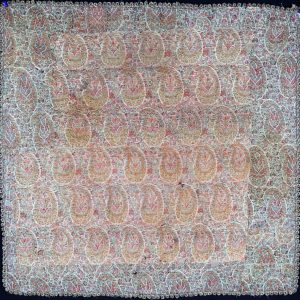
Gujarati textiles are among the most diverse, symbolically rich, and technically sophisticated textile traditions in India, spanning double‑ikat masterpieces, nomadic embroidery, sacred ritual cloths, and centuries‑old trade fabrics.
Kutch Embroidery — Nomadic Identity in Thread
• Communities: Rabari, Ahir, Jat, Meghwal, Sodha.
• Features:
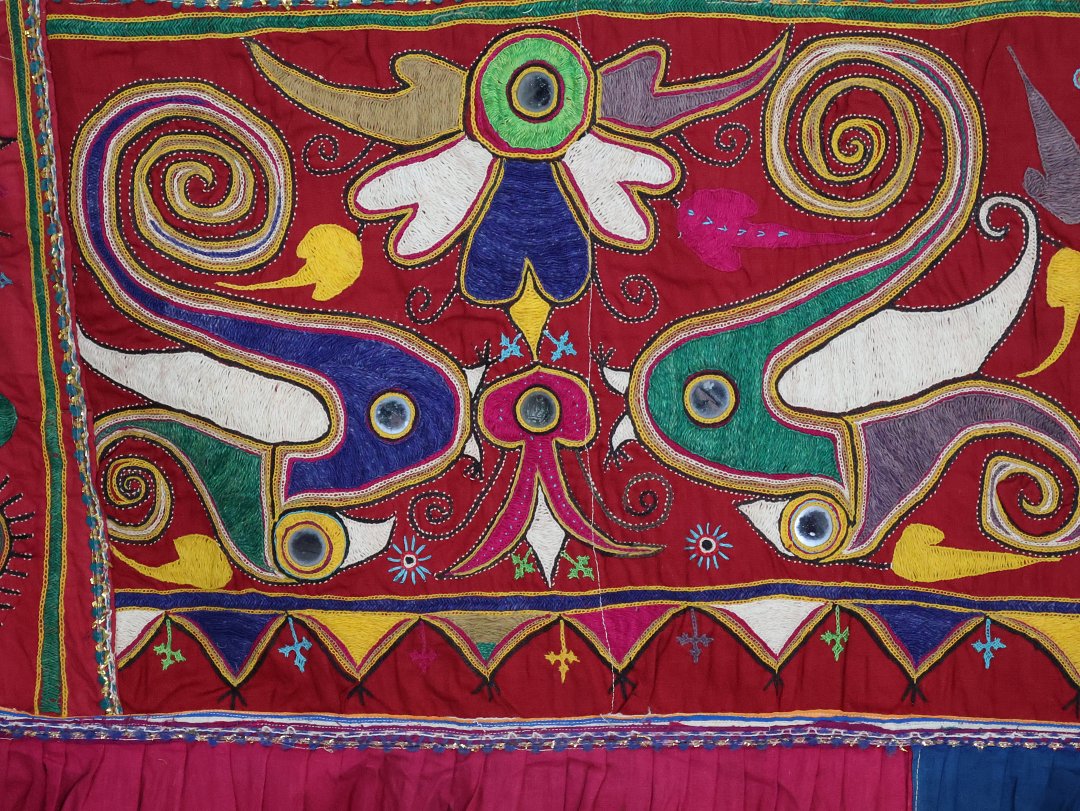
• Mirrorwork (abhla)
• Dense geometric and floral embroidery
• Bold colour palettes
• Objects: Ghagras, cholis, torans, dowry bags, camel trappings.
Major styles and their signatures
- Kutch embroidery — The most globally recognised style. Features dense stitching, bold colours, mirrors, chain stitch, and motifs inspired by daily life and nature. Origin stories link it to Kathi cattle breeders and to Mochi artisans taught by a Sindhi wanderer.
- Mochi (Aari) embroidery — Worked with an awl-like tool (ari) to create fine chain stitches. Often silk-on-silk with mirrors, beads, and sequins. Historically patronised by Kachchh and Kathiawad royalty.
- Rabari embroidery — Bold, dramatic, heavily mirrored, often on wool skirts and shawls. Strong geometric and amuletic motifs.
- Ahir embroidery — Curvilinear floral motifs, peacocks, and circular patterns; bright and rhythmic.
- Jat embroidery — Extremely fine, geometric, counted-thread work on plain fabric.
- Mutwa embroidery — Miniature geometric motifs and tiny mirrors, some as small as lentils.Gujarati embroidery is rich in symbolic imagery:
- Peacocks, elephants, parrots — auspiciousness and celebration
- Geometric grids and triangles — protection and order
- Mirror work (shisha) — believed to ward off the evil eye
- Floral vines and foliage — fertility and prosperity