Description
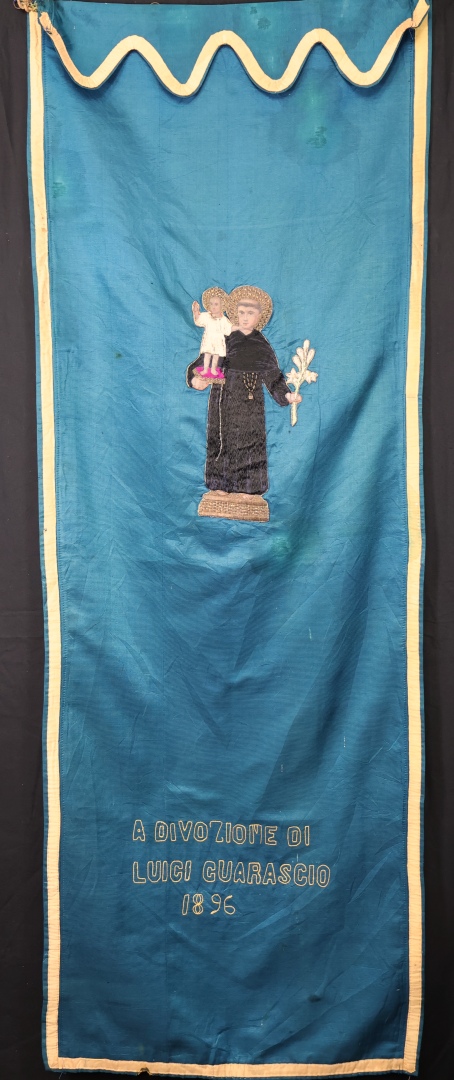
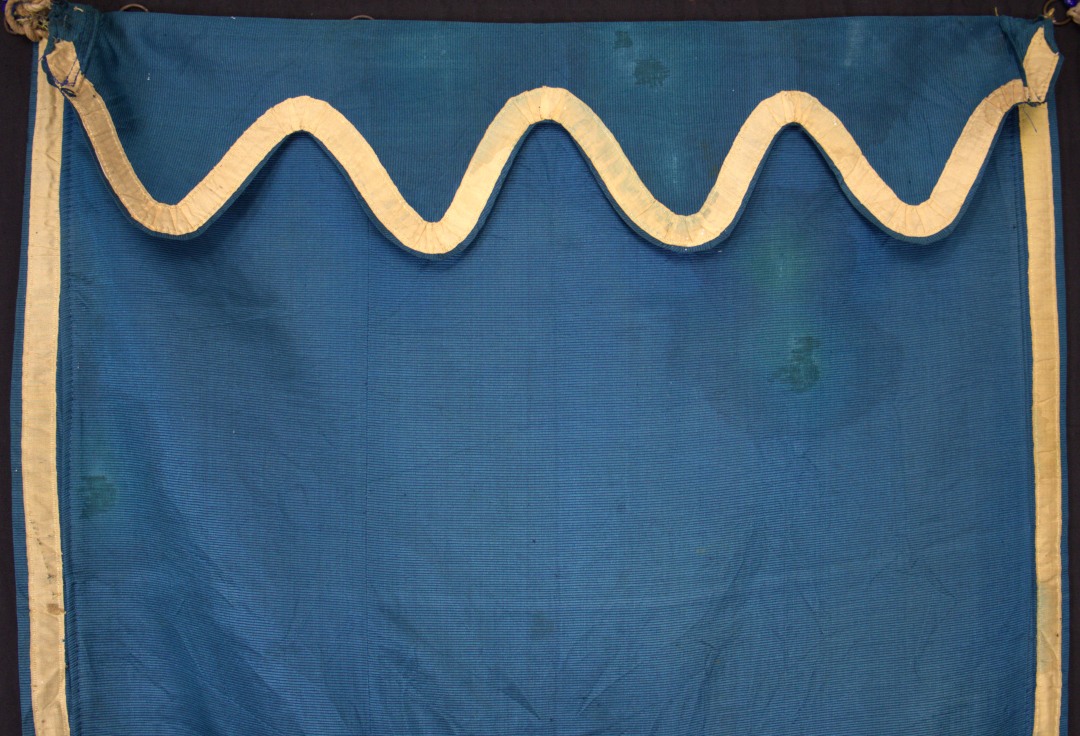
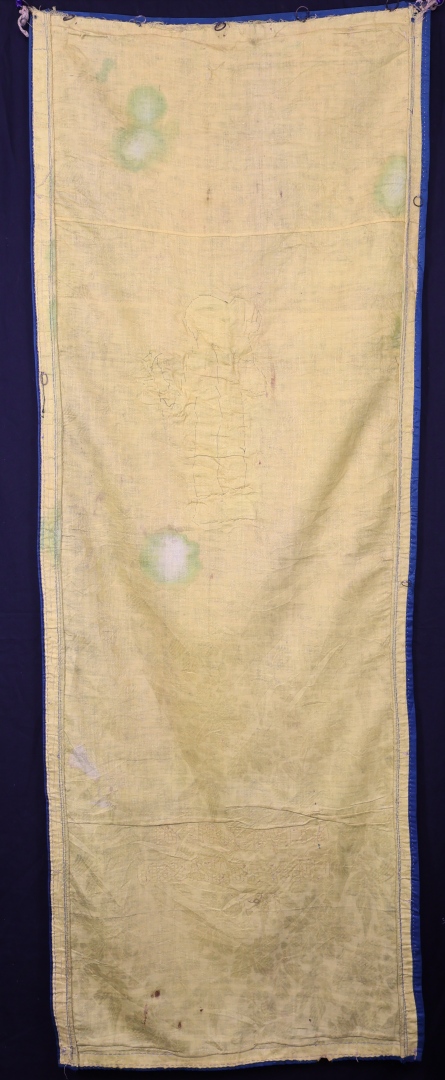
Religious banner
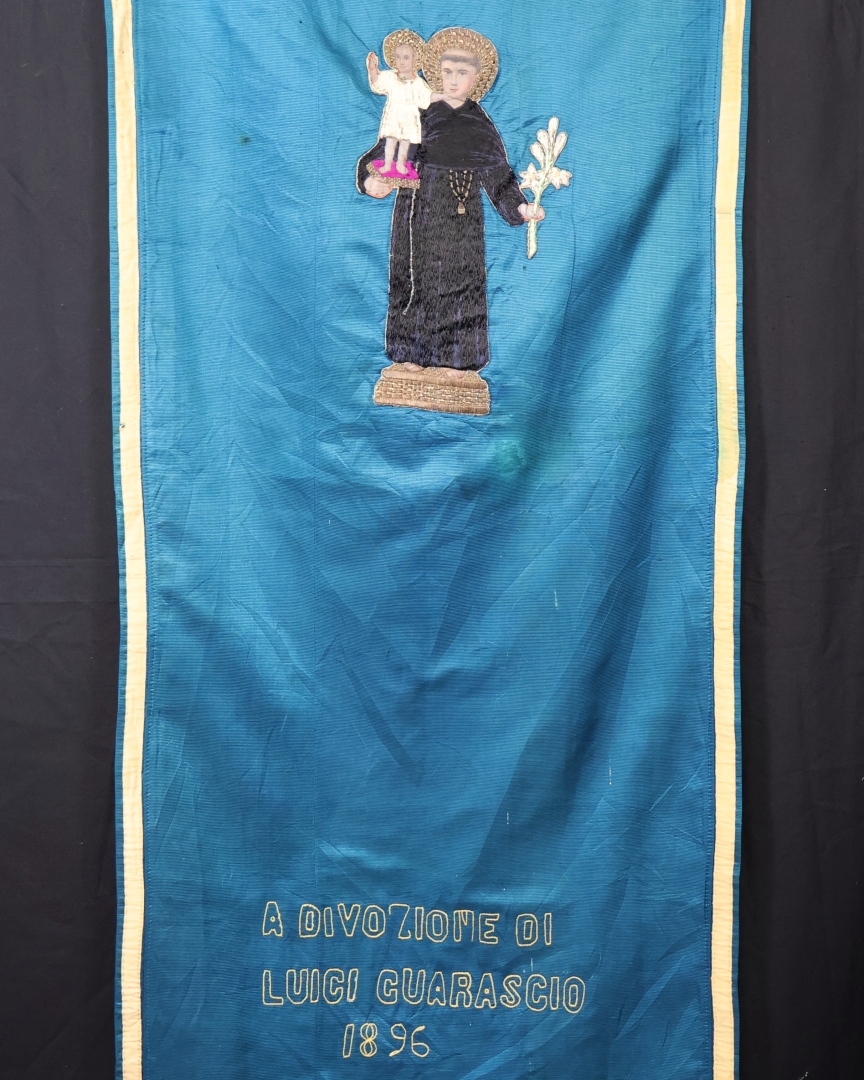
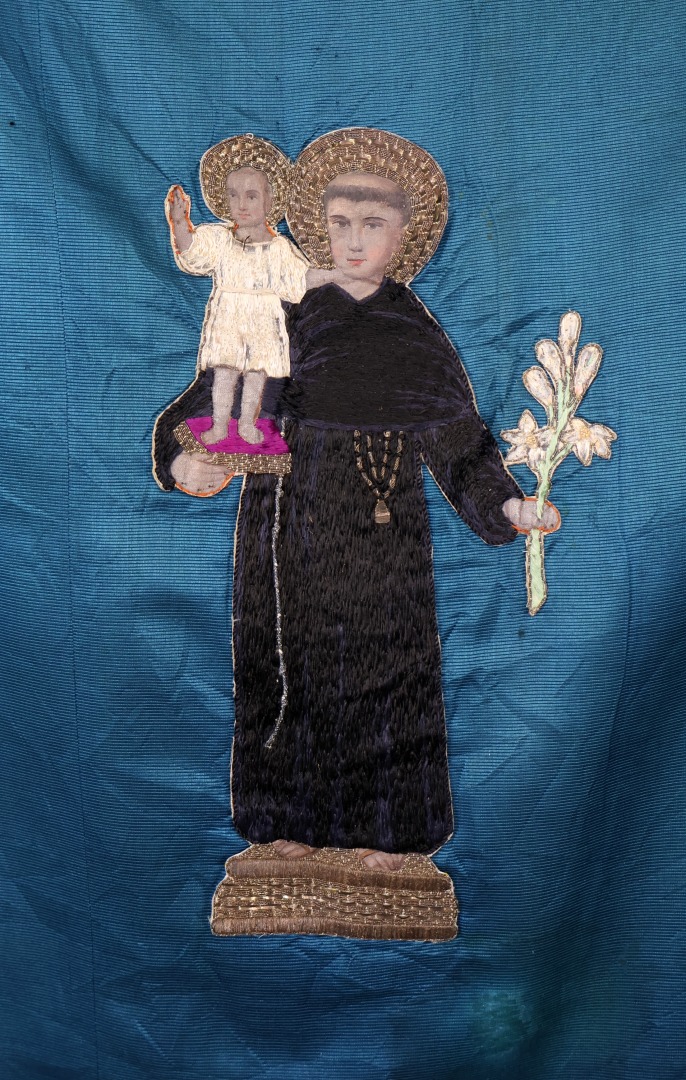
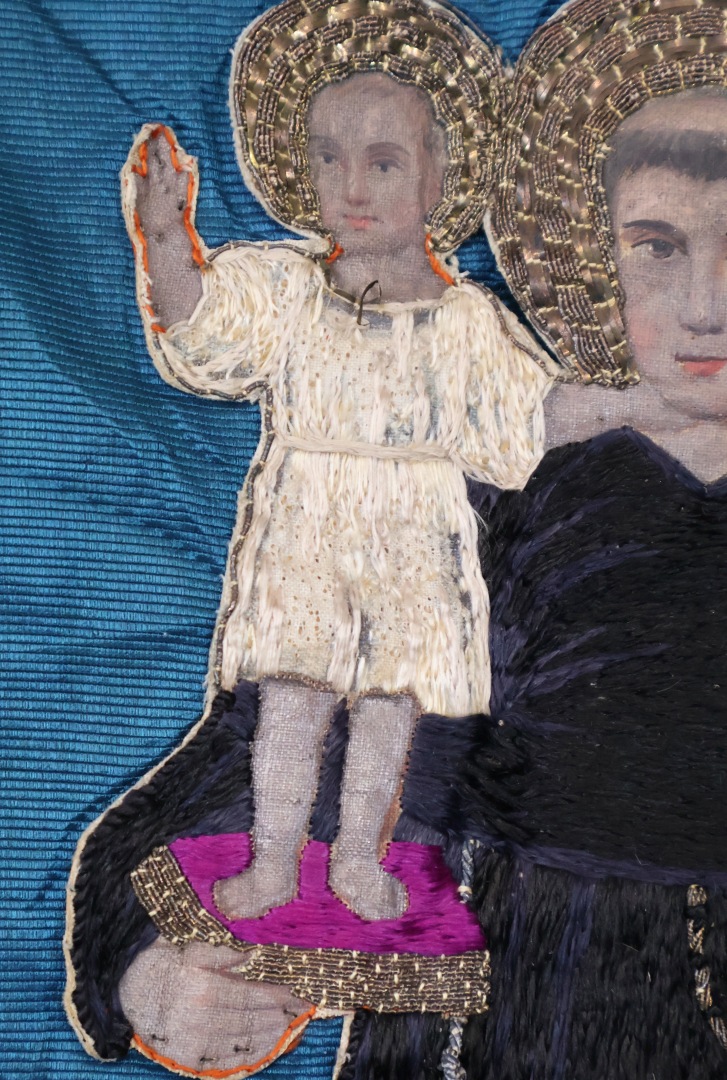
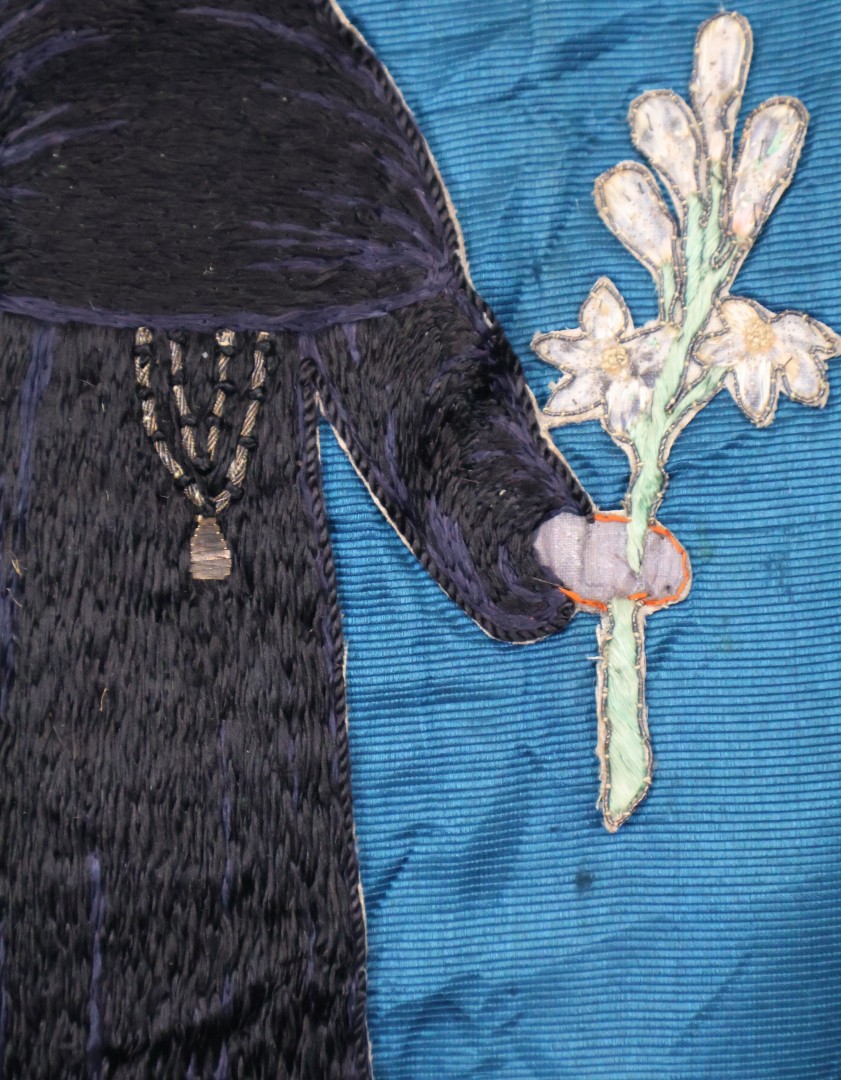
The central figure is Saint Anthony of Padua (Sant’Antonio di Padova), identifiable by several traditional attributes:
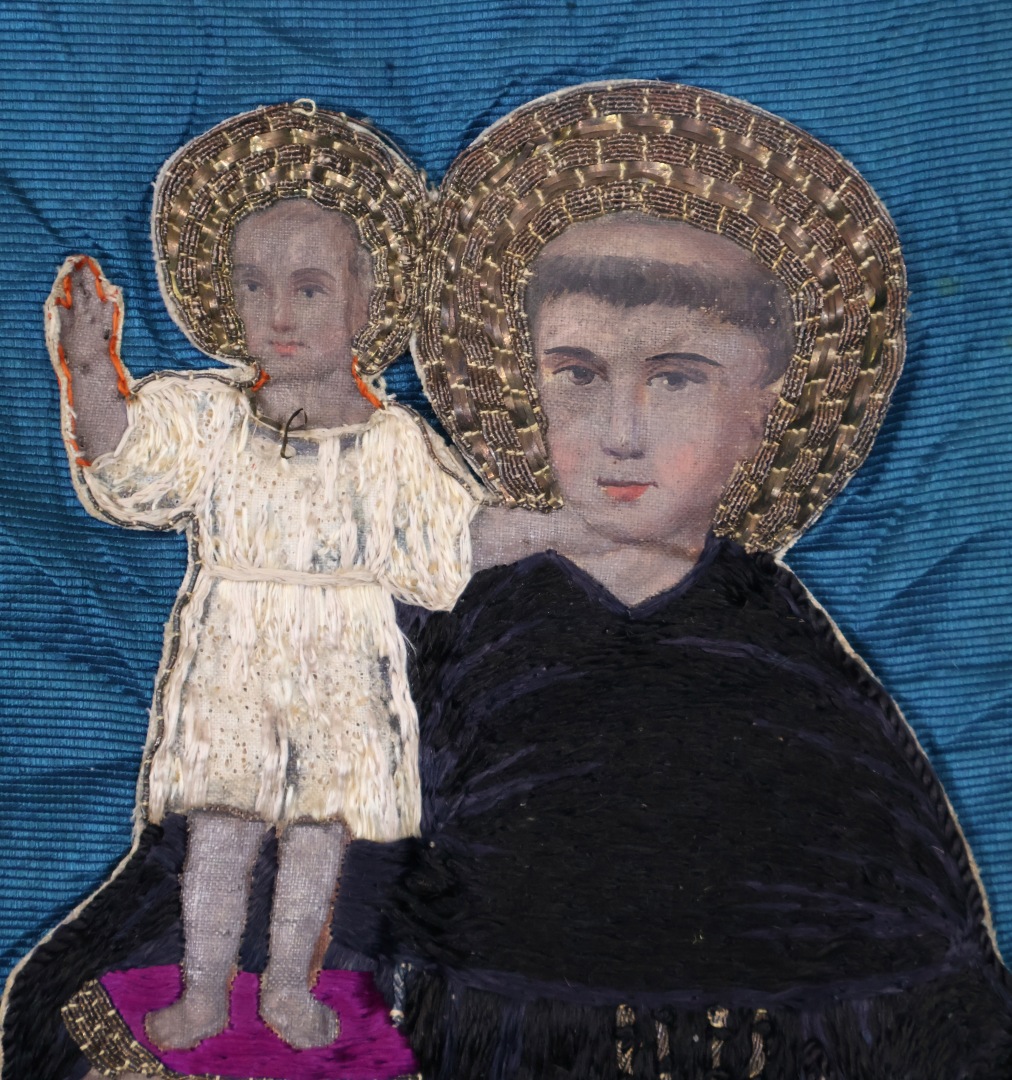
- The Christ Child standing on the saint’s arm.
- A stem of white lilies, symbolising purity.
- A Franciscan habit with cord and knotted belt.
- Haloes embroidered in metallic thread around both heads.
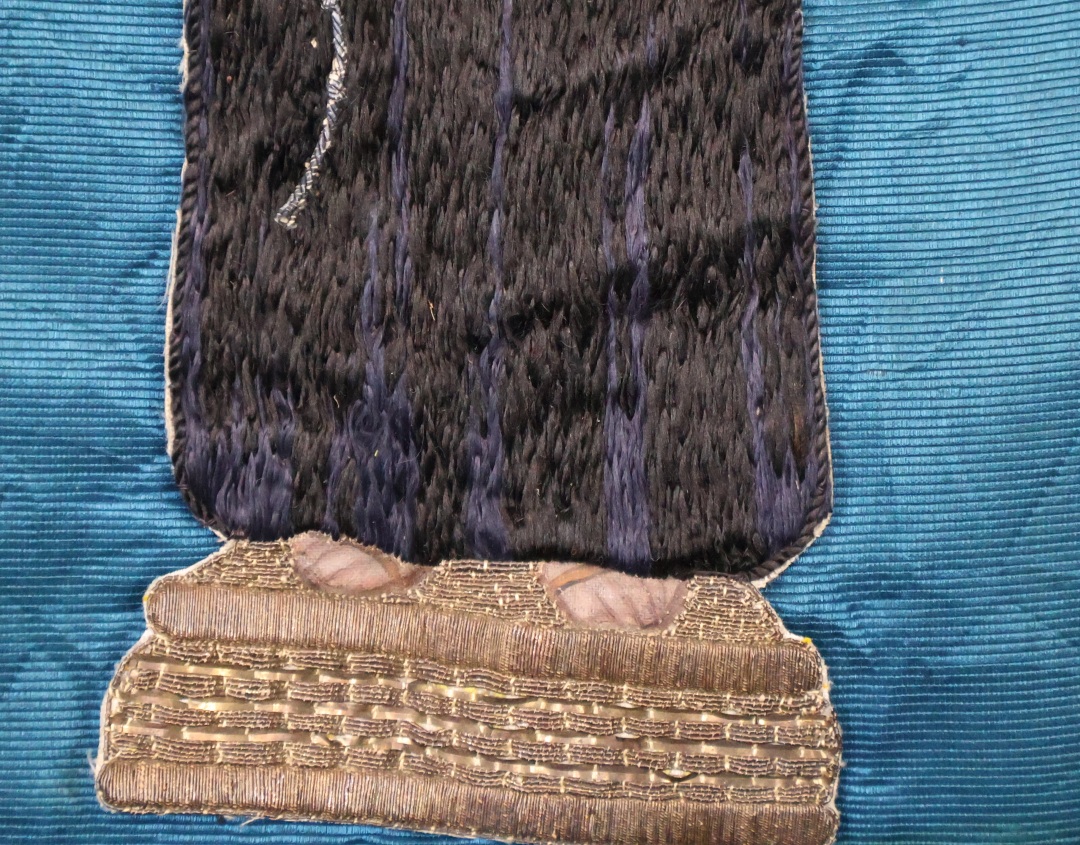
The figure is executed as an appliqué and embroidered work, combining painted faces with textile elements, a technique often seen in Italian religious banners and confraternity textiles of the late 19th century.
The inscription
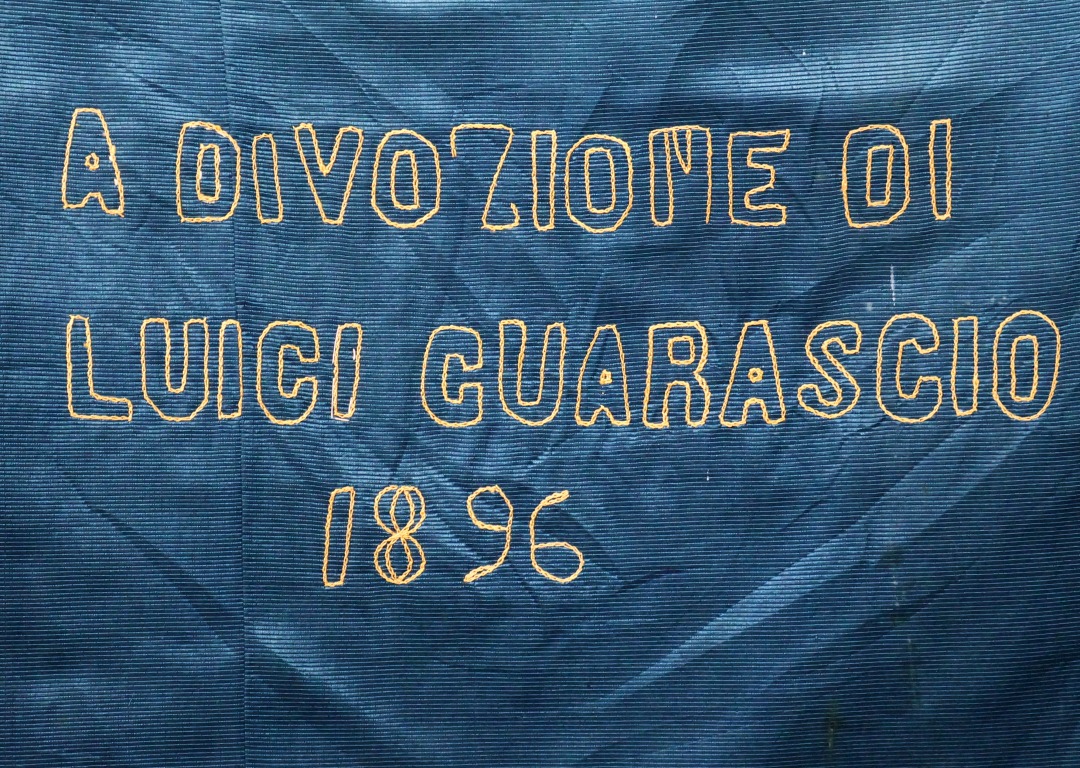
The embroidered text reads:
“A DIVOZIONE DI LUIGI GUARASCIO 1896”
This translates as:
“In devotion of Luigi Guarascio, 1896” or “Dedicated through the devotion of Luigi Guarascio, 1896.”
This indicates that Luigi Guarascio was most likely the donor, commissioner, or sponsor of the banner.
Probable origin
Several features point to southern Italy, especially Calabria or Basilicata:
- The surname Guarascio is strongly associated with Calabria, particularly the province of Cosenza.
- The banner’s simple folk-art style and personal donation inscription align closely with village religious traditions in southern Italy.
- The use of blue silk or satin ground fabric with isolated saint imagery is characteristic of many locally produced devotional banners from the late 19th century.


