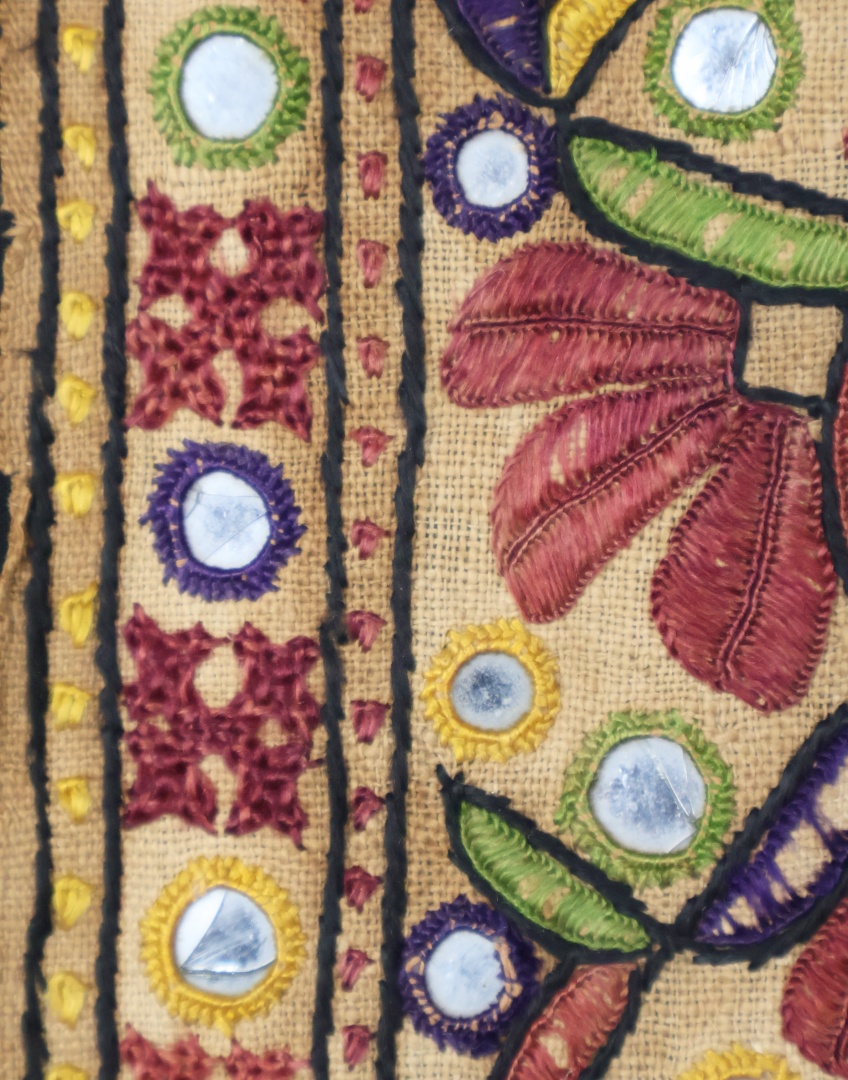

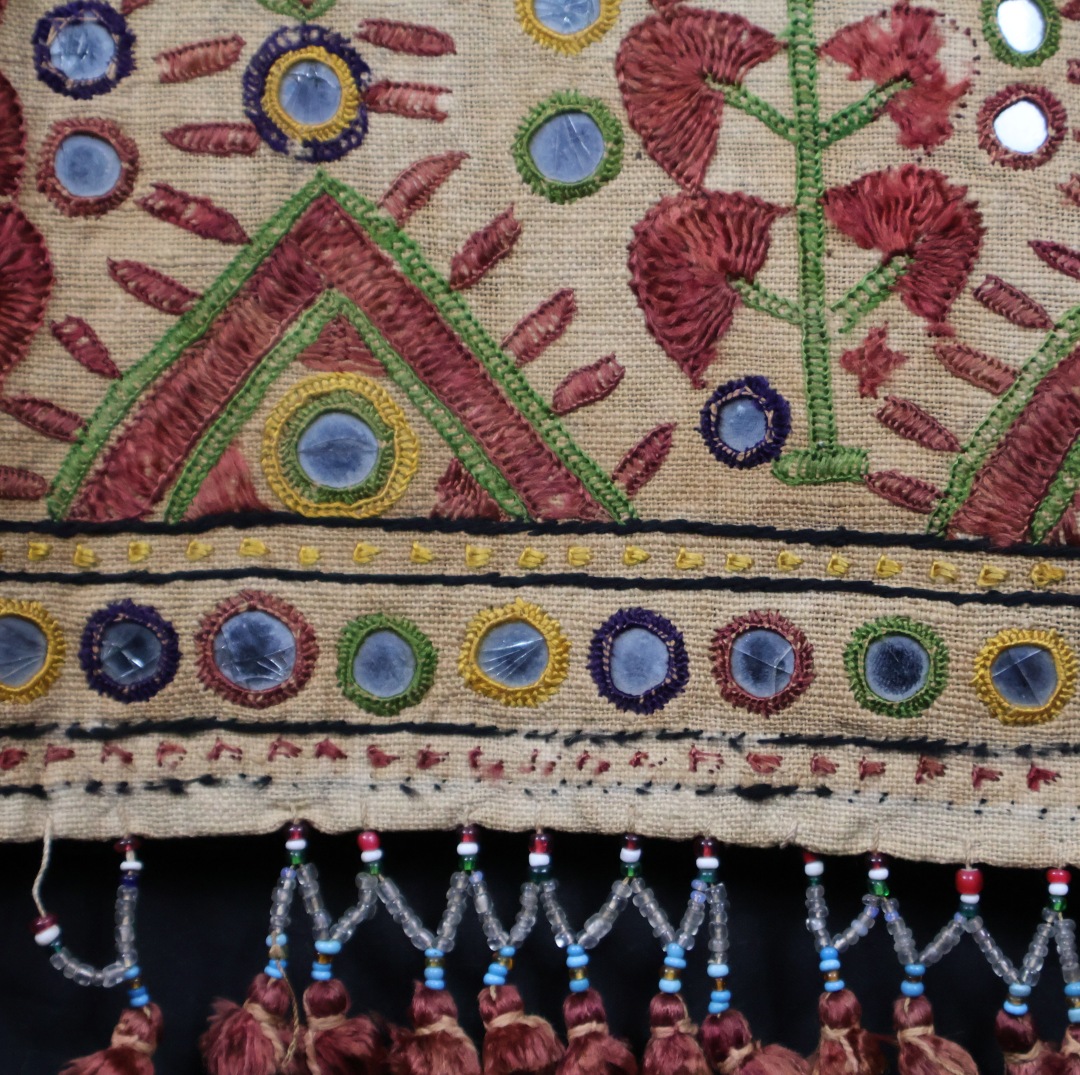
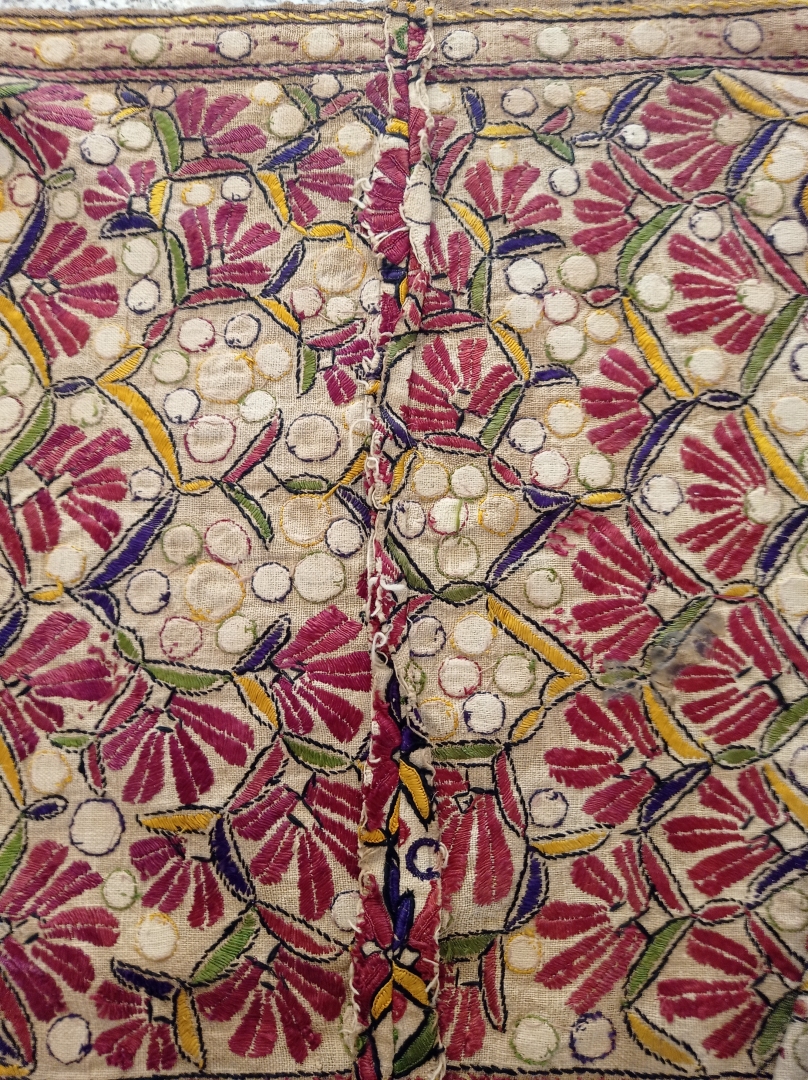
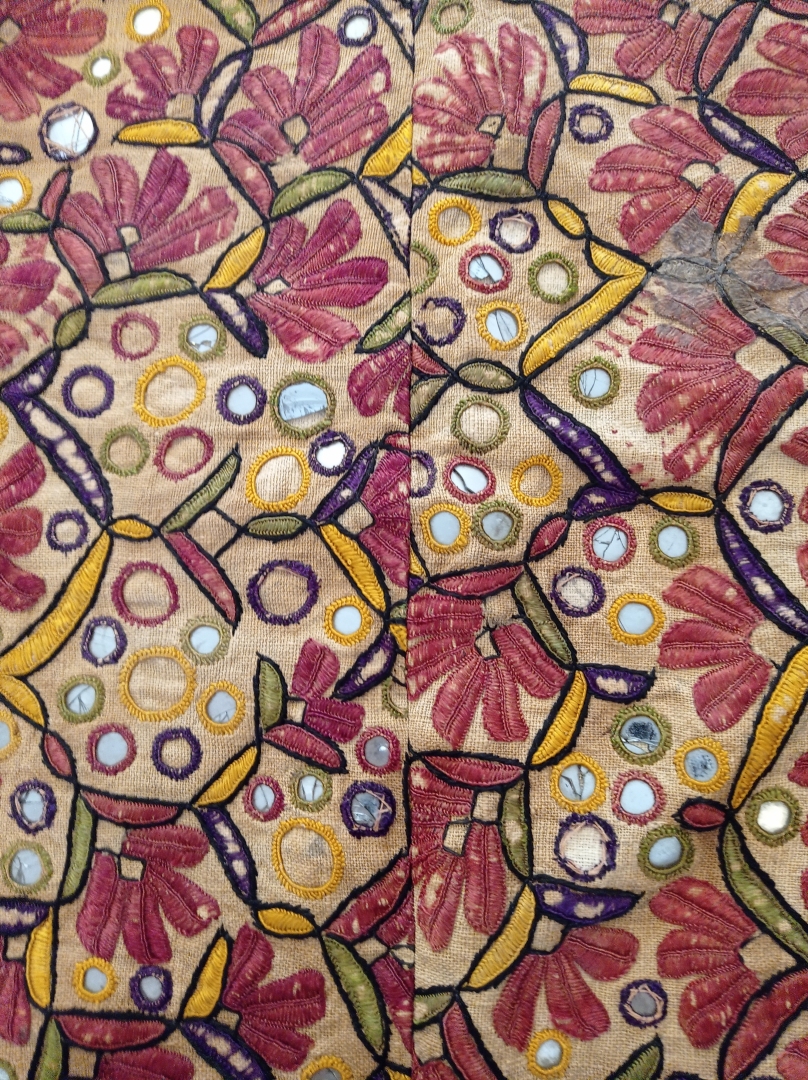
Description
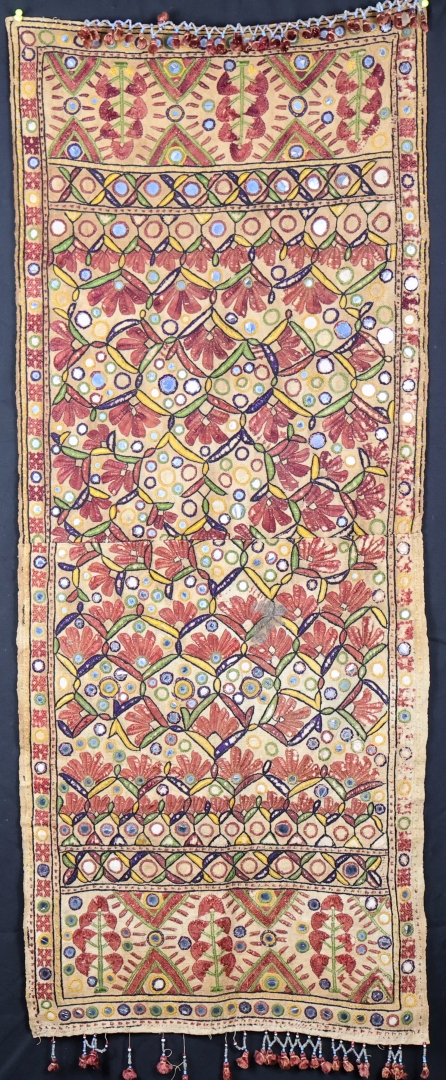
Sindhi embroidery is one of South Asia’s most symbolically rich and technically diverse textile traditions — a fusion of mirrorwork, geometric cosmology, desert‑born aesthetics, and caste‑specific identity. Its defining feature is shisha (mirror) work, but the tradition encompasses dozens of stitches, motifs, and regional styles across Sindh’s deserts and river plains.
Sindhi embroidery (Sindhi: سنڌي ٿرت) is practiced across the arid province of Sindh in southern Pakistan. It is historically tied to women’s domestic artistry: girls prepare embroidered trousseaux for marriage, creating garments, hangings, quilts, and even animal trappings to demonstrate skill and readiness for adult life.
Key characteristics:
-
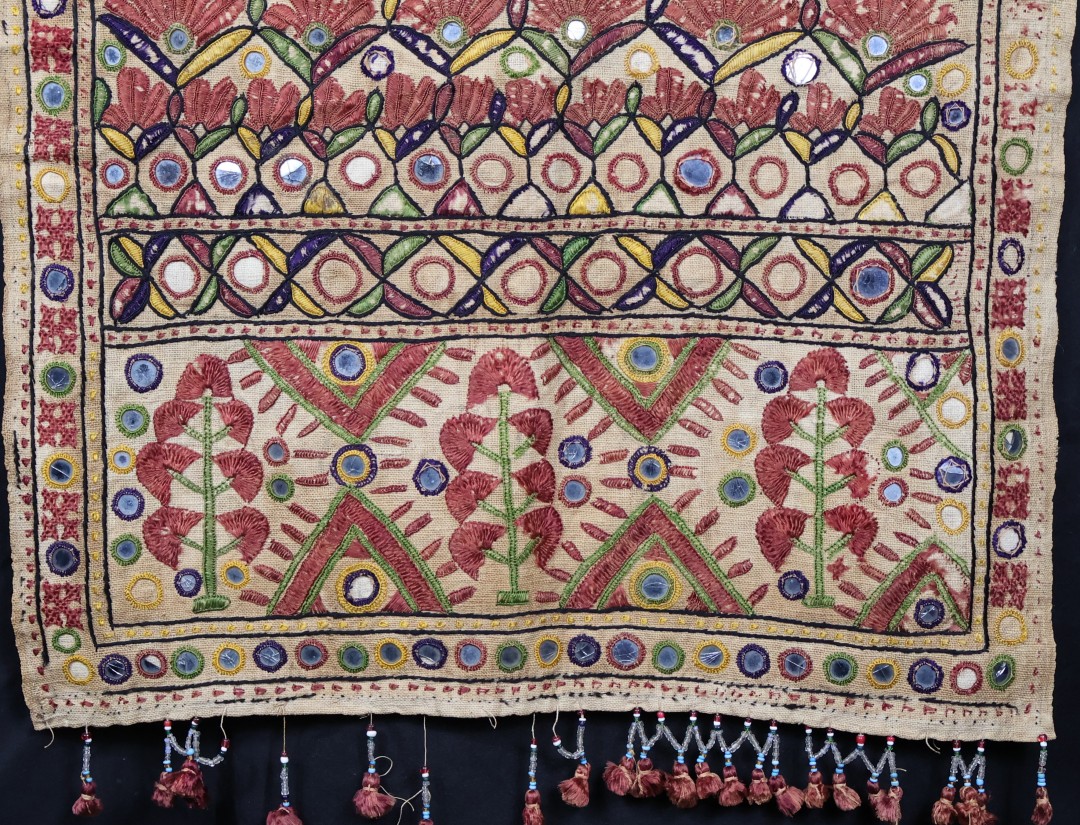
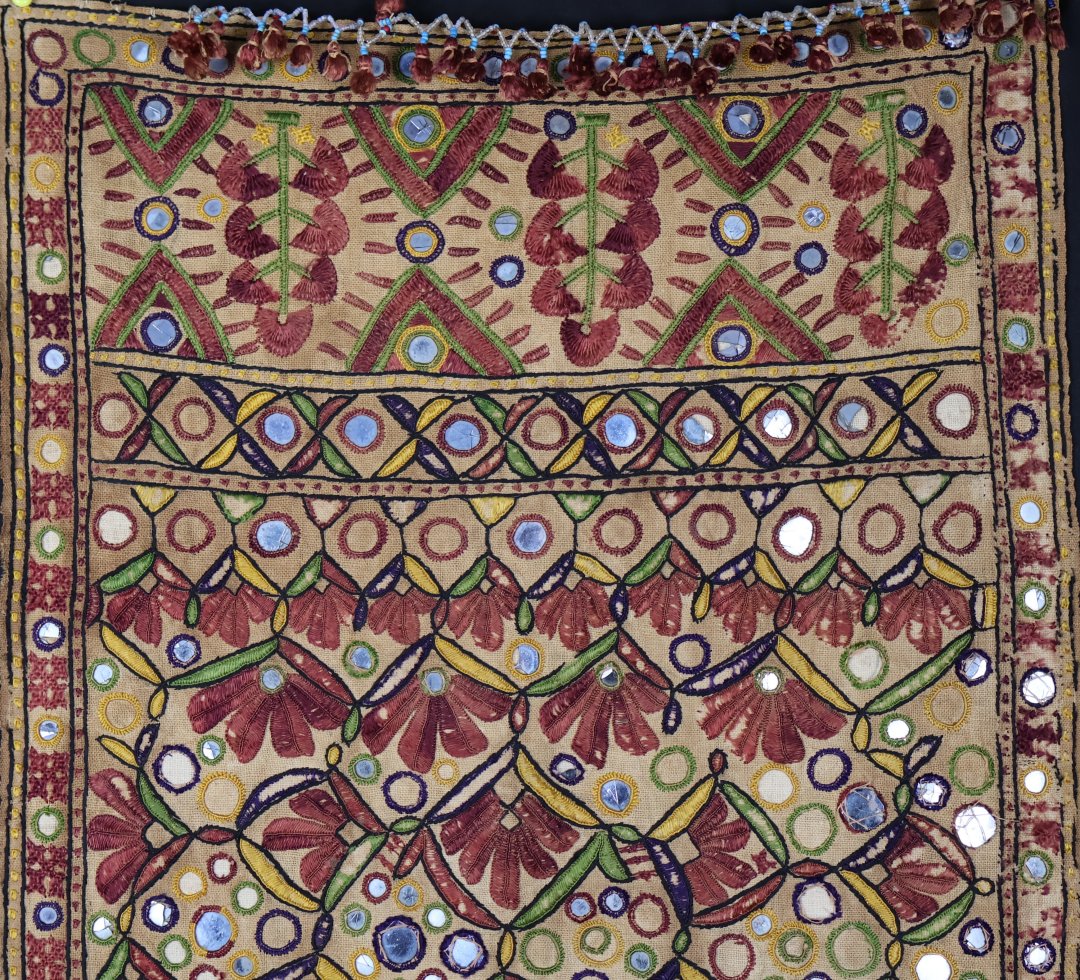
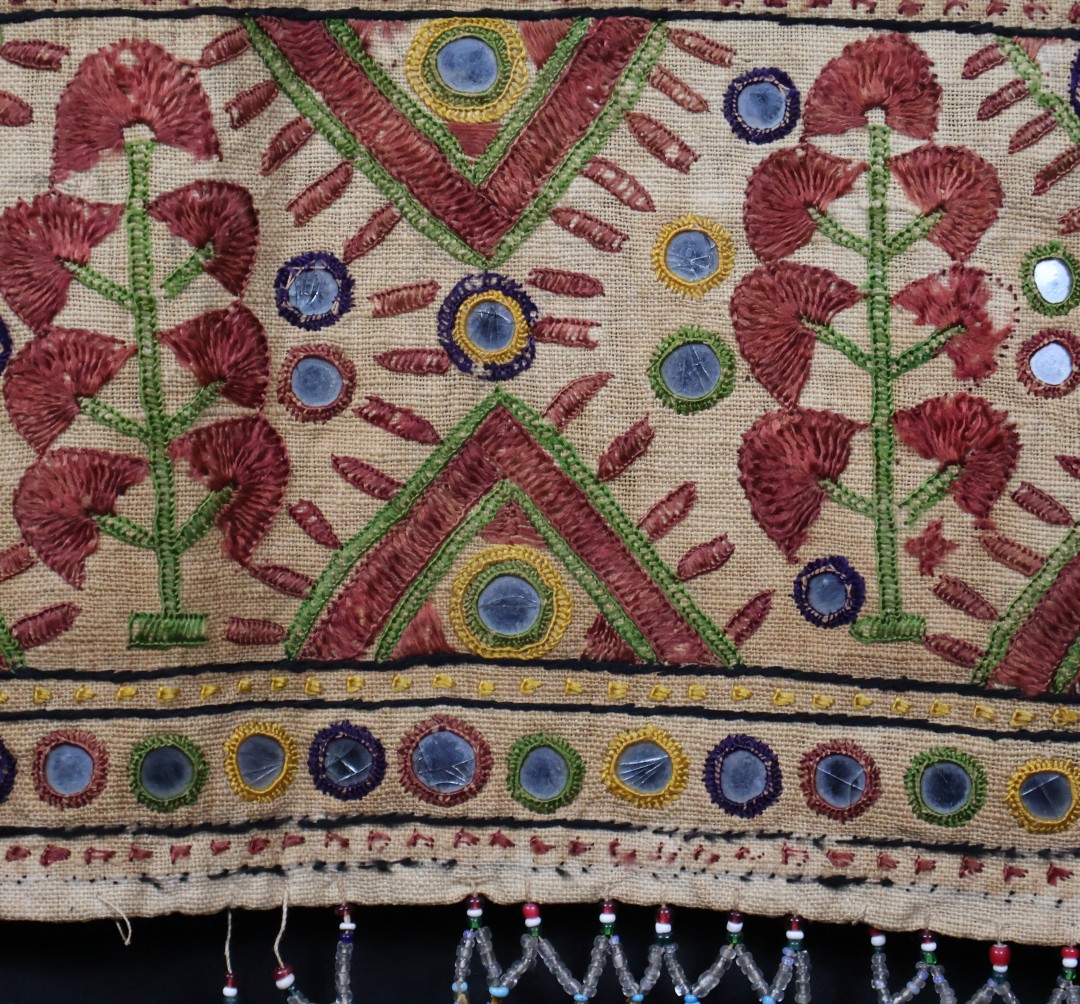
Mirrorwork (Shishe jo kam / Kawan jo kam) — tiny mirrors secured with buttonhole stitches; believed to reflect blessings and ward off evil.
-
Vibrant colour palettes — brilliant reds, yellows, indigos, and whites.
-
Caste‑specific motifs — embroidery signals village, caste, and marital status.
-
Multitechnique construction — couching, appliqué, metal thread (zardozi), beadwork, and shell embellishment.
Sindhi embroidery is not a single technique but a constellation of regional practices:
-
Shisha work — the most iconic; mirrors stitched into geometric grids.
-
Couching — thick threads laid on the surface and stitched down.
-
Zardozi — metallic gold/silver thread embroidery, historically linked to Mughal influence.
-
Appliqué — contrasting fabric pieces applied to create bold motifs.
-
-
-
-
Buttonhole, herringbone, chain stitch — used to secure mirrors and outline motifs.
Sindh contains several embroidery micro‑traditions:
-
Tharparkar & Nagarparkar (Desert Sindh) Known for profuse mirrorwork and bold geometric patterns. These regions produce some of the most elaborate dowry textiles.
-
Larr, Kohistan, Lasbela Distinctive motifs and colour schemes; embroidery acts as a badge of cultural identity.
-
Hyderabad Famous for wedding cholo (women’s tunics) with dense mirrorwork and silk thread detailing.
-
Thano Bula Khan Strong traditions tied to ostentatious marriage display among merchants
Sindhi embroidery is deeply symbolic — each motif carries meaning:
-
Geometric patterns — harmony, cosmic order, balance.
-
Floral motifs — fertility, abundance, connection to nature.
-
Stars & mirrors — protection, reflection of divine light.
-
Amuletic shapes — spiritual safeguarding for the wearer.
-
Animal motifs — often linked to pastoral life and desert ecology.
These motifs are not merely decorative; they encode stories, identity, and spiritual worldview.
-
-
-


