
Description
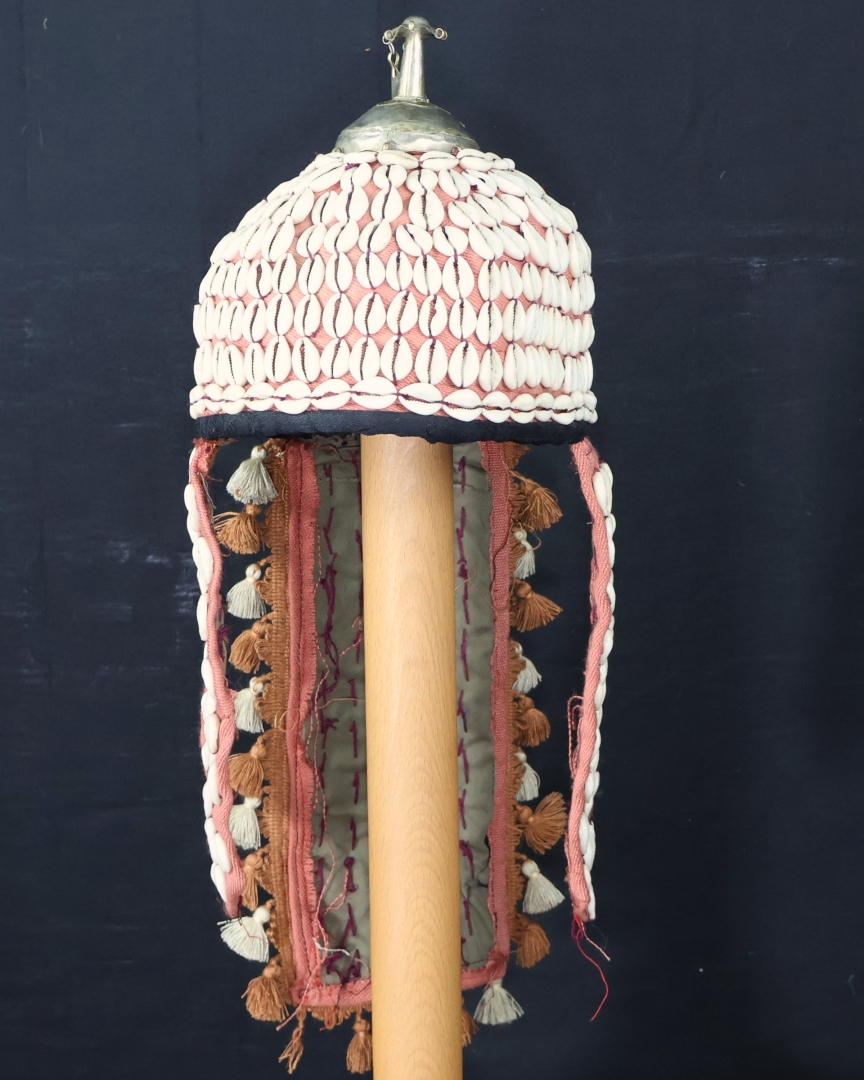
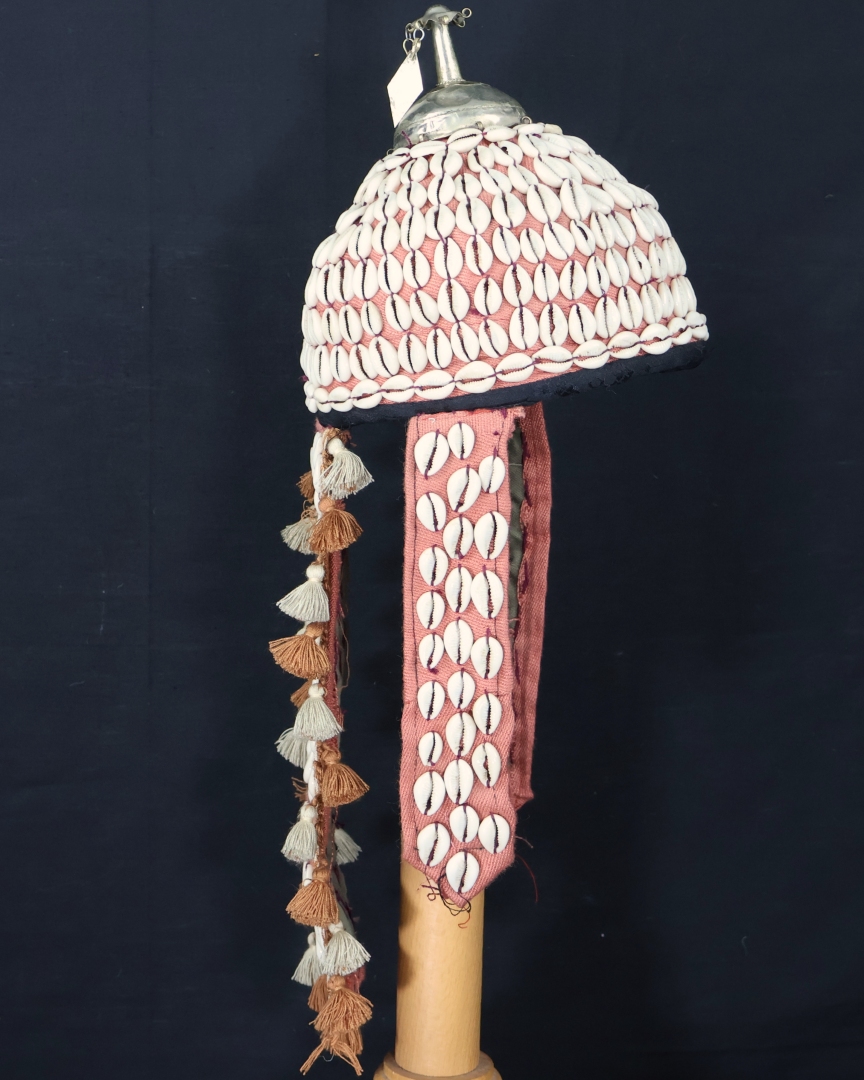
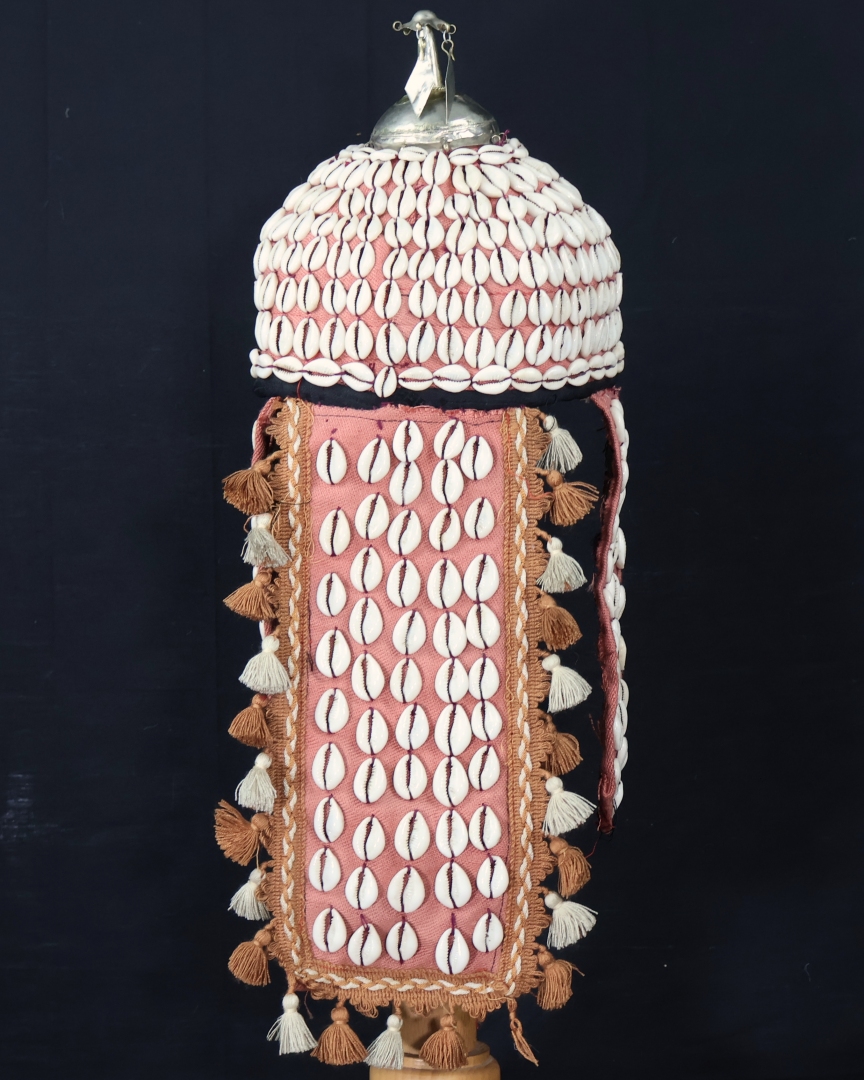
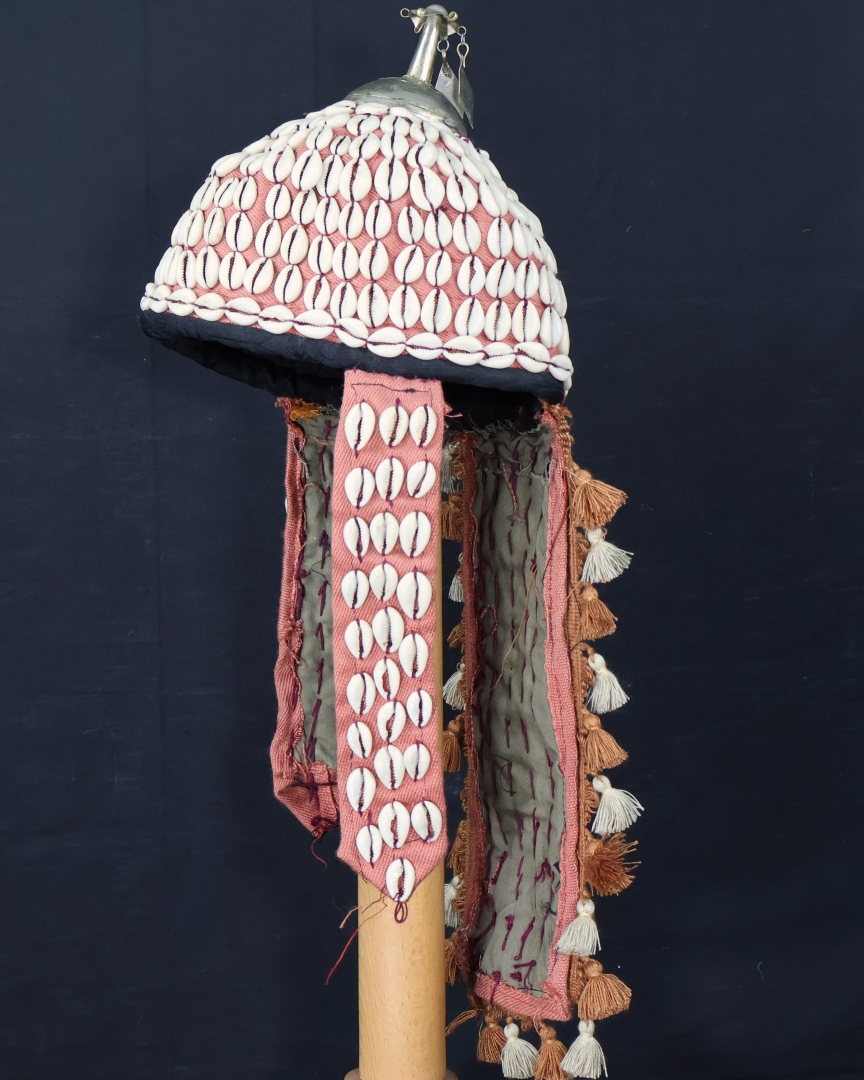
Turkman wedding headdress
A Turkmen women’s headdress with cowrie shells is one of the most symbolically charged elements of Turkmen female adornment. Cowries appear across Central Asia, but in Turkmen material culture they carry a particularly strong protective, fertility‑linked, and status‑signalling meaning. Based on the search results, these headdresses are typically ceremonial, often bridal, and combine cowrie shells, metal plaques, tassels, and textile appliqué.
The cowrie‑adorned Turkmen headdress is usually a dome‑shaped or cap‑like crown worn by young women, especially brides. It is:
-
Handmade, often with a textile base (felt, cotton, or wool)
-
Covered in cowrie shells, sometimes densely layered
-
Decorated with metal plates, pendants, buttons, beads, and tassels
-
Often featuring bright embroidery in red, yellow, white, and black
-
Sometimes topped with a raised central crown or plume
Cowrie‑shell headdresses appear among several Turkmen tribes (Teke, Yomut, Ersari, Saryk), though the densely cowrie‑covered dome is most often associated with nomadic or semi‑nomadic groups and border regions where Turkmen, Uzbek, and Afghan communities interacted.
Cowries historically symbolised:
-
Protection (amuletic power against the evil eye)
-
Fertility and female generative power
-
Wealth and status, since cowries were once a form of currency
-
Transition into marriage, especially when combined with silver pendants
These meanings align with the broader Turkmen aesthetic, where geometric motifs, amulets, and natural symbols dominate clothing and jewellery.
-