
Description
What Kashmiri Crewelwork Is
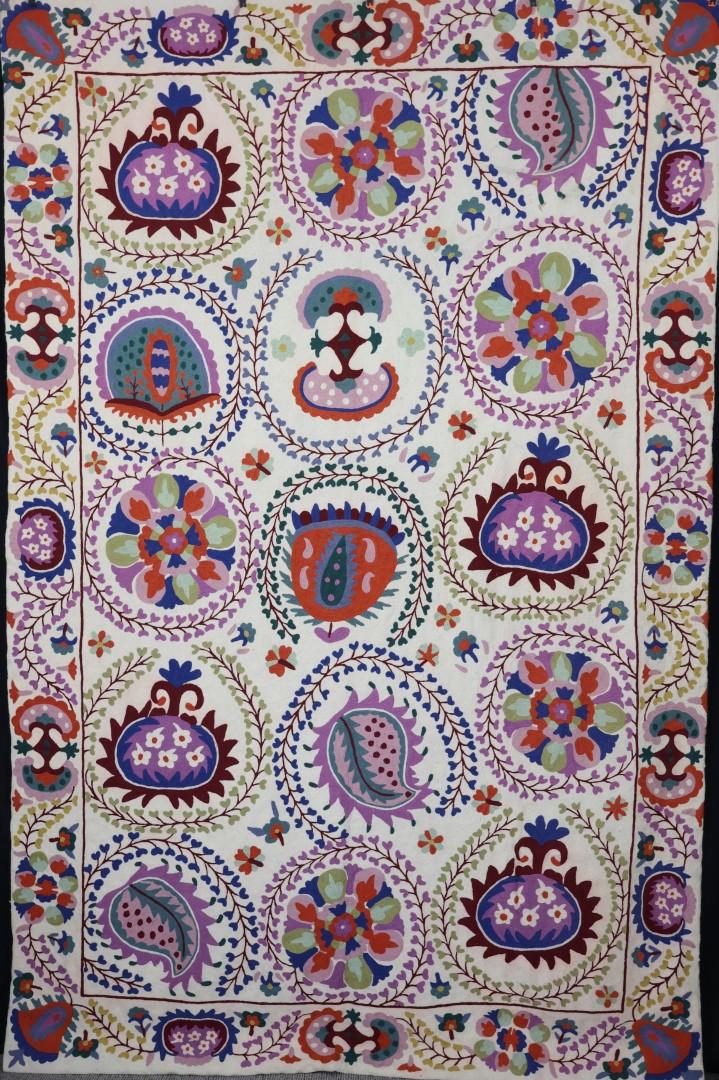
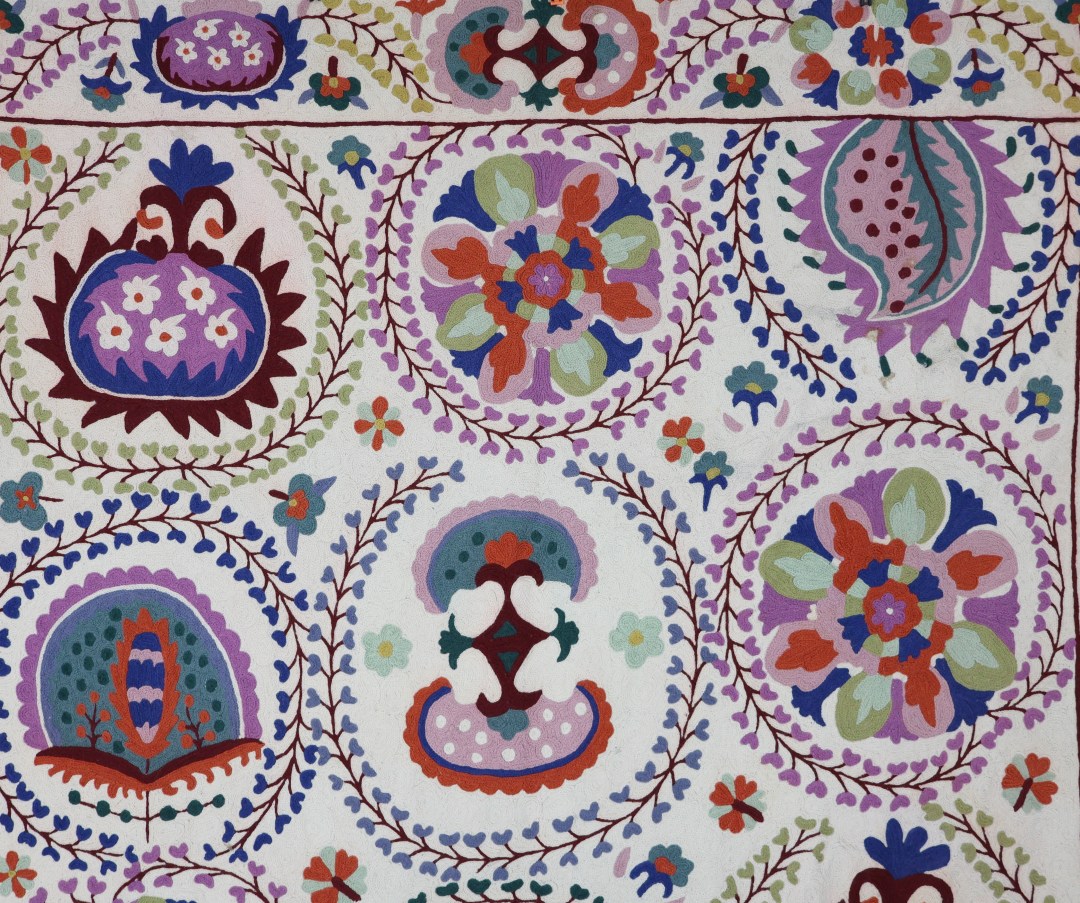
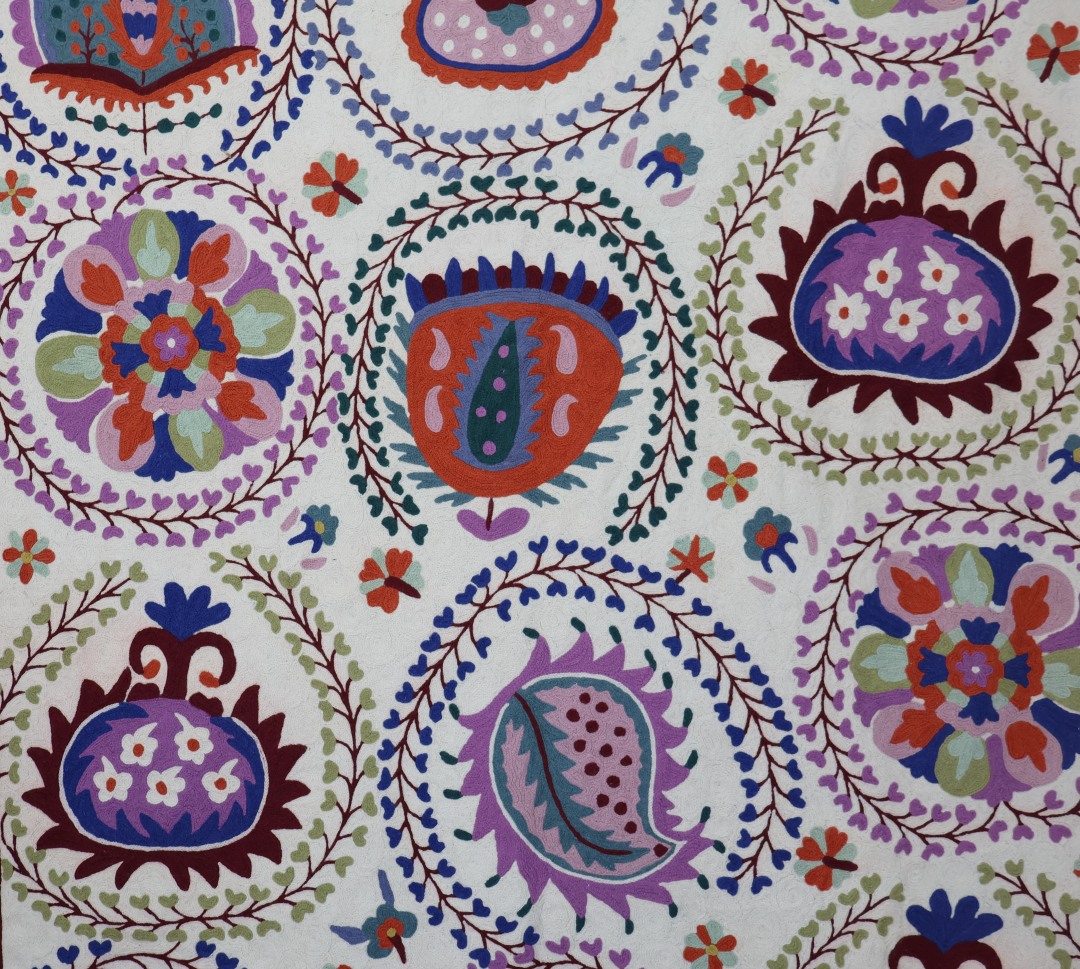
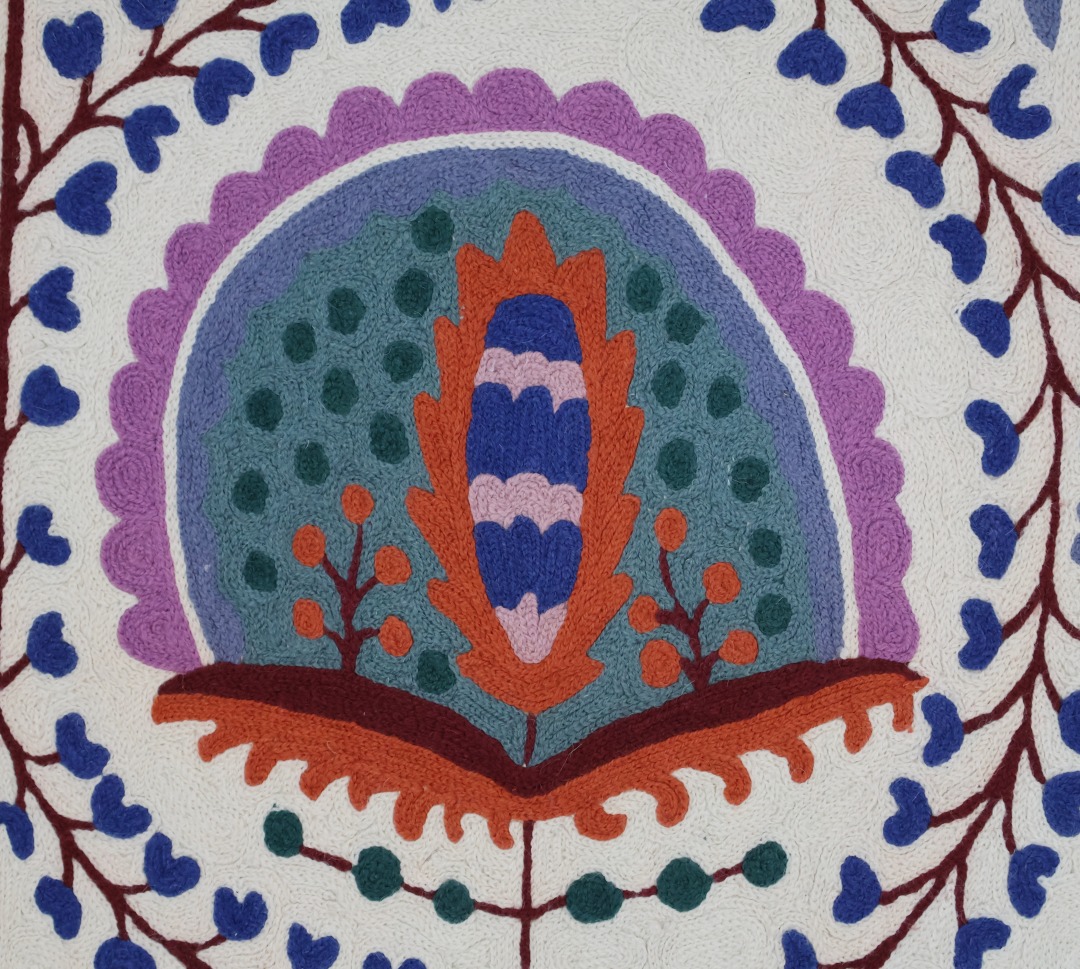
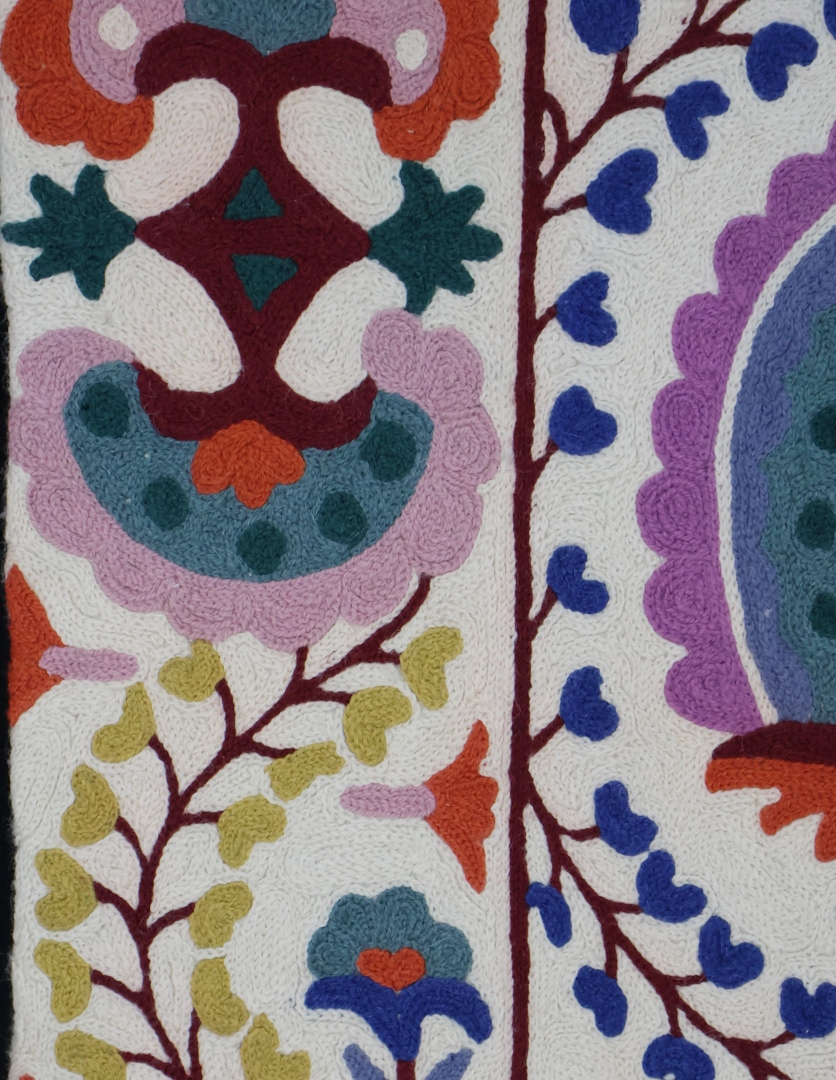
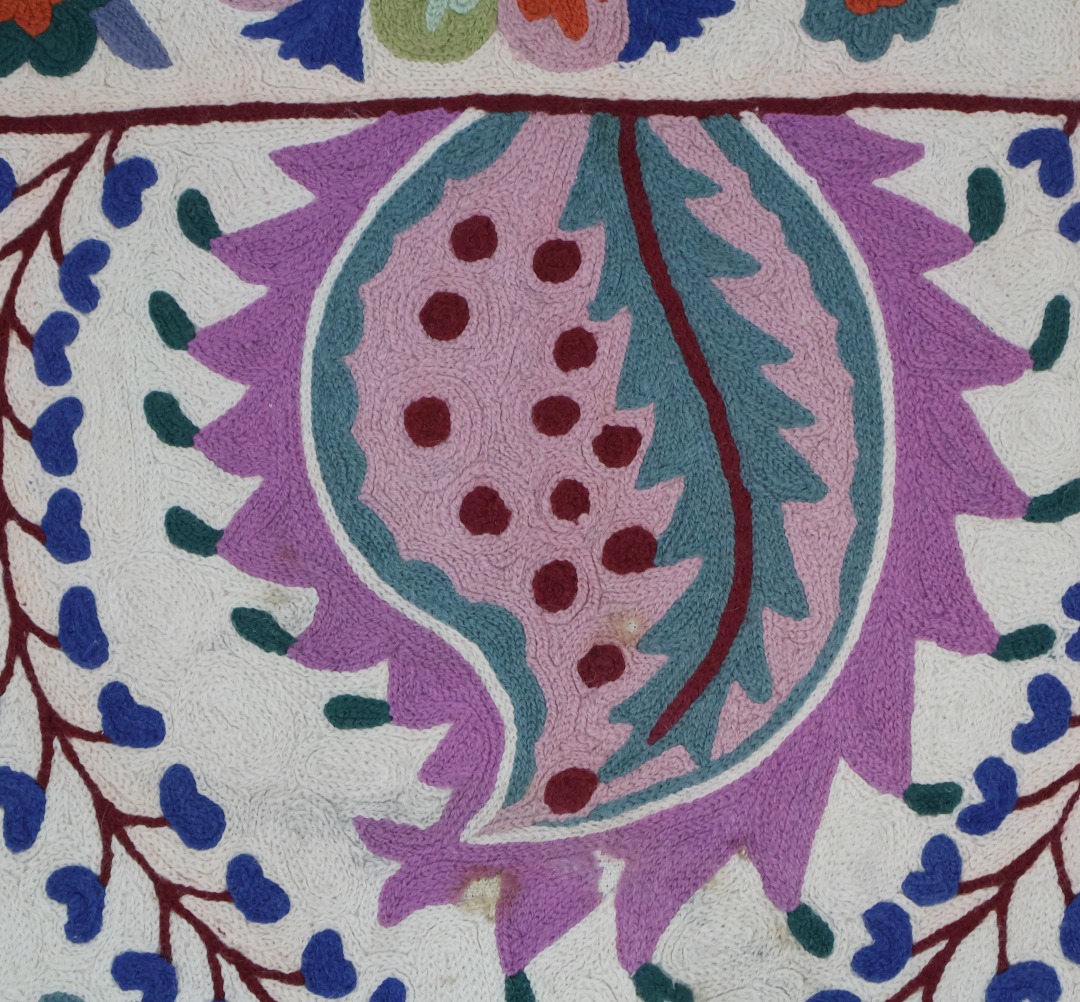
Kashmiri crewelwork—locally called zālakdozi—is a centuries‑old embroidery tradition from the Kashmir Valley, worked with wool yarn on a sturdy cotton or linen base. It’s known for its bold, flowing motifs, rich colours, and the distinctive texture created by the aari (hook) needle.
Key Characteristics
Materials
• Wool yarn (1‑ply or 2‑ply):
• 1‑ply: softer, cheaper, less durable
• 2‑ply: denser, more durable, finer finish
• Base fabrics: dusooti cotton, linen, or heavy cotton twill.
Tools
• Aari hook needle (similar to a tambour hook)
• Tracing paper and ink printing for transferring designs
Stitches
• Chain stitch
• Stem stitch
• Padded satin stitch
Motifs & Aesthetic
Kashmiri crewelwork blends Persian, Central Asian, and local Kashmiri influences. Common motifs include:
• Tree of Life
• Chinar leaves
• Jacobean florals (a legacy of global trade routes)
• Maple leaves
Designs are typically large, flowing, and rhythmic—perfect for home textiles like curtains, cushions, and wall hangings.