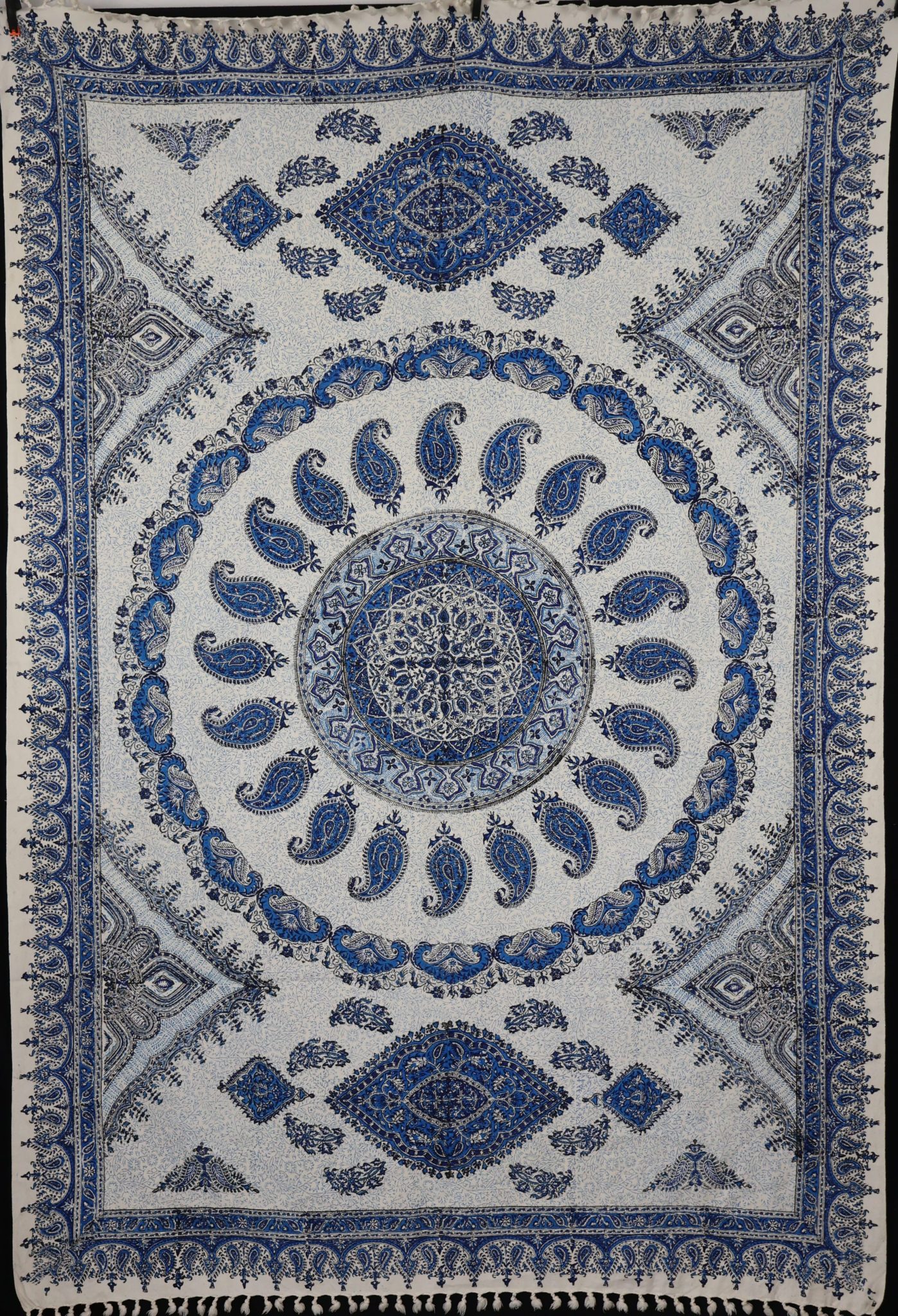
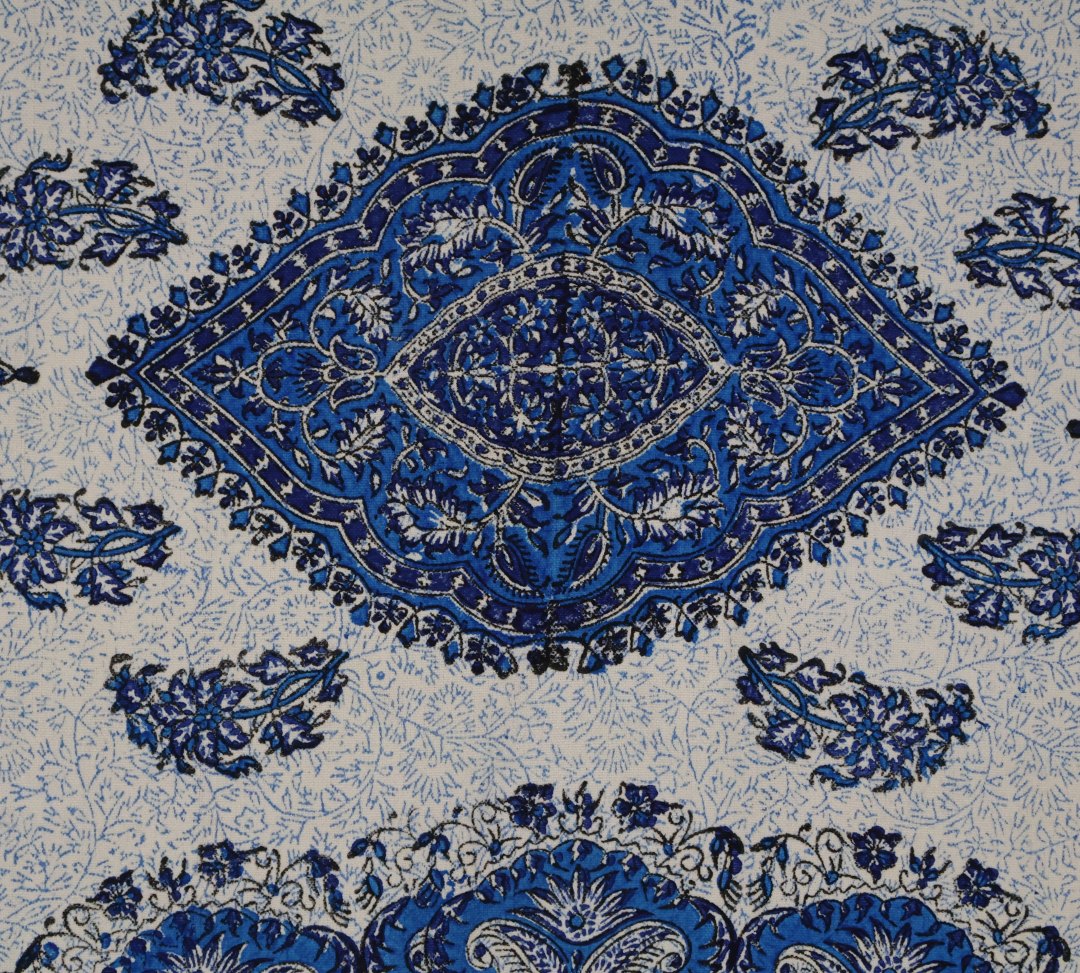
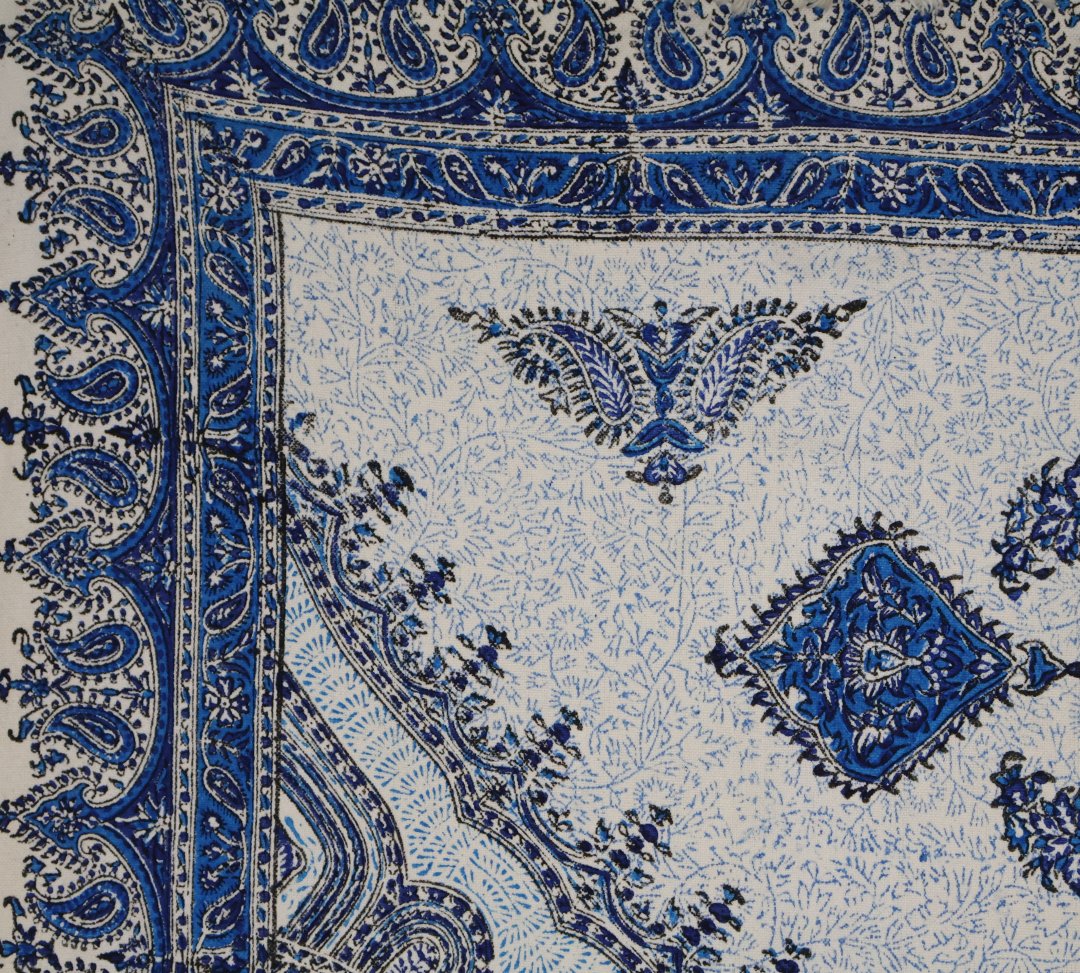
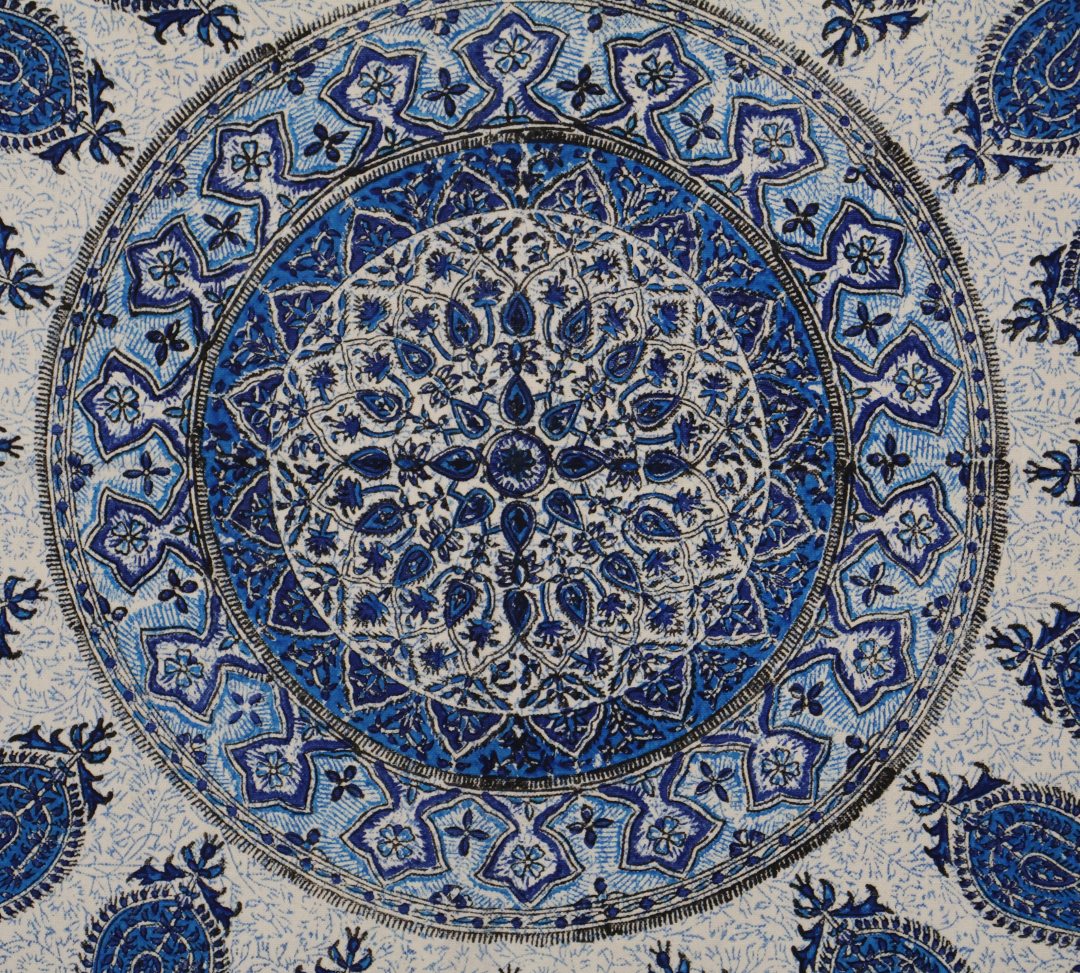
Description
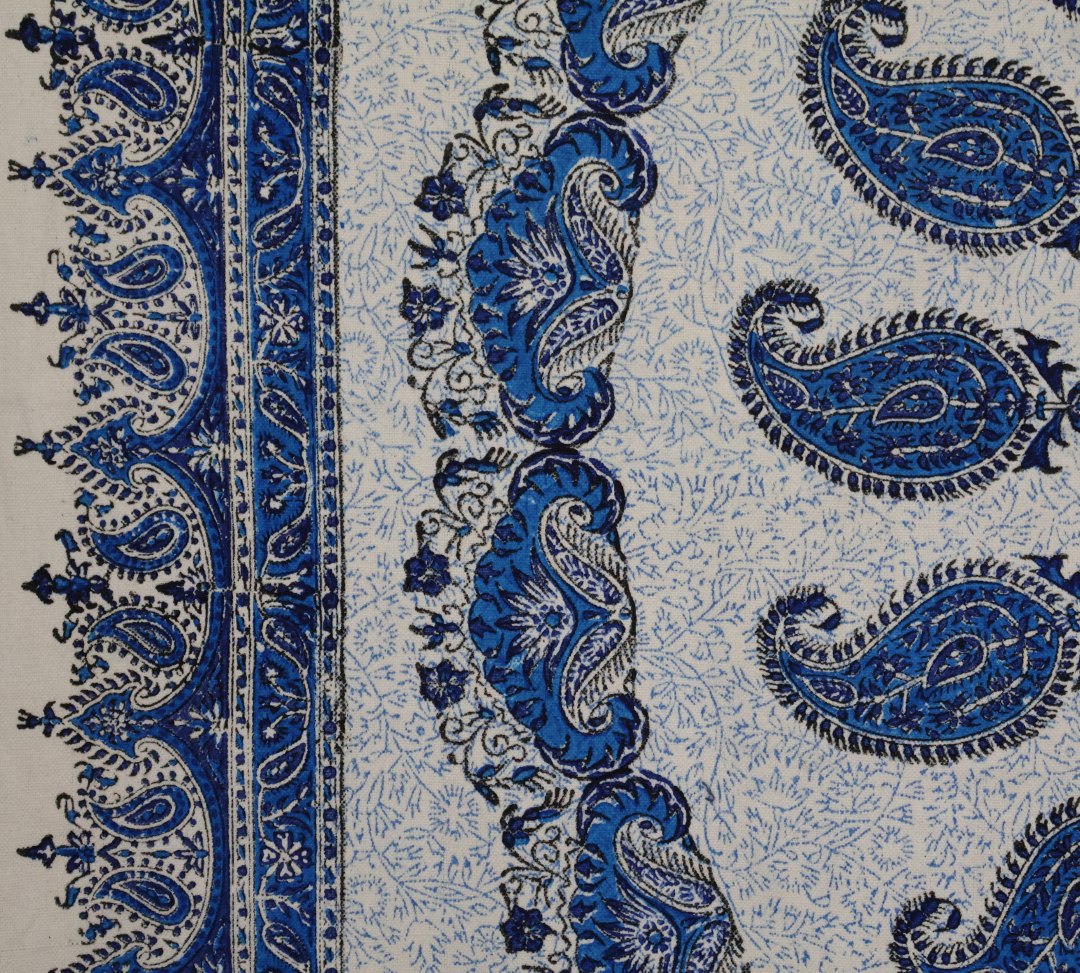
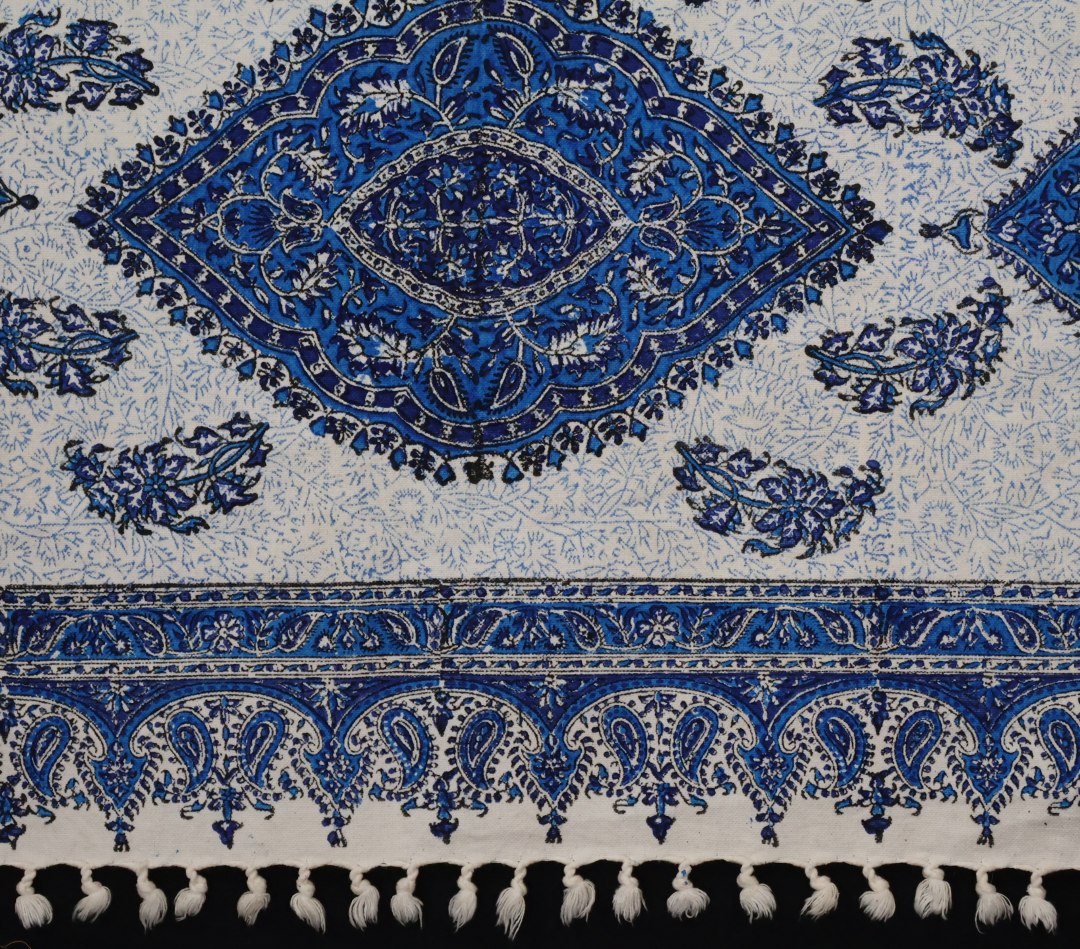
Persian kalamkari—known in Iran as qalamkar—is a centuries‑old textile art from Isfahan, famous for its hand‑carved woodblock prints, natural dyes, and flowing Persian motifs such as boteh (paisley), arabesques, and garden imagery. It’s one of the most iconic Iranian textile traditions and remains a living craft today.
Below is a clear, engaging guide to what makes Persian kalamkari special
A hand block‑printed cotton textile made with carved wooden stamps.
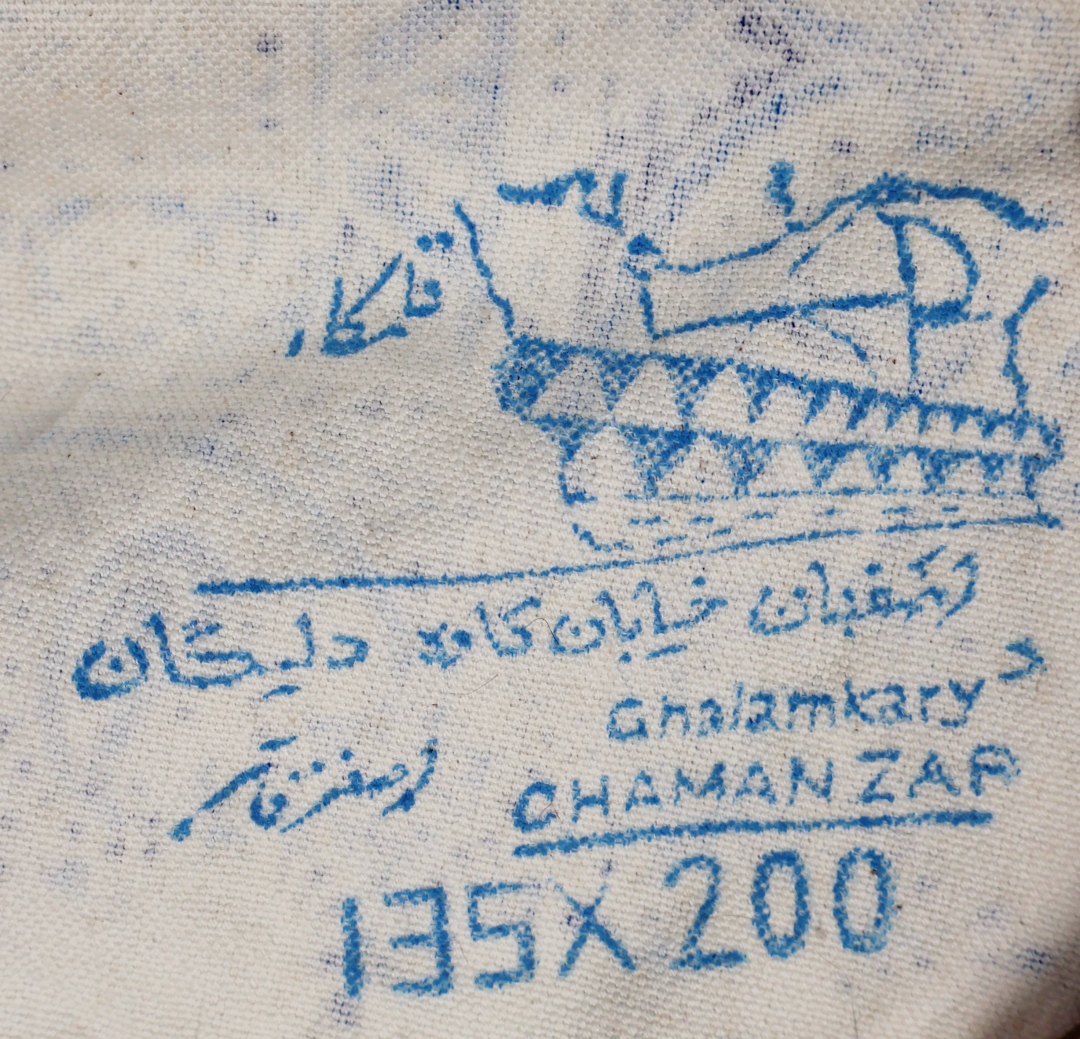
• Produced mainly in Isfahan, especially Khorzug, where over 70% of qalamkar tablecloths are made.
• Traditionally dyed with madder red, indigo blue, pomegranate rind, walnut husk, and other natural pigments.
• Used for tablecloths, bedspreads, prayer mats, wall hangings, scarves, and ceremonial banners.
A Short, Accurate History
10th–11th century origins
• Early references place qalamkar’s emergence in the Ghaznavid period.
Safavid Golden Age (17th century)
• Under Shah Abbas, qalamkari flourished with royal patronage.
• New types emerged, including Zar Qalamkari‑e (gilded prints) and Delgeh, known for intricate designs.
• Isfahan’s Qaisarieh Bazaar became the craft’s centre.
Qajar era
• Still practiced, but began to decline with the rise of machine‑printed fabrics.
Today
• Revived by artisans and cultural heritage efforts.
• Still considered one of Isfahan’s most significant handicrafts.
Process
1. Fabric preparation – cotton washed and treated with natural mordants.
2. Design creation – patterns drawn by miniature artists or transferred to blocks.
3. Block carving – pear‑wood blocks carved by specialist artisans.
4. Printing – each colour requires a separate block; alignment is a skilled craft.
5. Dyeing – immersion in natural dyes; indigo vats for blues.
6. Fixing & washing – historically washed in the Zayandeh River.
7. Final detailing – borders, outlines, and sometimes hand‑drawn accents.
This aligns with both historical and contemporary descriptions of the craft.


