
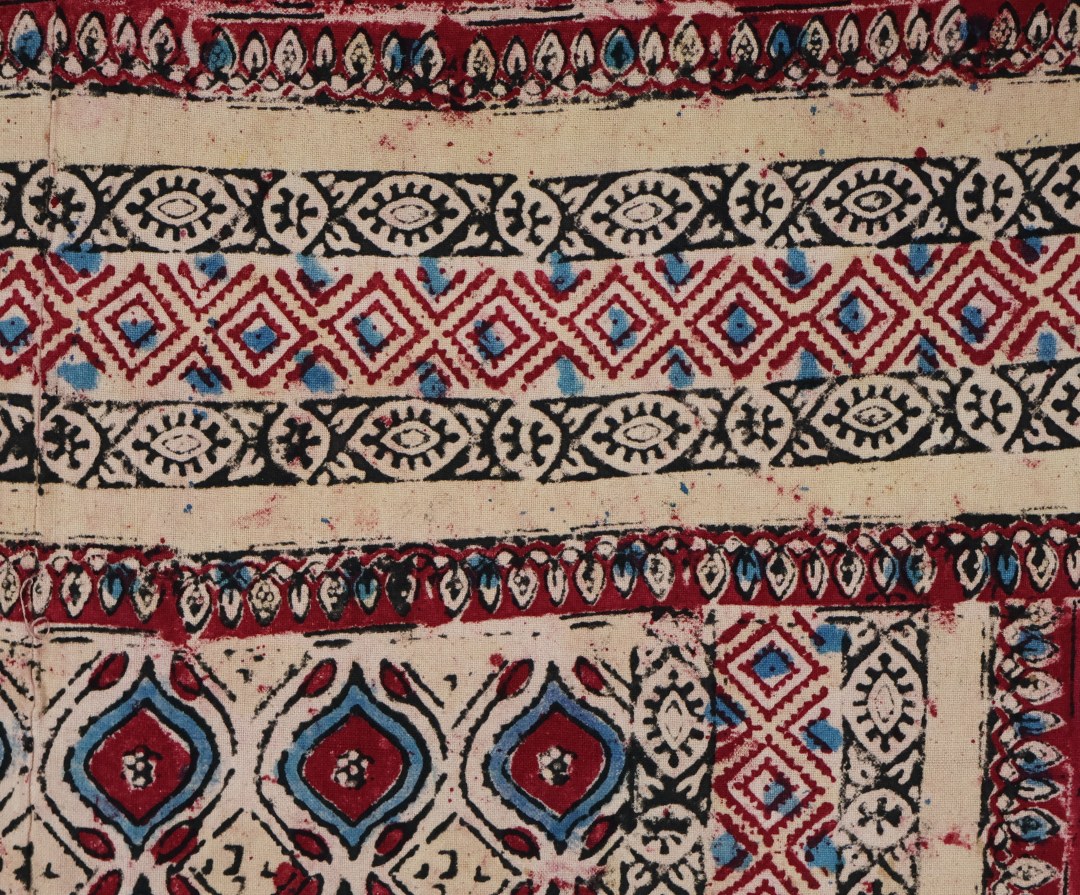


Description
Rajasthani block prints are one of India’s most iconic textile traditions—earthy, rhythmic, and deeply tied to the artisan communities of Bagru, Sanganer, Barmer, and Jaipur.
Rajasthan isn’t one style—it’s a constellation of regional traditions, each with its own personality.
1. Bagru Prints (Bagru, near Jaipur)
• Earthy, muted palette: indigo, madder red, black from iron, beige backgrounds.
• Natural dyes + Dabu mud‑resist technique.
• Bold, rustic motifs: vines, trellises, geometric repeats.
• Artisans: the Chhipa community, practising for 400+ years.
2. Sanganeri Prints (Sanganer, Jaipur)
• Fine, delicate florals—mughal‑influenced.
• Whites and pastels with crisp outlines.
• Known for precision and multi‑block layering.
3. Barmer Prints (Western Rajasthan)
• Vibrant colours: reds, yellows, deep blues.
• Abstract, folkish motifs: camels, peacocks, stylised flowers.
• Often more spontaneous and expressive.
Rajasthani block printing is slow craft—every step is tactile and deliberate.
1. Preparing the cloth
Bagru artisans soak fabric in water, cow dung, and sesame oil to bleach and soften it (Hari Sarana).
2. Carving the blocks
• Teak or sheesham wood.
• One design often needs multiple blocks:
• Rekh (outline)
• Datta (fill colours)
3. Printing
• The rhythmic thap‑thap of block to cloth.
• Perfect alignment is everything—one slip breaks the pattern.
4. Dyeing & washing
• Natural dyes interact with local water and soil, giving Bagru its signature tones.


