
Description
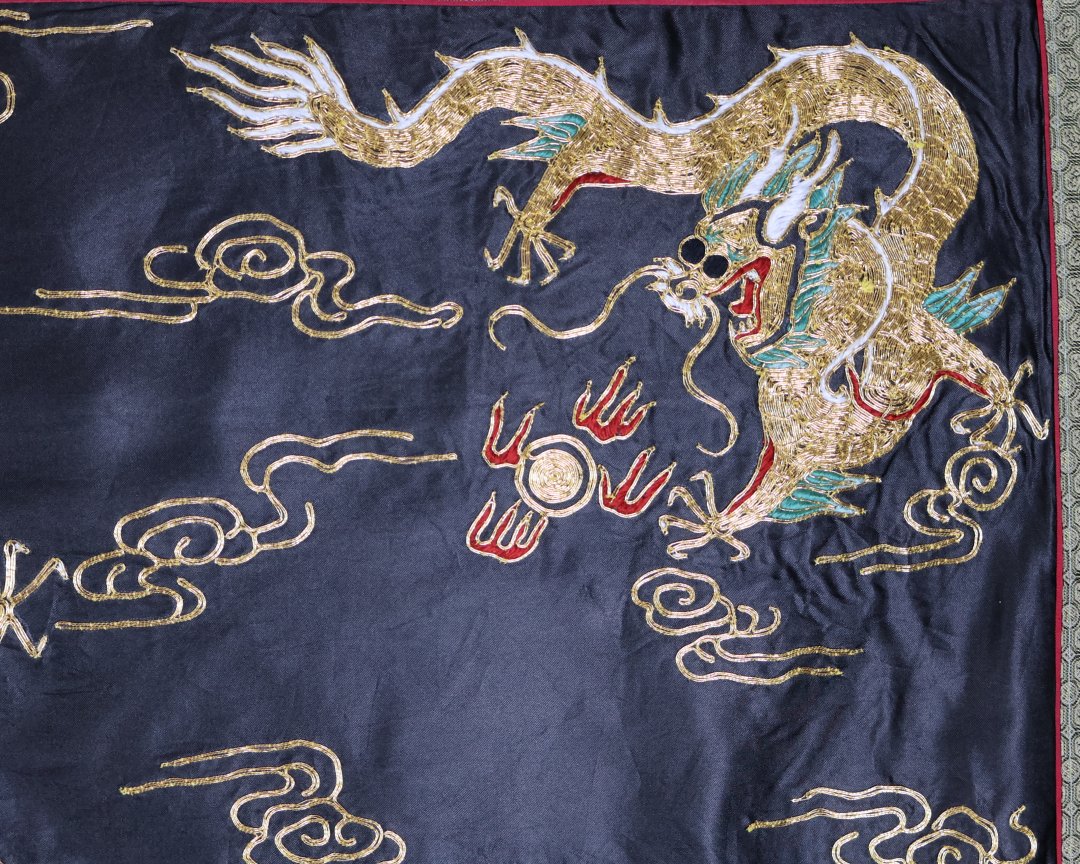
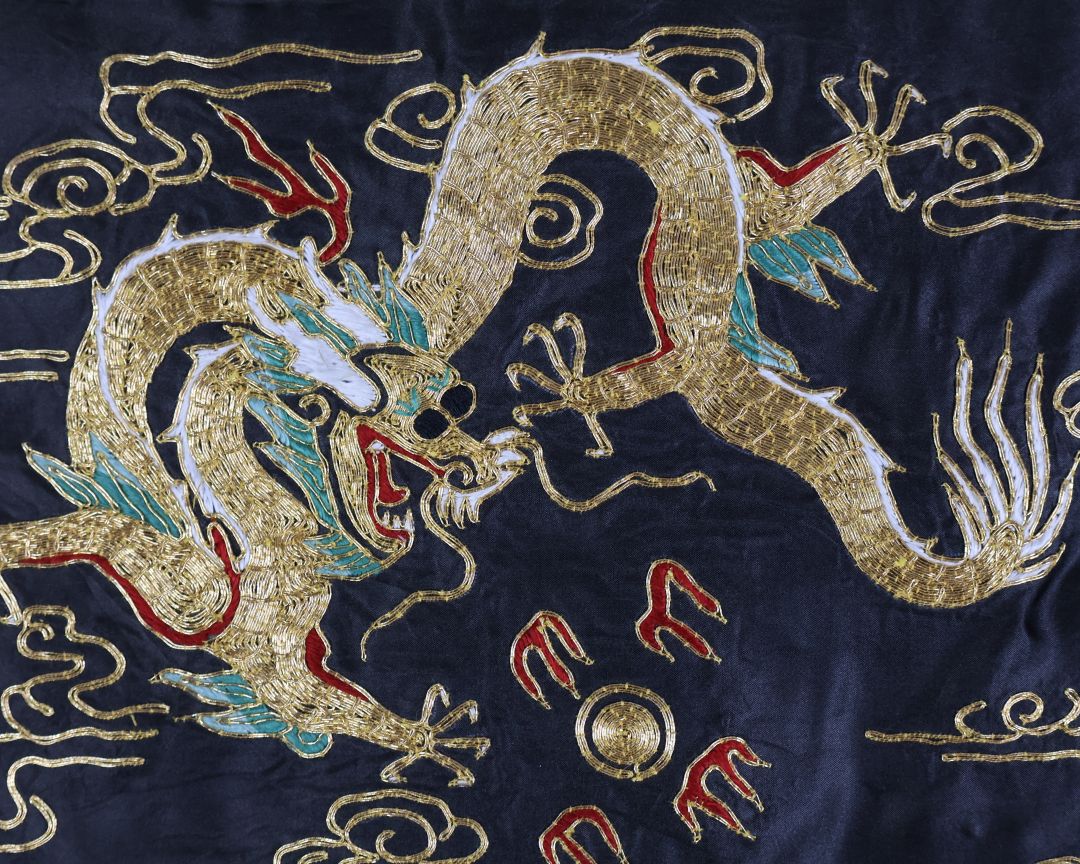
Chinese Dragon hanging
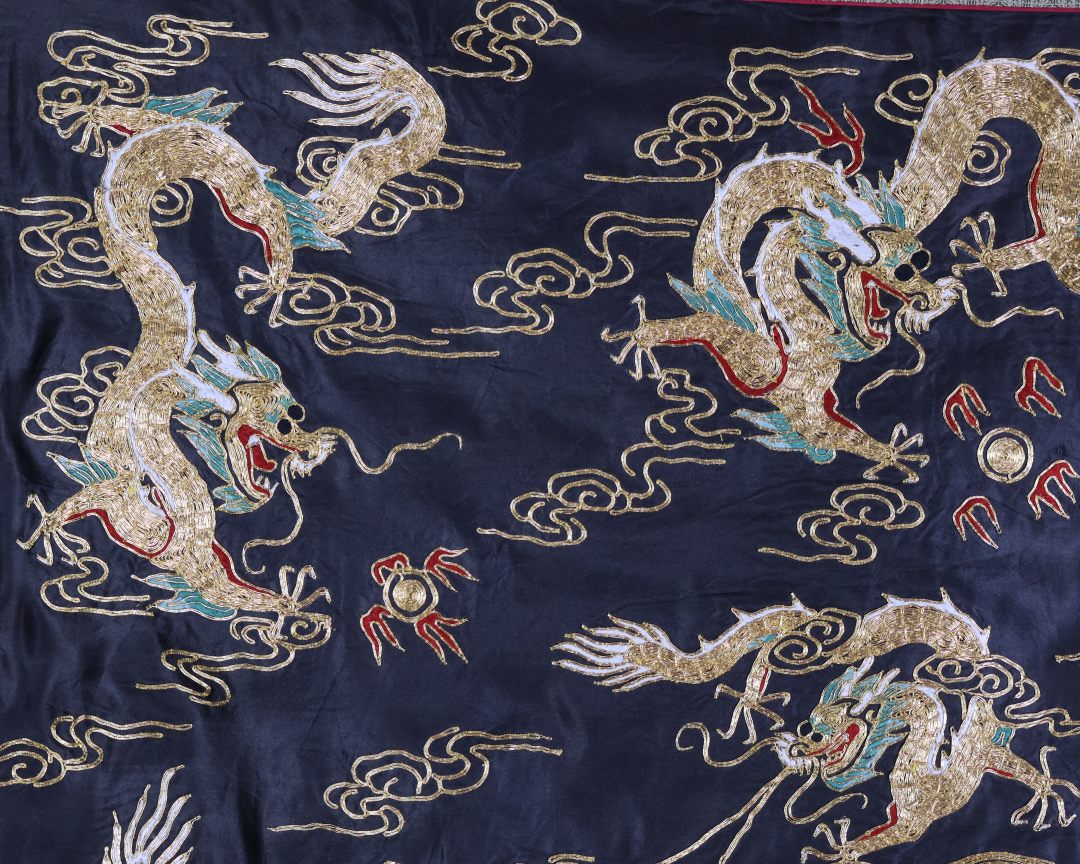
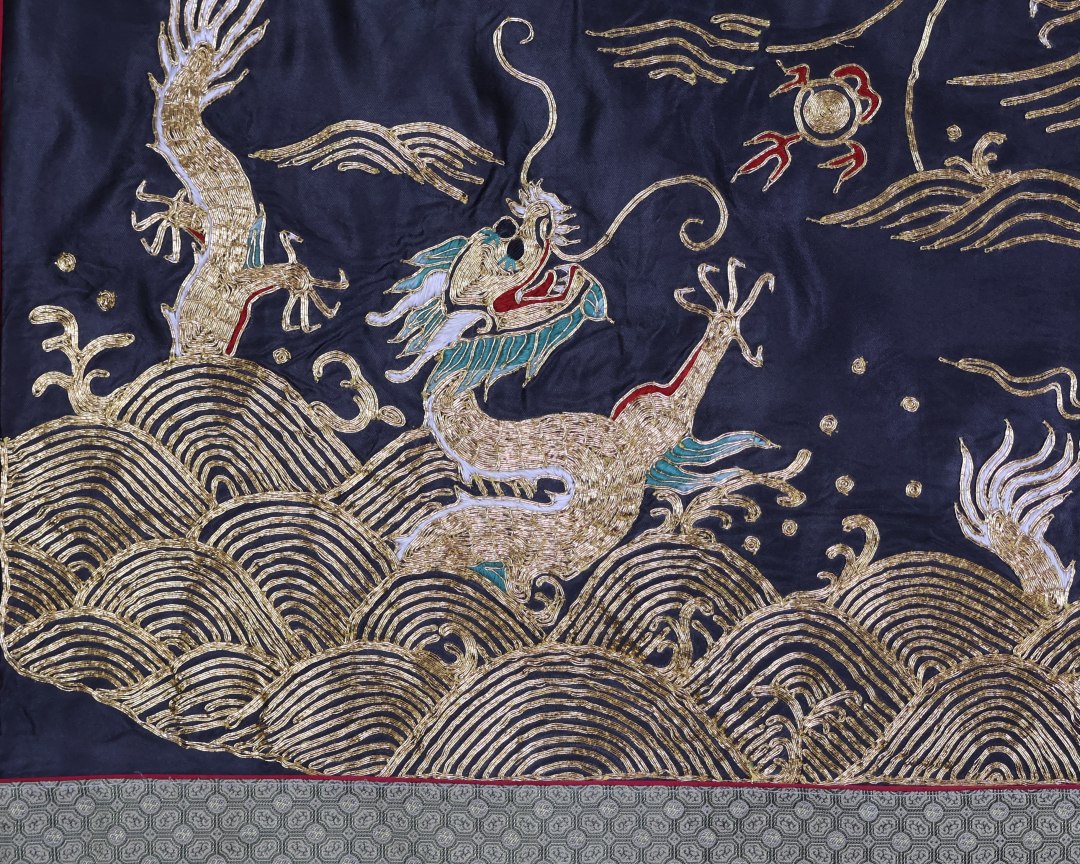
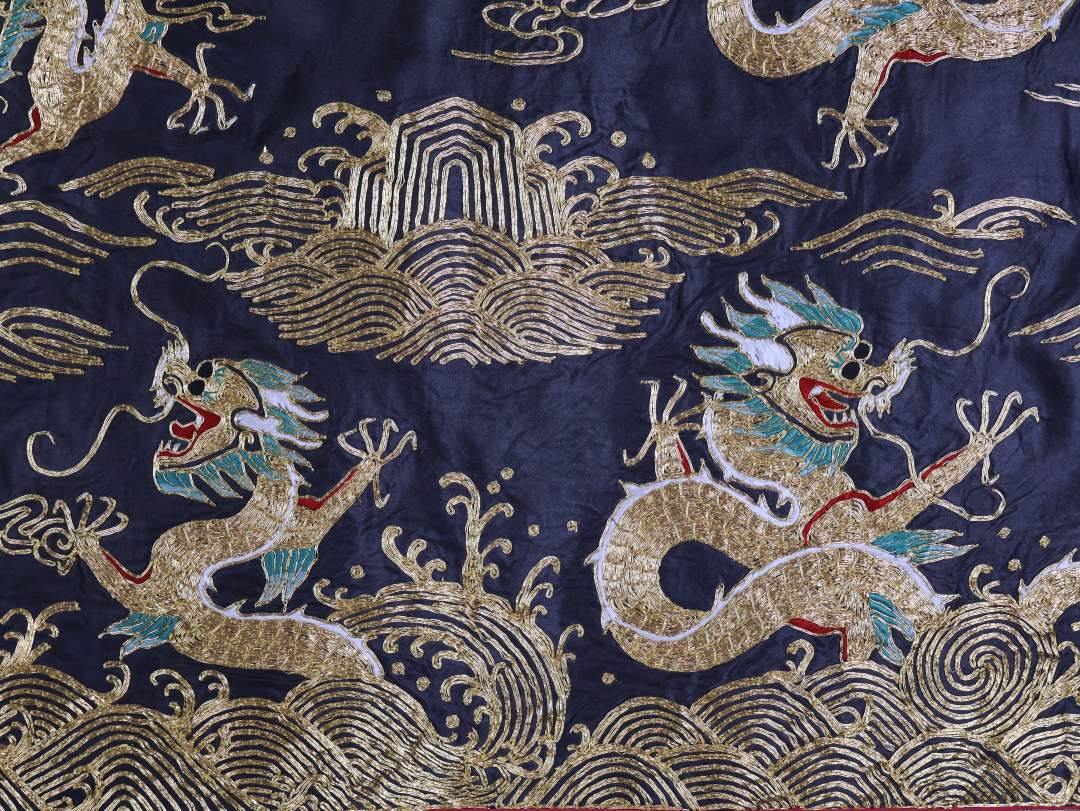
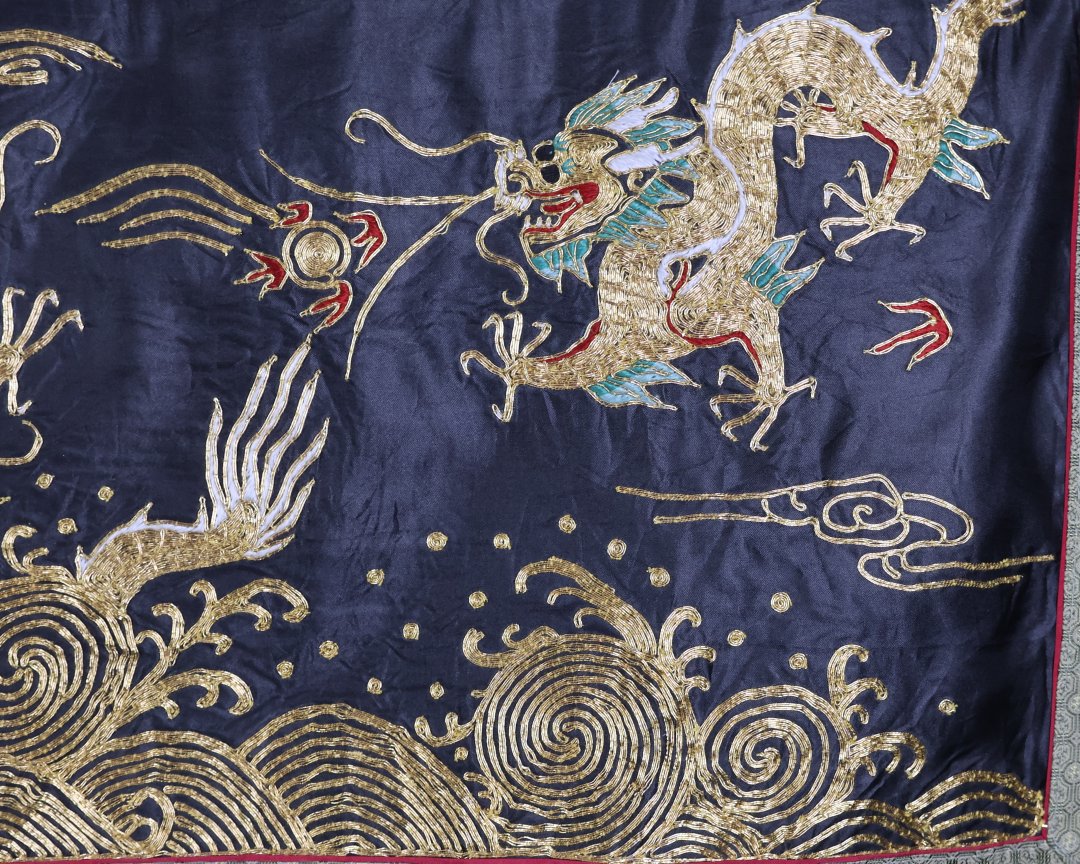
Multi-dragon imperial-style embroidery refers to the highly formal, intricate textile art historically reserved for the Chinese imperial court—most notably seen on the jifu (dragon robes) and ceremonial court vestments of emperors, empresses, and high-ranking nobility.
This style is characterized by a precise cosmological layout featuring multiple dragons (long or mang) stitched with rich materials and strict symbolism.
Key Visual and Design Characteristics
-
The Multi-Dragon Layout: True imperial robes typically featured nine dragons arranged across the garment. This layout was deeply symbolic, as nine is considered the most auspicious, supreme number in Chinese numerology.
-
Four dragons typically appear on the front and back (visible as prominent roundels or full-body profiles).
-
Shoulders feature two additional dragons.
-
The inner or lower flaps conceal the remaining dragons, bringing the total to nine—representing the emperor’s supreme authority and the structure of the cosmos.
-
-
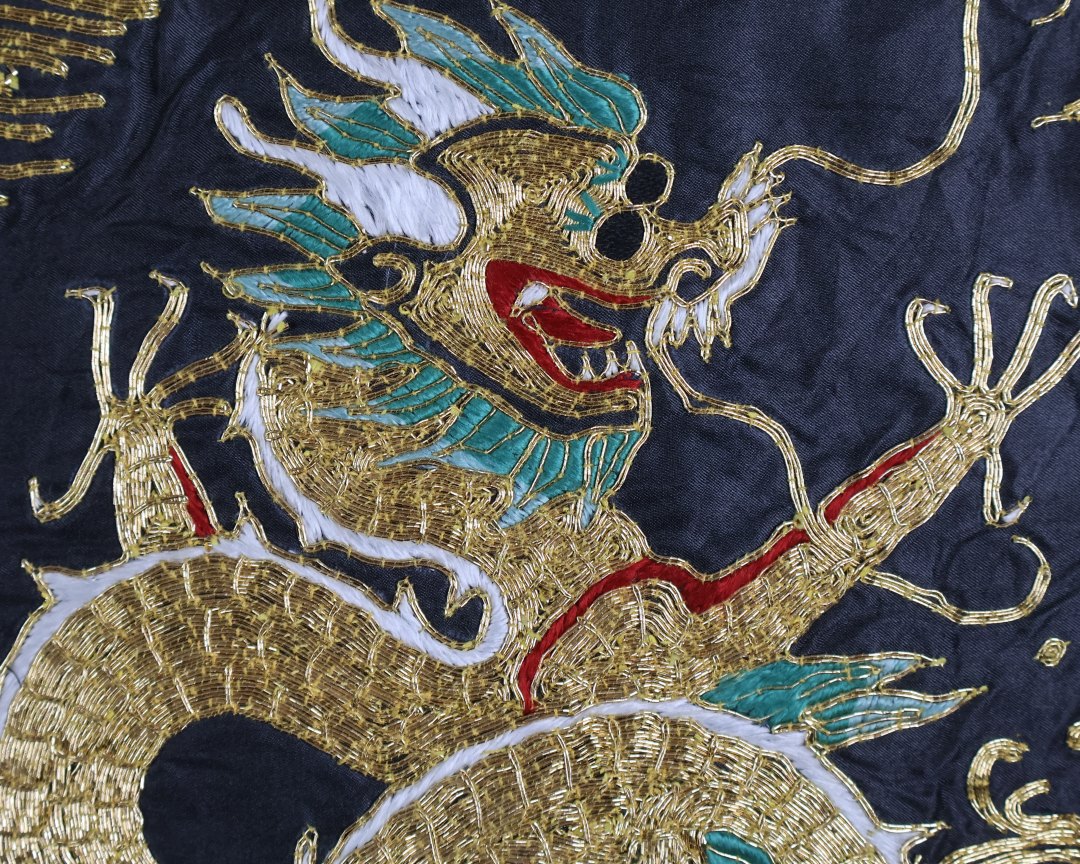
Five-Clawed Dragons (Long): On true imperial garments, the dragons possess five claws on each foot. During the Qing Dynasty and earlier eras, the use of a five-clawed dragon was legally restricted strictly to the Emperor, Empress Dowager, and high-ranking imperial family members.
-
Dynamic Postures: The dragons are rarely static; they are depicted as fierce, sinuous, and powerful creatures dynamically “chasing the flaming pearl” (a symbol of wisdom, cosmic energy, and spiritual enlightenment). They feature wide, flat heads, branching antlers, wiry whiskers, and scaly, serpentine bodies.
Surrounding Iconography & Cosmic Order
The multi-dragon motif does not exist in isolation; it is part of a larger ecosystem of symbols representing the universe and the emperor’s role as the mediator between heaven and earth:
-
Cosmic Mountains and Standing Water: The hem and sleeves of imperial embroidery are heavily stylized with diagonal stripes of multicolored lines representing “standing water” rising from frothy, crashing ocean waves. At the base, triangular peaks represent the Earth/Cosmic Mountains (lishui).
-
Clouds and Heavenly Elements: Swirling stylized clouds, vapor trails, and auspicious bats (representing good fortune) fill the spaces between the multi-dragon motifs, symbolizing the heavens.
-
Auspicious Emblems: Traditional Buddhist or Daoist treasures—such as endless knots, flaming wheels, and longevity (shou) symbols—are frequently woven into the background grid.
Technique and Materials
-
Gold-Couched Thread: The bodies of the dragons are frequently built using couched gold thread (flat metallic gold strips wrapped around a core thread and tacked down with fine silk stitches), creating a shimmering, dimensional, and opulent surface.
-
Silk Floss Shading: Fine silk threads in rich hues (such as blues, greens, reds, and white) are blended using delicate needlework techniques (like the forbidden stitch or satin stitch) to give the dragon scales, fire trails, and floral accents incredible depth and texture.
-
Color Hierarchy: The background fabric itself denoted strict hierarchy. Bright imperial yellow or bright gold was reserved exclusively for the Emperor, while apricot yellow, blue, or other shades marked lower ranks of the imperial household.


