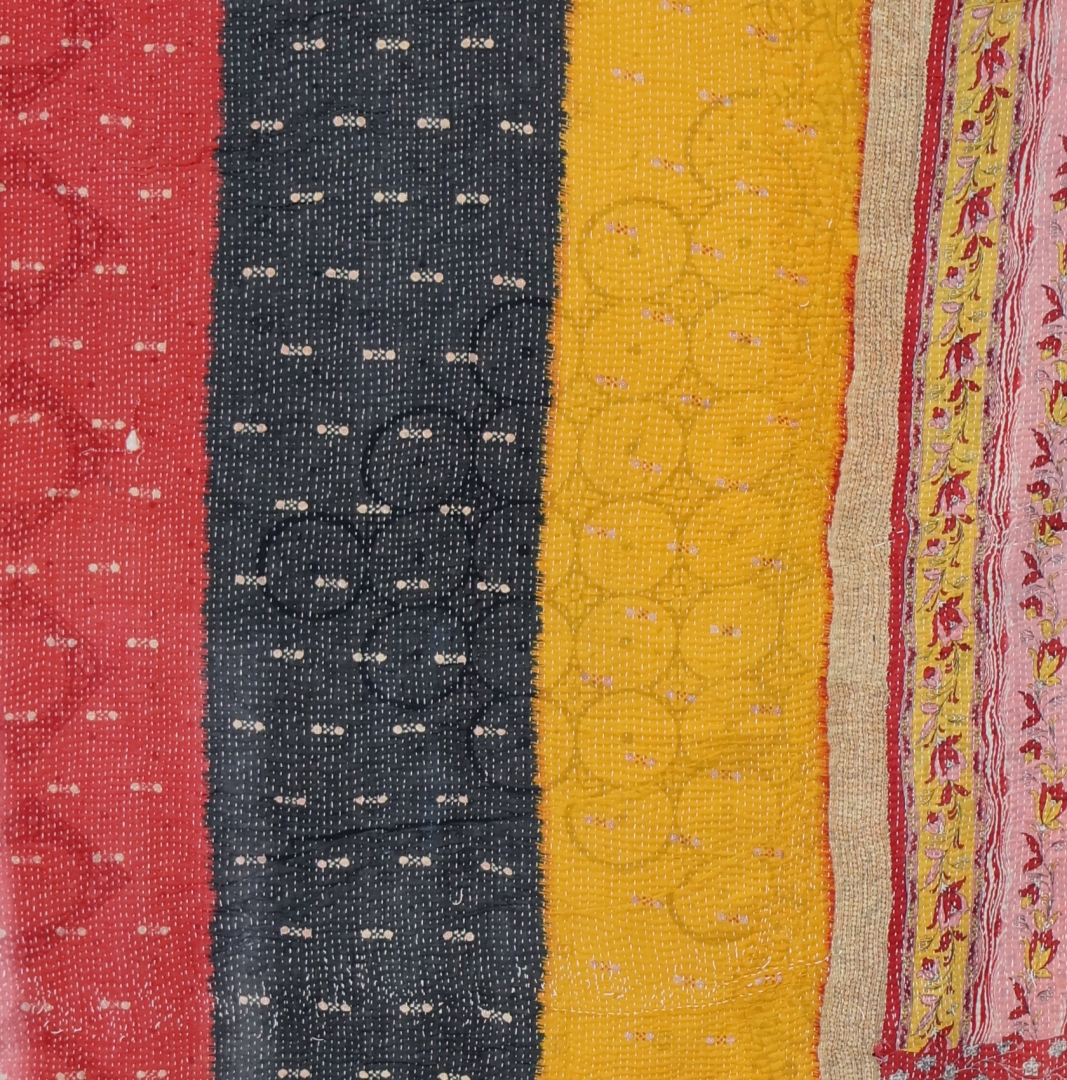
Description
What a Kantha quilt is
- Origin: Bengal region (West Bengal, India & Bangladesh).
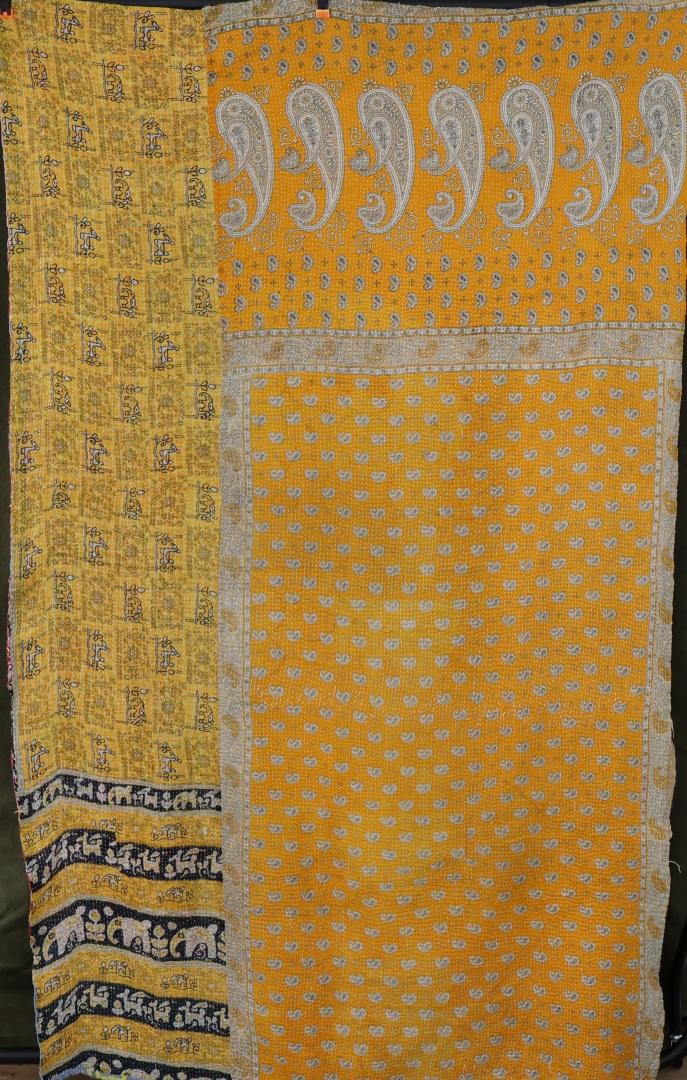
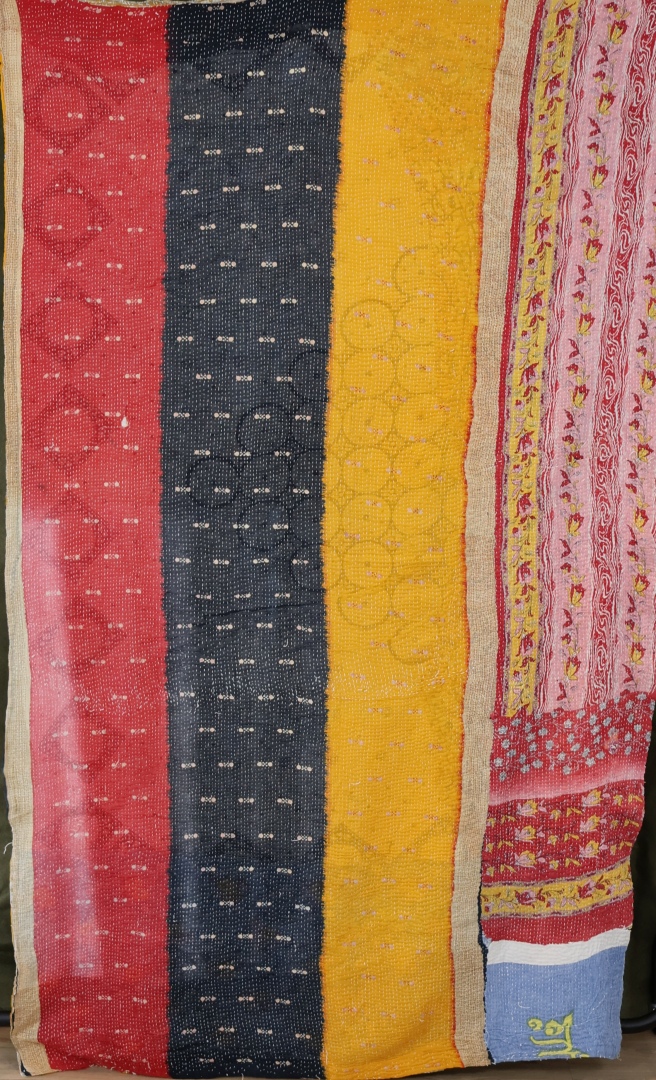
- Construction: 2–7 layers of recycled cotton cloth, usually sari fragments.
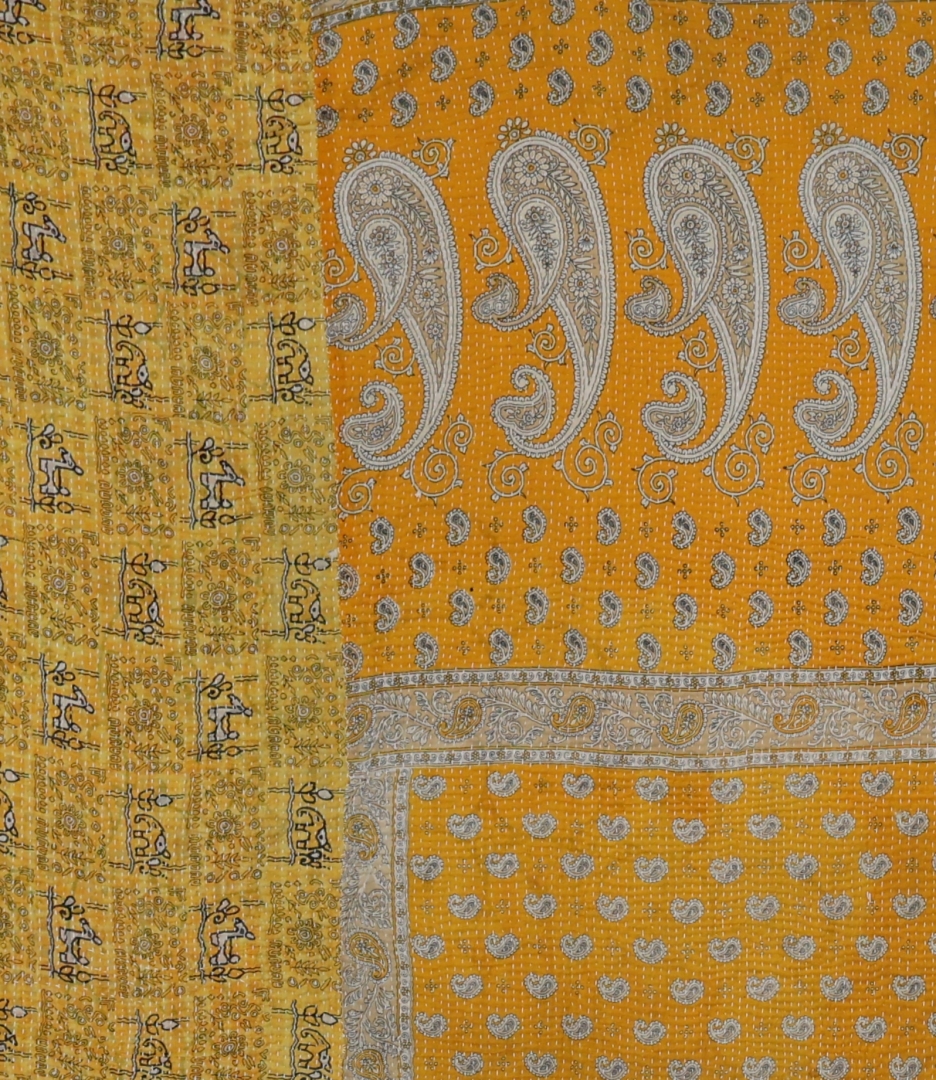
- Stitch: The signature running stitch (kantha), creating a rippled texture.
- Purpose: Historically used as baby blankets, dowry gifts, household covers, and devotional textiles.
- Aesthetic: Soft, lightweight, often reversible, with patchwork or block‑printed surfaces.
Kantha is one of the world’s oldest forms of upcycled textile craft, turning worn cloth into something protective, beautiful, and symbolic.
Kantha quilts often encode:
- Protection — the dense stitching acts as a spiritual safeguard.
- Domestic memory — each layer comes from garments worn by family members.
- Rebirth — old cloth transformed into new life, echoing Bengali folk philosophy.
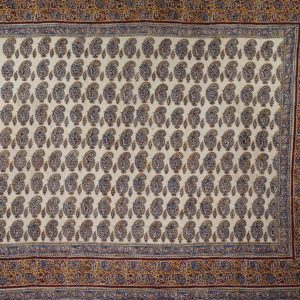
- Narrative motifs — flowers, fish, paisleys, and village scenes stitched freehand.
For a collector like you, Peter, Kantha sits beautifully alongside your interests in symbolic motifs, natural dyes, and authentic handwork.
- Lep Kantha — thick quilts for winter.
- Sujani Kantha — decorative quilts with figurative motifs.
- Durjani Kantha — folded, wallet‑like pieces with elaborate borders.
- Oaar Kantha — large spreads used as bedcovers.
- Baiton Kantha — small wrappers or covers.