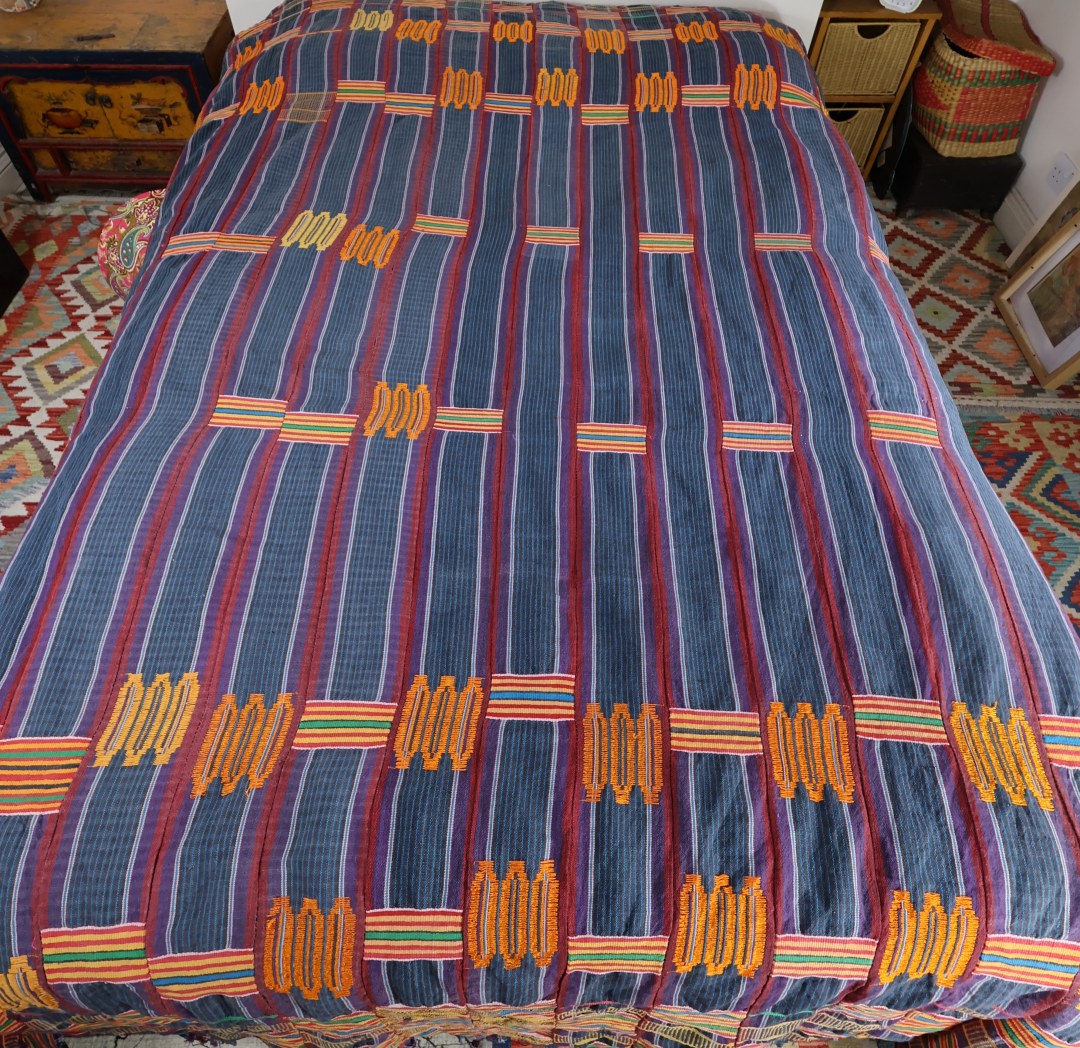
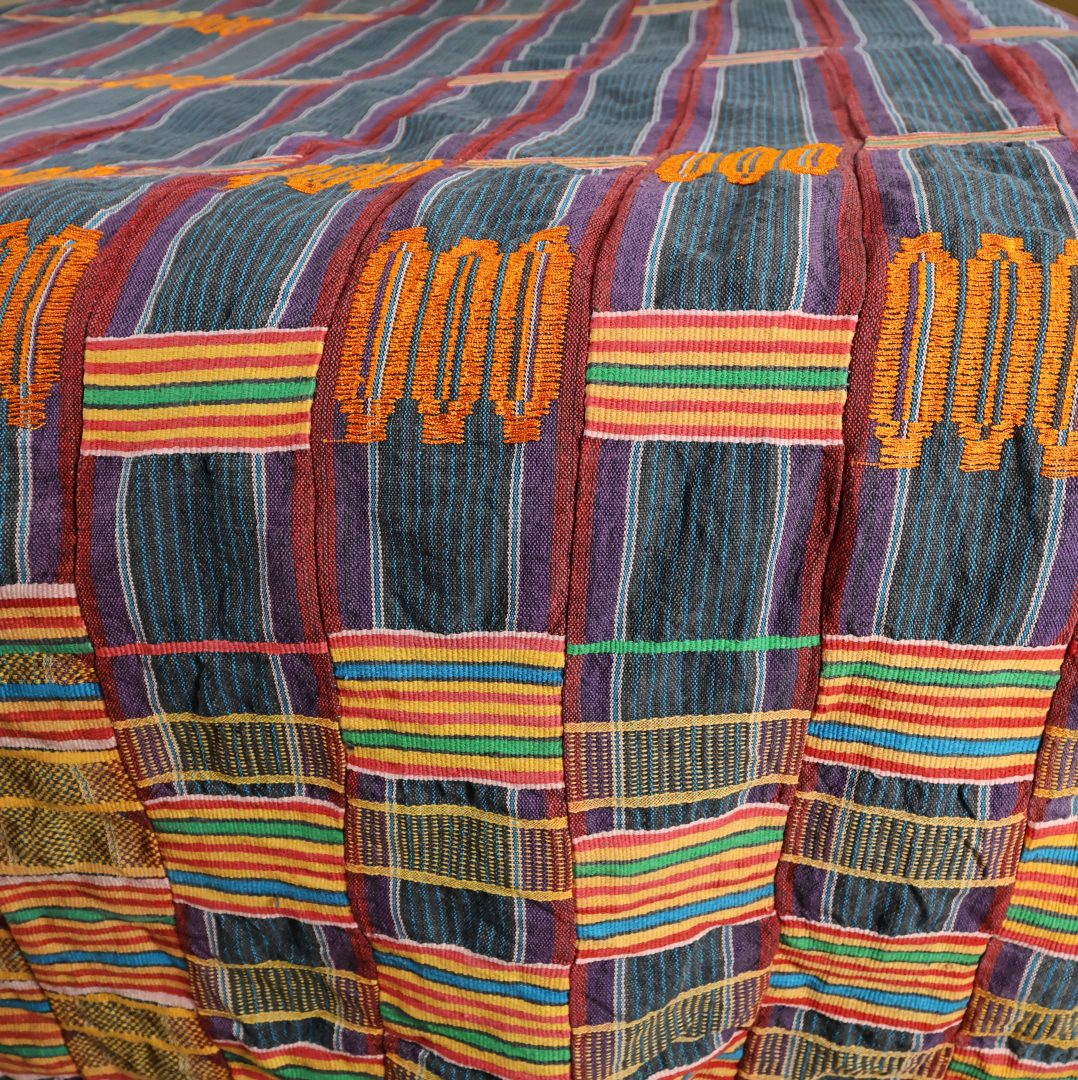
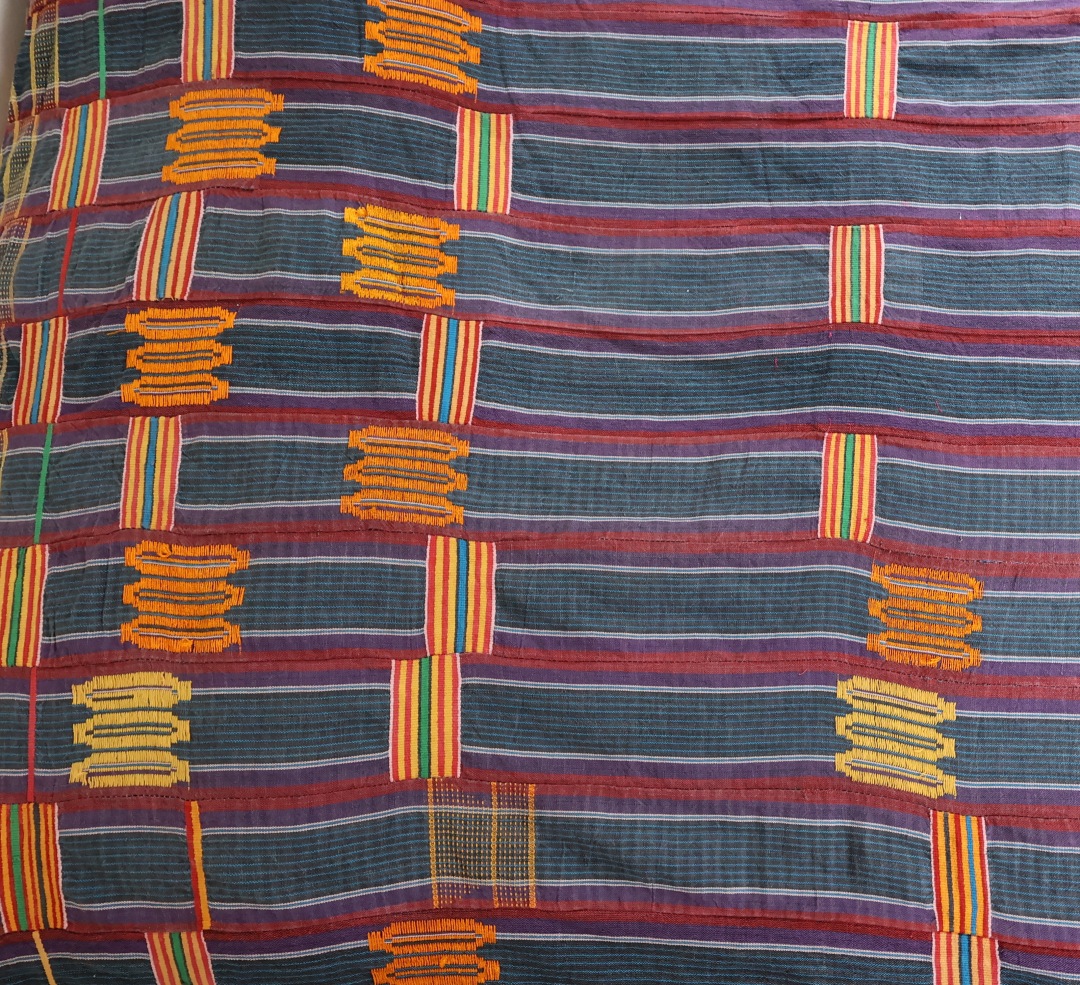
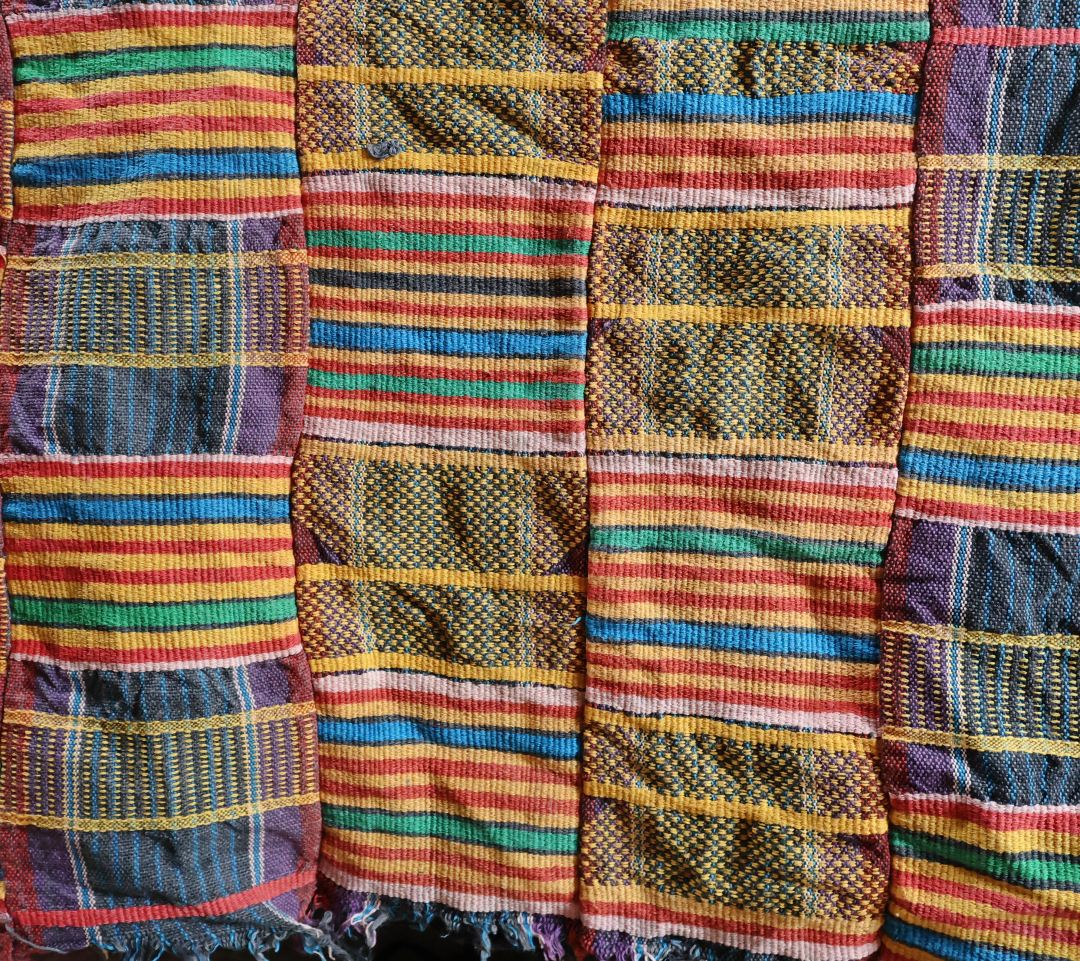
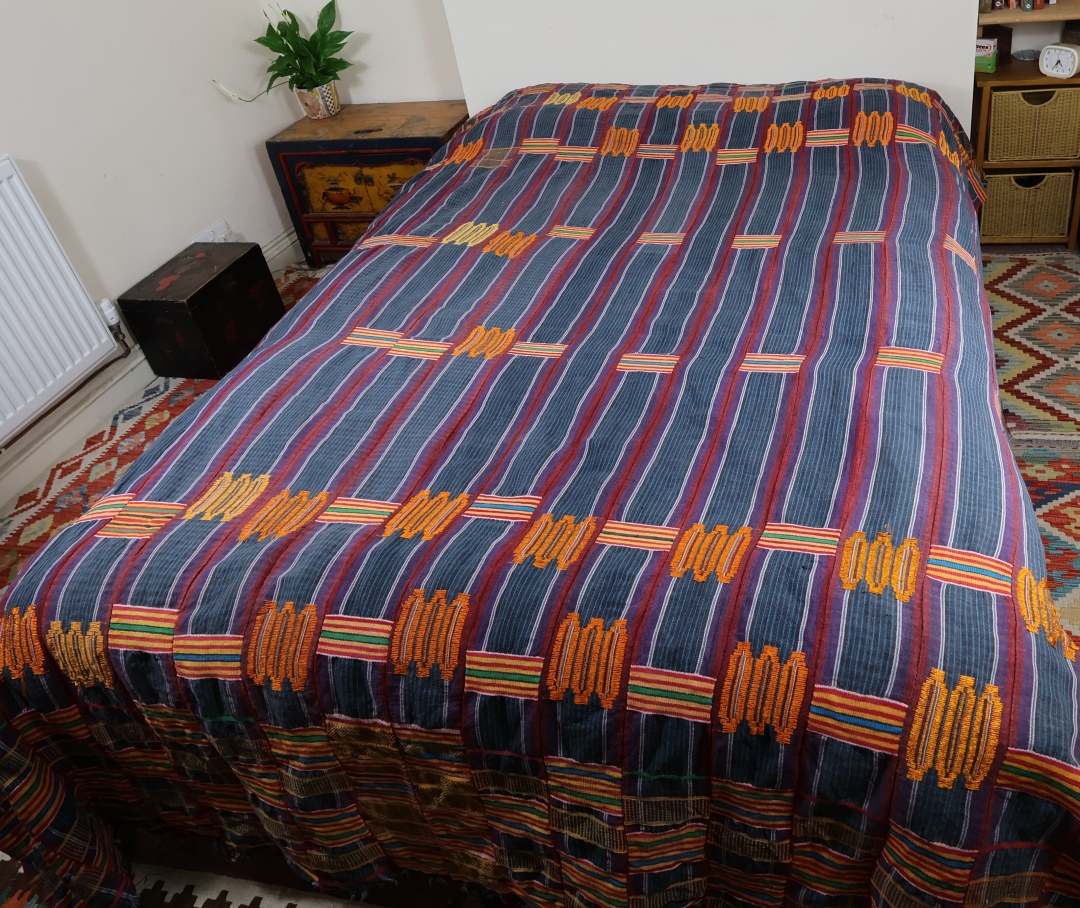
Description
Ewe kente is a hand‑woven narrow‑strip cloth from the Ewe people of southeastern Ghana and Togo, distinguished by figurative motifs, improvisation, and technical variety, making it one of the most artistically expressive kente traditions.
Who the Ewe are
- The Ewe live around the Volta delta in Ghana and across the border in Togo.
- Historically they were not a centralized kingdom, unlike the Asante, which led to greater stylistic diversity in their weaving.
Figurative motifs (adanudo style)
This is the hallmark of Ewe weaving. Cloths may include:
- Animals (cows, sheep, horses)
- Human figures
- Ceremonial stools
- Hats, trees, flowers
- Household objects (forks, pots)
- Written text (from the 1940s onward) These motifs are created using weft‑float inlay, often on plain silk, rayon, or cotton backgrounds.
2. Improvisation and individuality
Because Ewe weaving wasn’t regulated by a royal court, patterns vary widely. Weavers often innovate freely, producing one‑off compositions rather than standardized designs.
3. Speckled weft technique
Ewe weavers sometimes ply two colours of weft together, creating a subtle speckled band — a feature that helps distinguish Ewe cloth from Asante kente.
4. Shared roots with Asante kente
Ewe kente uses the same narrow‑strip loom and shares many structural features with Asante kente, but tends to be more pictorial and less rigidly geometric.
Historical context
- Ewe weaving traditions predate Asante rule; the Ewe later adopted and adapted kente techniques.
- Weaving centres today include Kpetoe and Agbozume, the latter hosting a major cloth market drawing buyers from across West Africa.


