Description
What makes Rajasthani textiles distinctive
Rajasthan’s textile heritage is unusually rich because its crafts evolved under Rajput royal patronage, desert‑trade routes, and strong artisan guilds. Textiles here are not just decorative—they encode identity, ritual meaning, and social status.
Key characteristics include:
- High-saturation natural dyes (madder, indigo, turmeric, marigold)
- Geometric and floral pattern systems tied to caste, region, and ritual
- Community-specific techniques passed down through generations
- Symbolic motifs such as peacocks, elephants, mango forms, and dotted constellations
Core textile traditions of Rajasthan
1. Block Printing (Bagru, Sanganer)
Block printing is one of Rajasthan’s most iconic crafts. Artisans carve intricate wooden blocks and print repeating patterns with remarkable precision, producing floral, geometric, and figurative designs.
- Bagru: earthy, natural dyes; bold dabu (mud-resist) patterns
- Sanganer: fine floral work, lighter palettes
2. Bandhani (Tie‑Dye)
Bandhani involves tying thousands of tiny knots before dyeing, creating constellations of dots that form waves, circles, and symbolic patterns. It is especially associated with Jaipur and Jodhpur.
- Used in turbans, odhnis, sarees
- Colours and dot arrangements historically signalled marital status and community
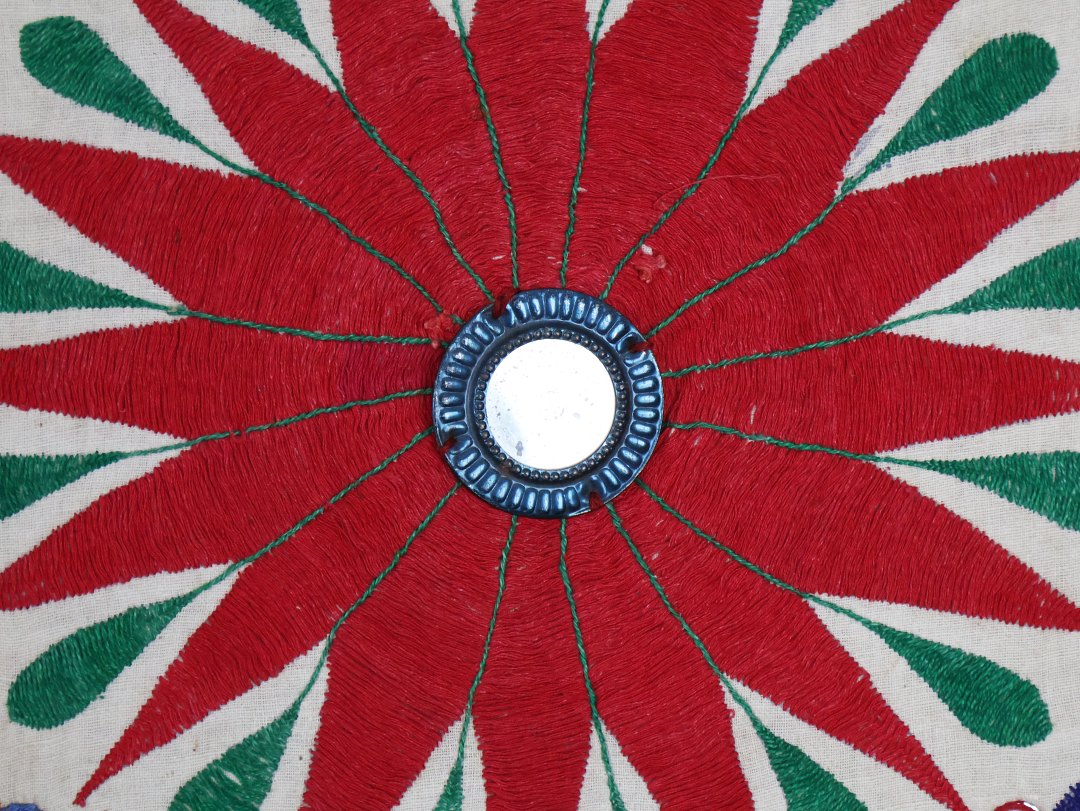
3. Embroidery & Mirrorwork
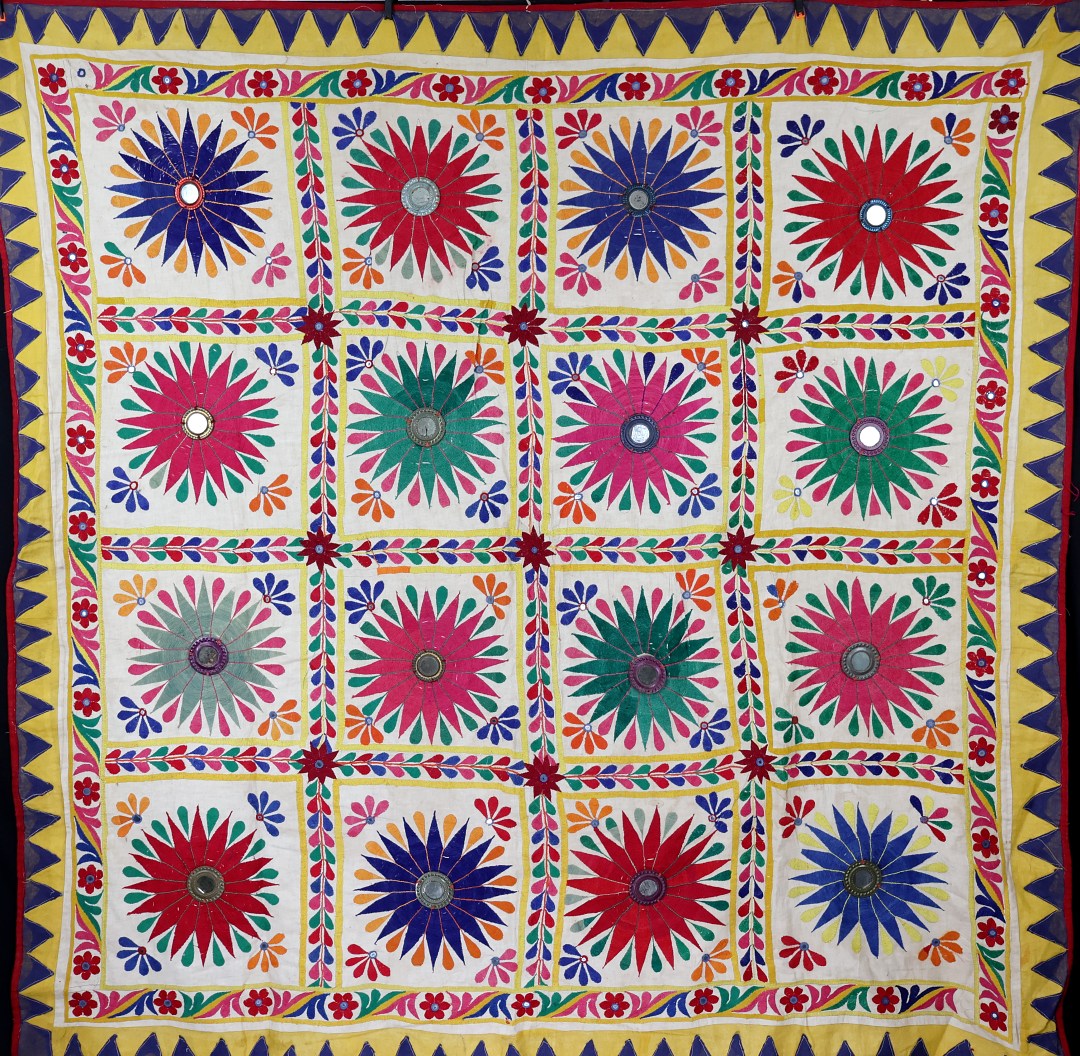
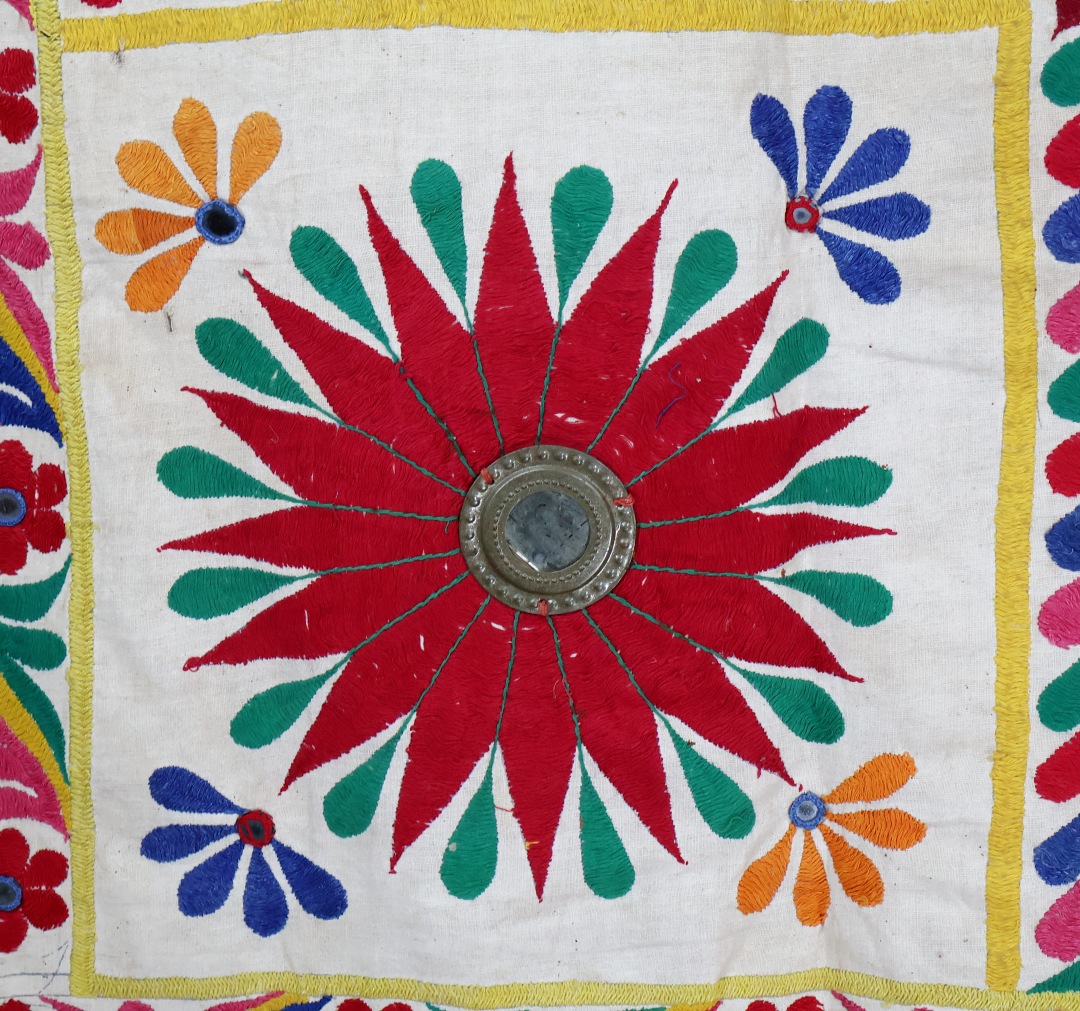
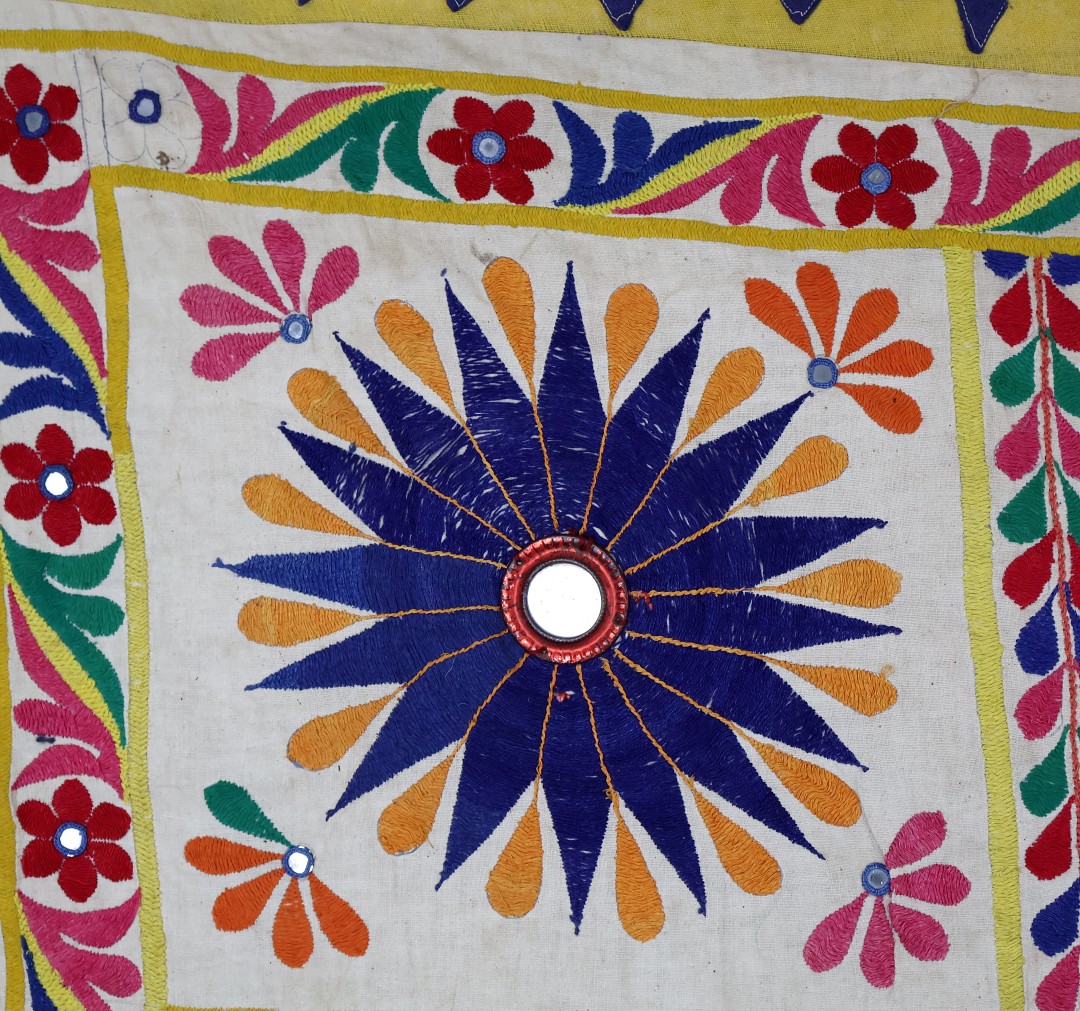
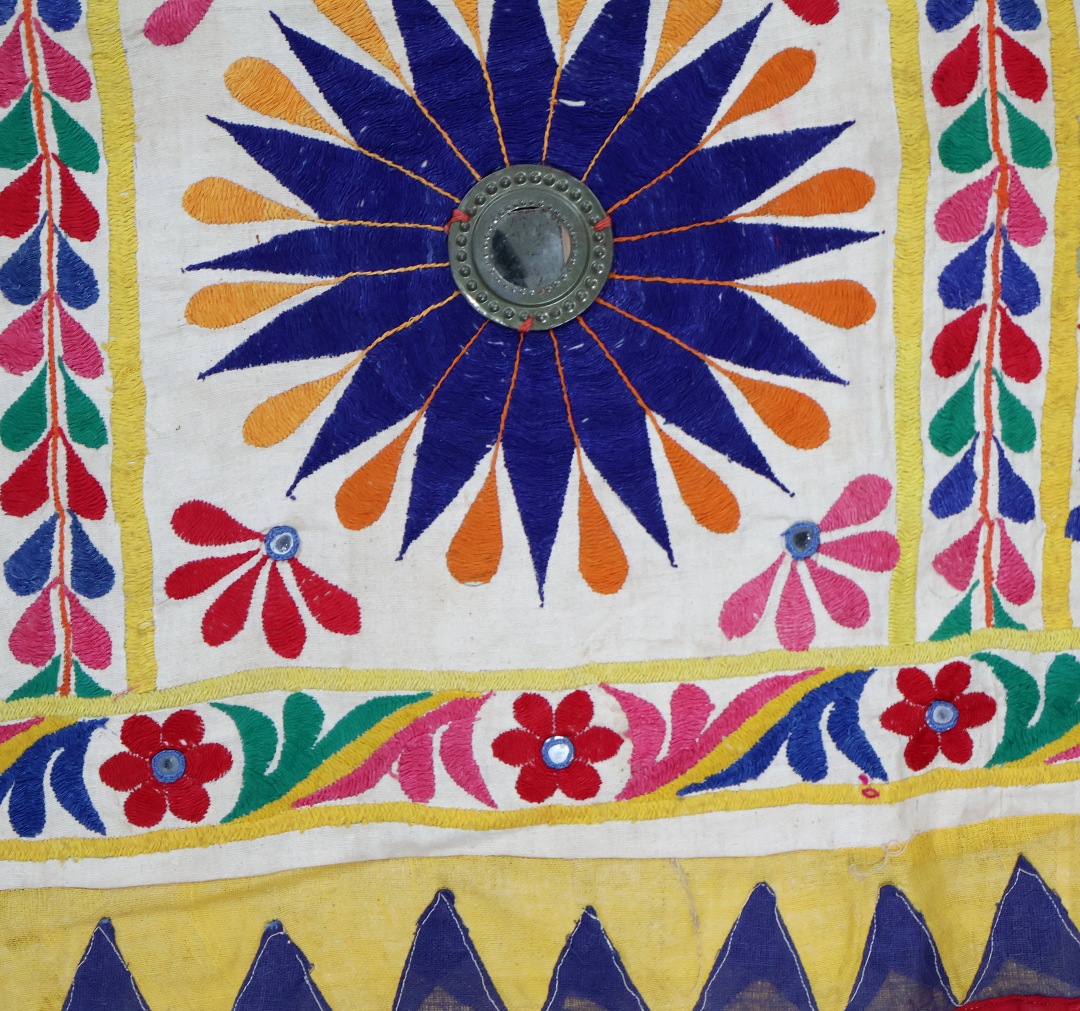
Rajasthan’s embroidery traditions incorporate mirror inlay, metallic thread (zari), and dense surface stitching. These embellishments reflect desert light and were historically used in festive and ceremonial garments.
4. Handloom Weaving (Kota Doria)
Kota Doria, from the town of Kota, is a delicate cotton or silk fabric woven with a distinctive checkered pattern. It is prized for its lightness and breathability.


