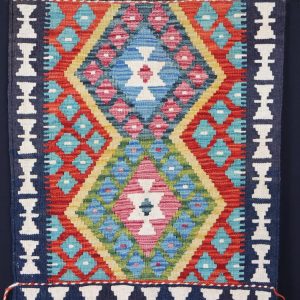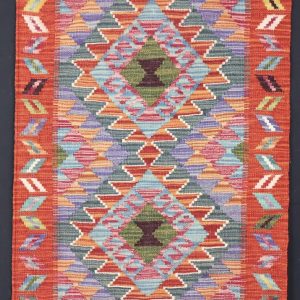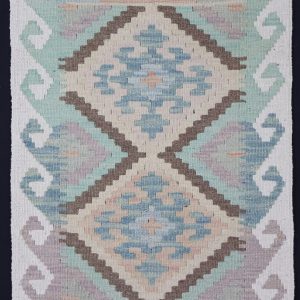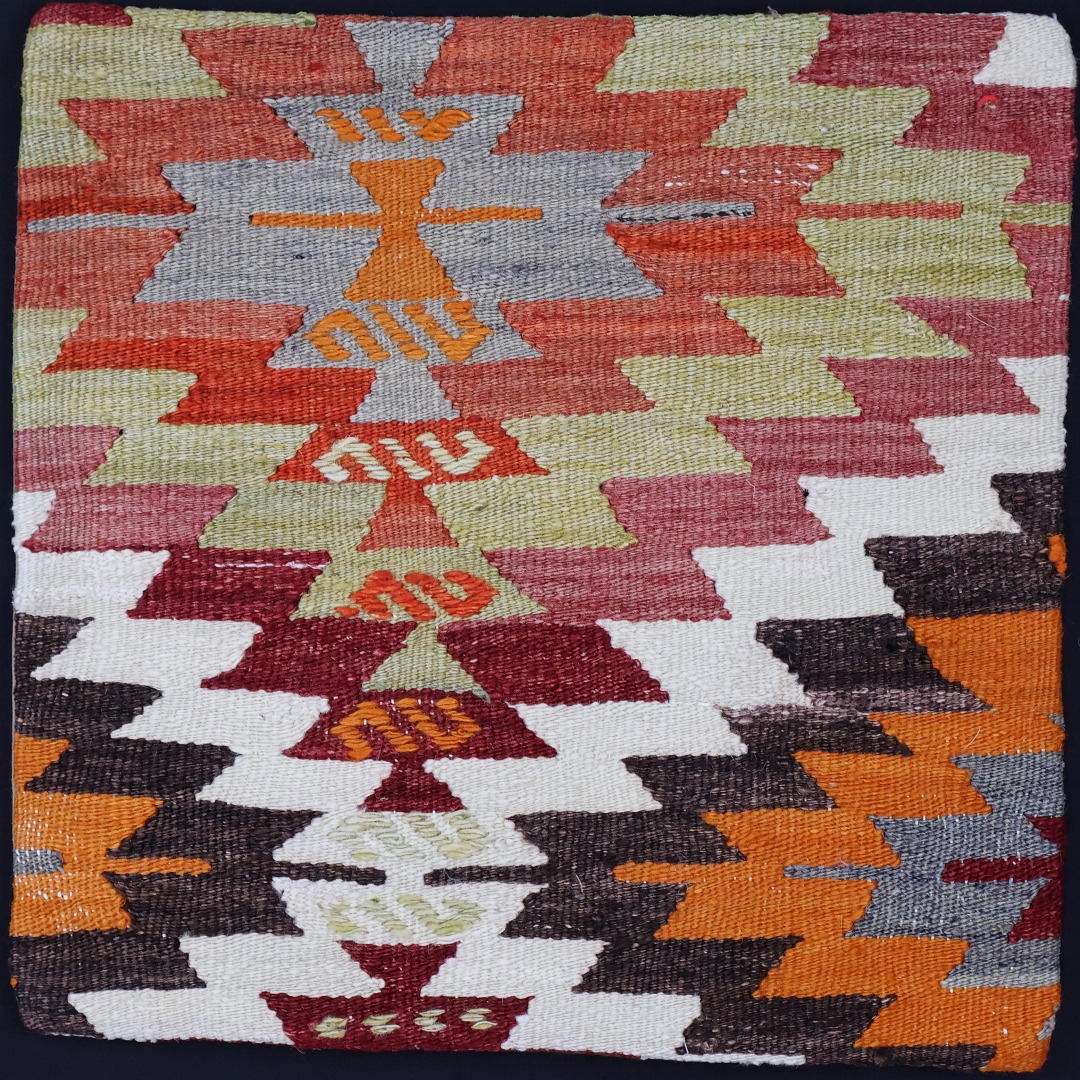
Description
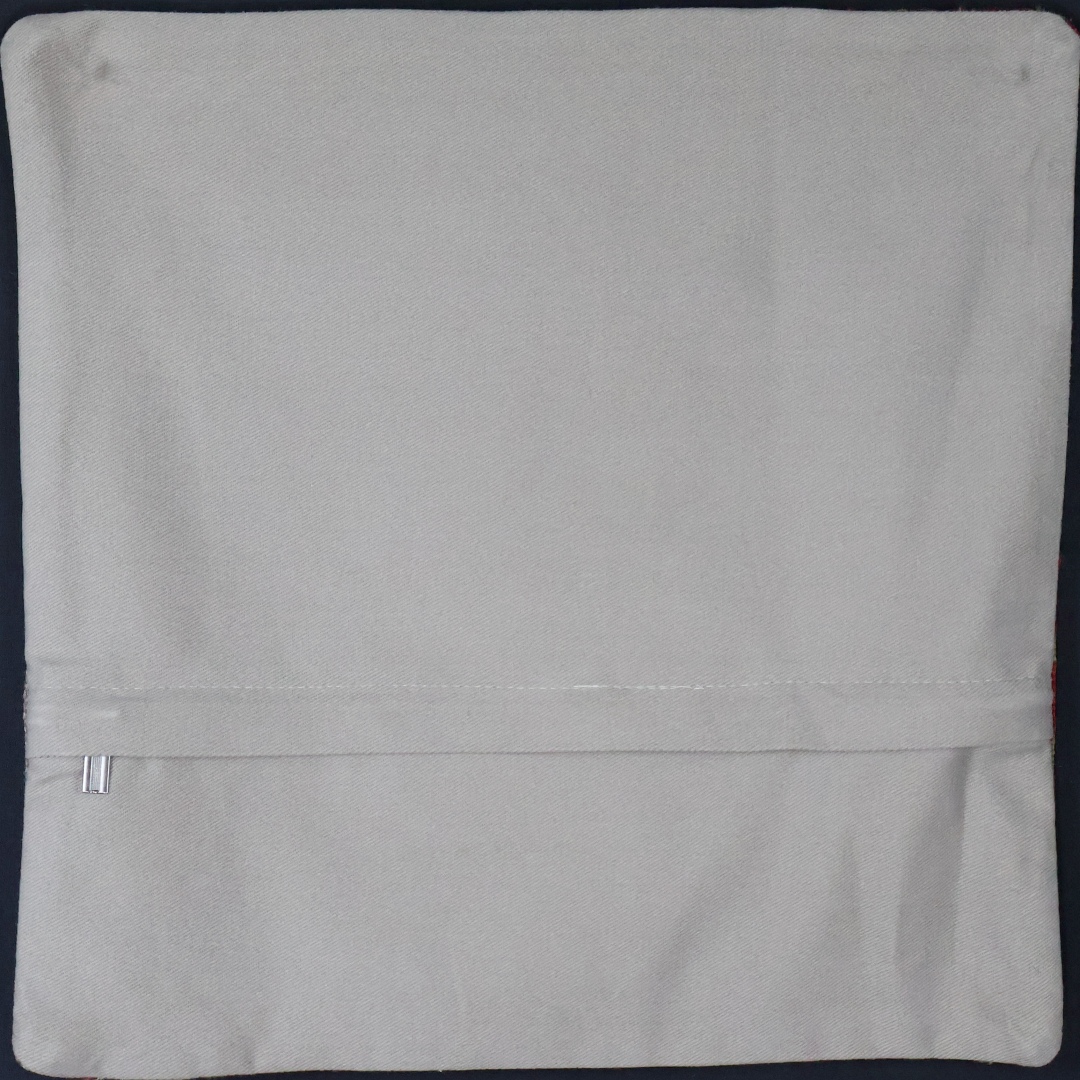
Cushion cover made from an old Turkish kilim.
A Turkish kilim is a flat‑woven Anatolian textile known for bold geometry, symbolic motifs, and strong wool warp–weft structure. They are among the most culturally expressive textiles in the Near East, prized for both craftsmanship and meaning.
A kilim is a flat‑weave (no pile) textile made by interweaving coloured wefts tightly across warps, producing crisp geometric patterning. Turkish kilims are traditionally woven in Anatolia, with roots going back to Seljuk‑era nomadic Turkic groups. They were used as floor coverings, bedding, tent dividers, dowry pieces, and wall hangings, functioning as both practical objects and carriers of cultural identity.
Key structural traits
-
Flat weave using slit‑tapestry technique
-
Wool weft on wool or cotton warp (wool‑on‑wool is most traditional)
-
Natural dyes (madder red, indigo, walnut, onion skin, cochineal in some regions)
-
Sharp-edged motifs due to the slit‑weave method
🧭 Regional Styles (Most Collectors Track by These)
Each Anatolian region has its own visual “accent.” Here are the most distinctive:
-
Konya / Karapınar — Large medallions, bold reds, strong tribal geometry.
-
Malatya — Soft apricot, saffron, and earthy tones; often with elibelinde (fertility) motifs.
-
Balıkesir / Bergama — Strong contrast, hooked diamonds, talismanic motifs.
-
-
Sivas / Şarkışla — Narrow runners with repeating guls and amuletic devices.
-
Denizli / Çal — Striped layouts, often with minimalist repeating motifs.
-
Kars / Eastern Anatolia — Darker palettes, Caucasian influence, ram’s‑horn motifs.
(These regional attributions are based on synthesis of common scholarship; specific attributions vary by workshop and tribal lineage.)
🔮 Symbolism You’ll Commonly See
Turkish kilims are dense with encoded meaning:
-
Elibelinde — female fertility, protection of the household
-
Koçboynuzu (ram’s horn) — strength, virility, prosperity
-
Nazar / amulet motifs — protection from the evil eye
-
Hands-on-hips figures — motherhood, continuity
-
Hooked diamonds — guarding thresholds, warding spirits
-