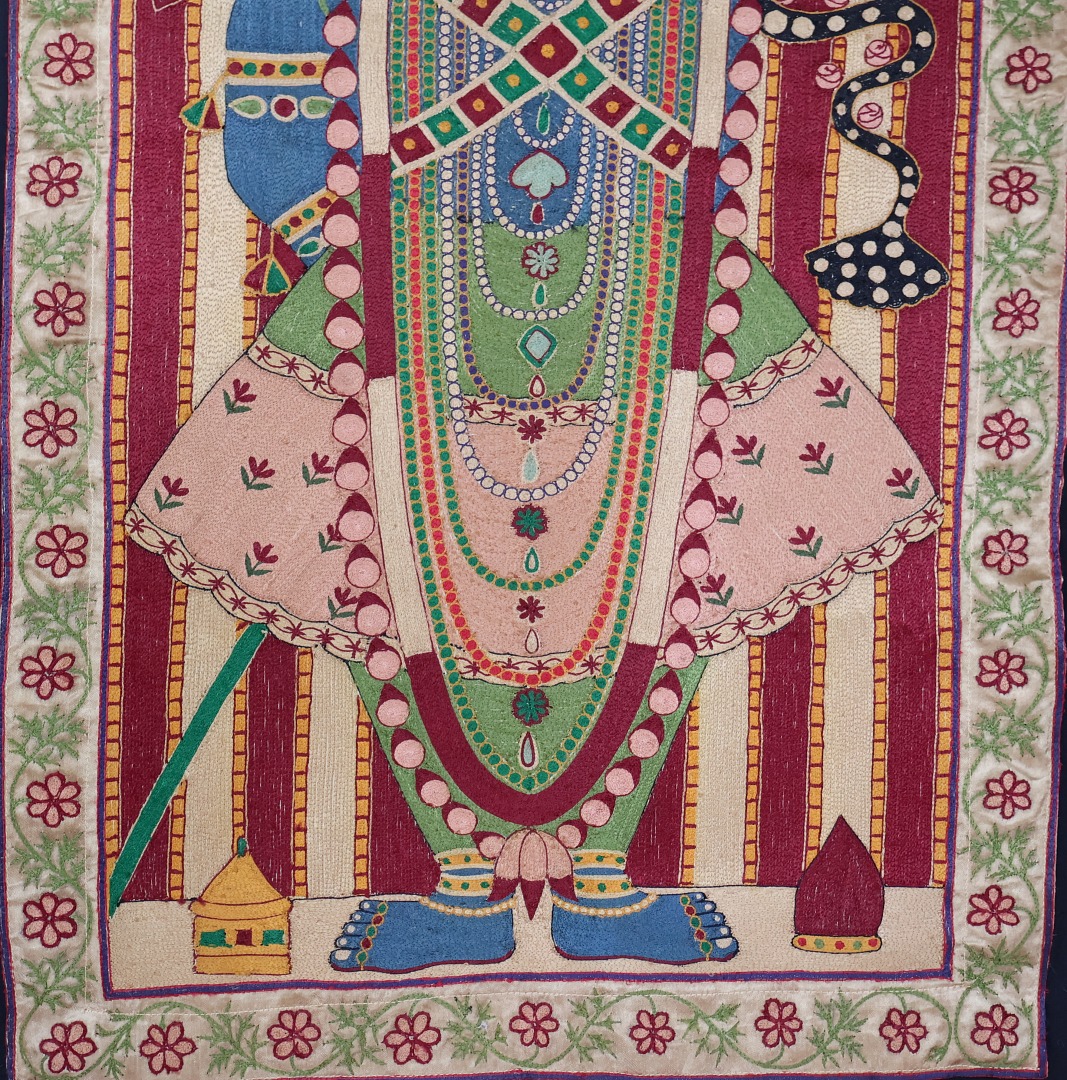
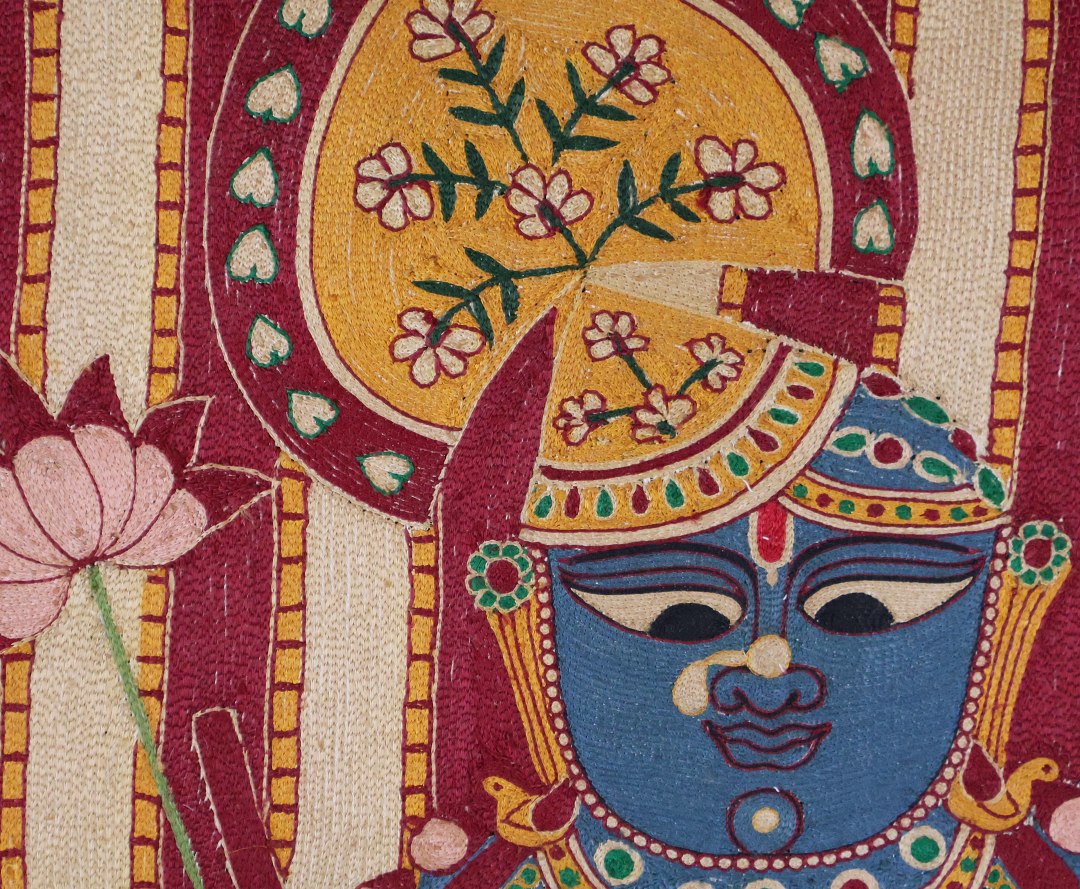
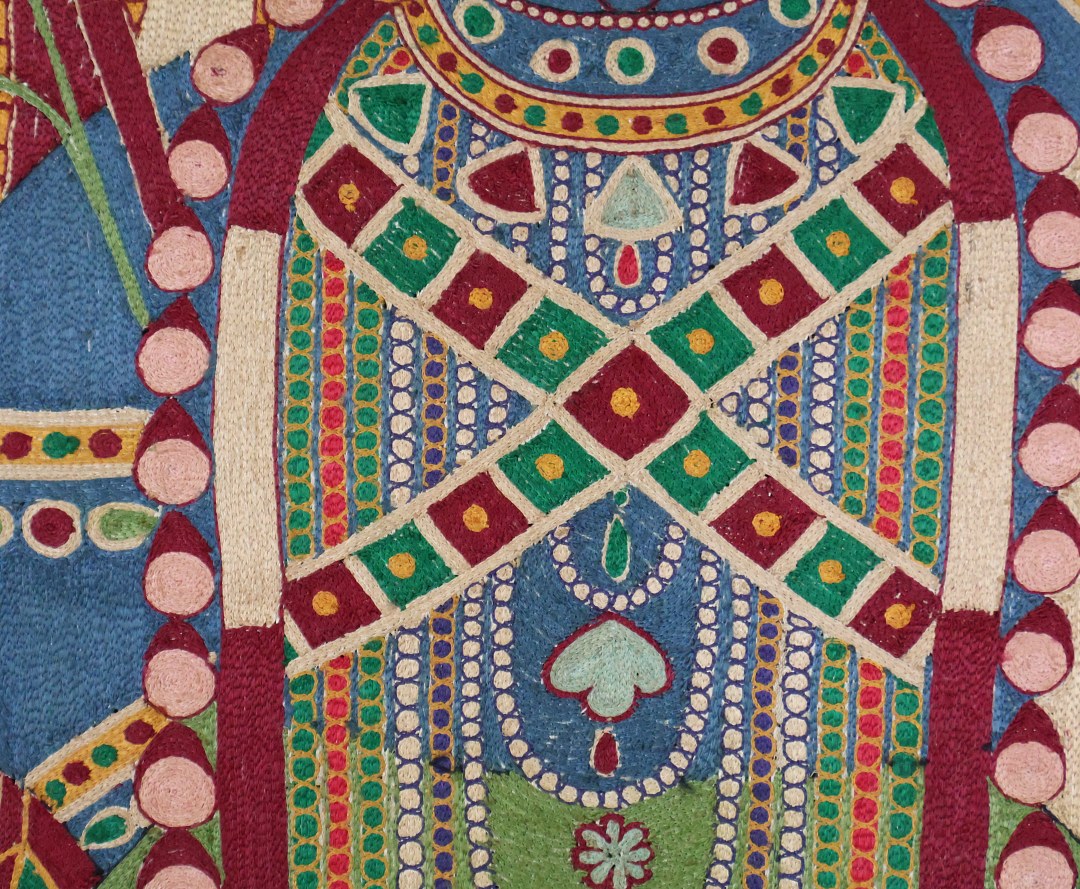
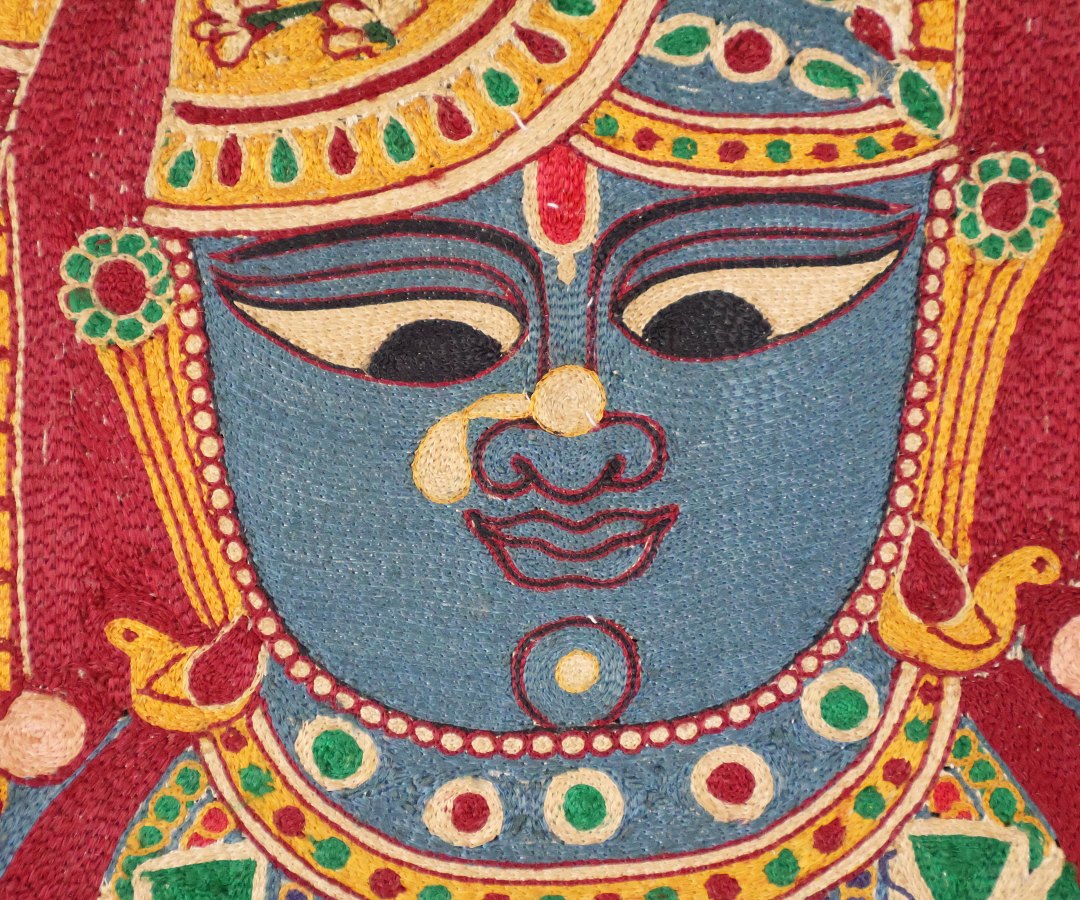
Description
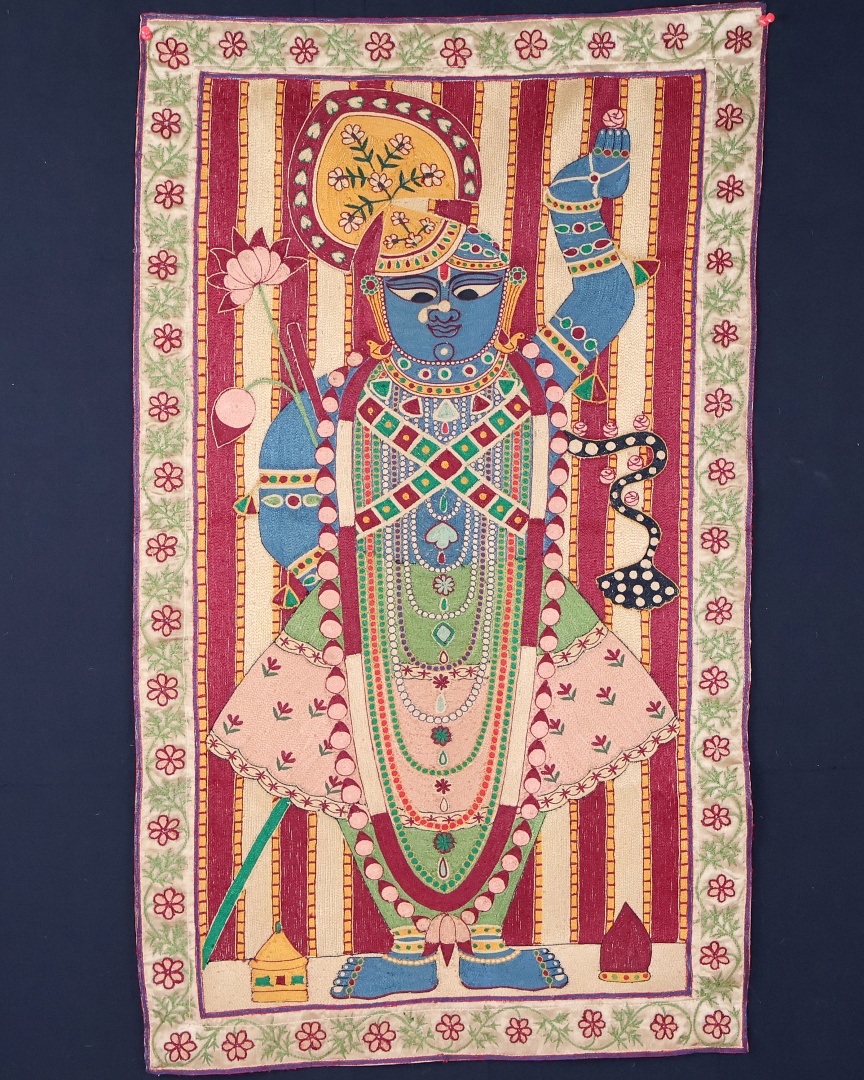
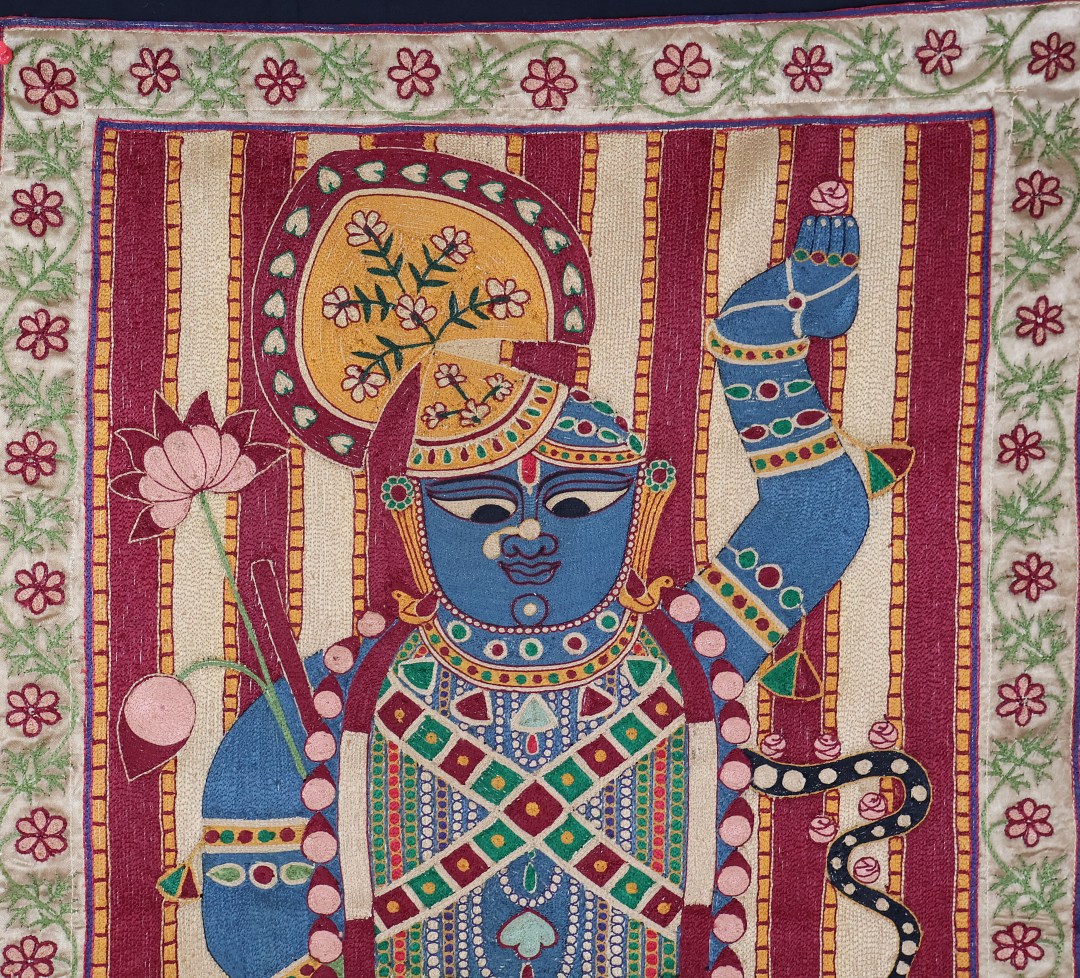
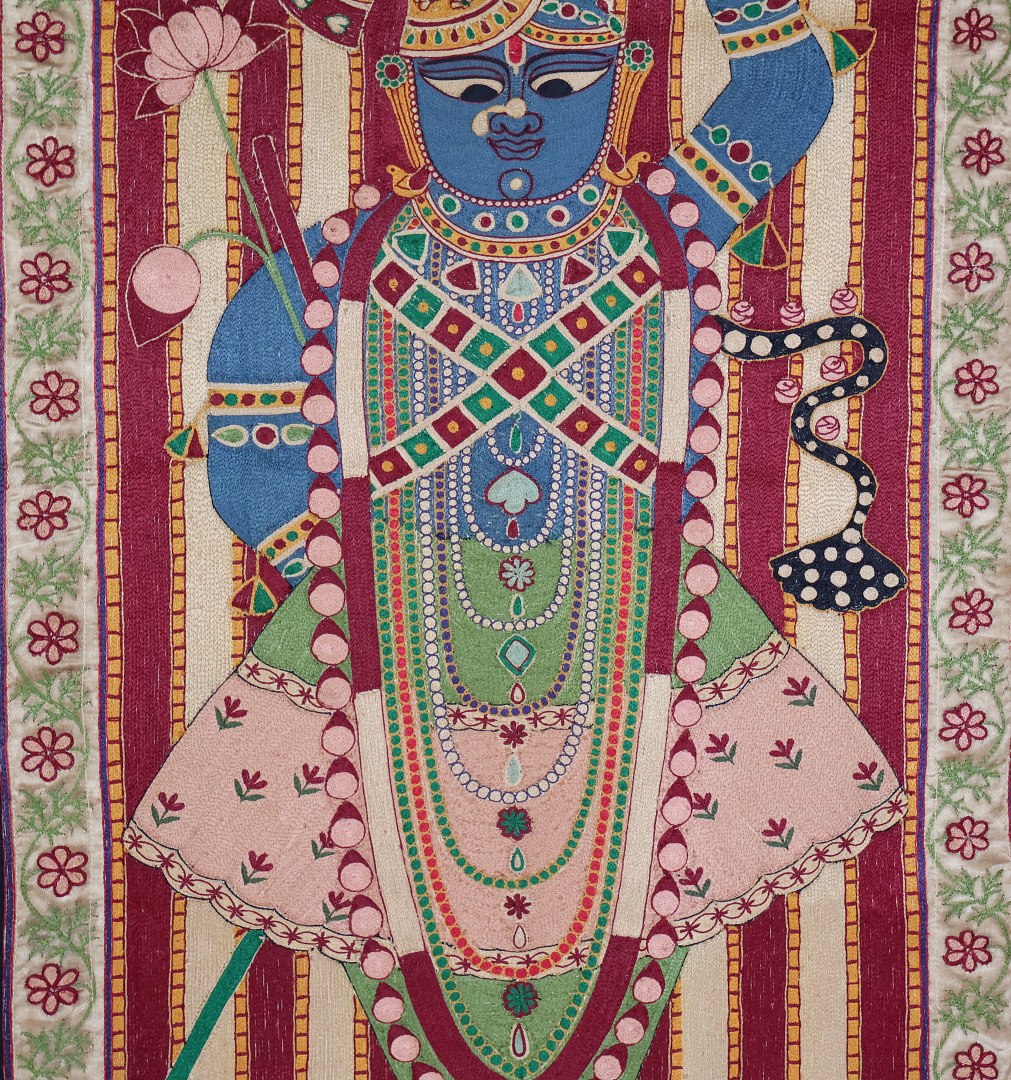
A Pichwai (from Sanskrit pichh “back” + wai “hanging”) is a painted textile backdrop used in the Shrinathji temple. These hangings depict:
- Episodes from Krishna’s life
- Seasonal cycles (Sharad Purnima, Monsoon, Annakut)
- Lotus ponds, cows, peacocks, gopis, and Govardhan motifs
- The eight daily darshans of Shrinathji
They are not merely decorative — they are part of ritual worship, changing with festivals and seasons.
Origins & Devotional Context
- Emerged in the 16th–17th century within the Pushtimarg sect founded by Vallabhacharya.
- Artists were allowed brief glimpses of the deity during temple rituals; they sketched these moments and later transformed them into detailed paintings.
- Nathdwara became a thriving artistic centre, with entire neighbourhoods of painters (Chitrakaron ki Galli).
- The tradition grew alongside the temple economy, making Nathdwara globally known for its painted hangings.
✦ Materials & Technique
Traditional Pichwais are:
- Painted on cotton or cotton‑silk cloth
- Using natural mineral pigments (lapis, emerald, cinnabar, gold leaf)
- Built up in layers with extremely fine brushwork
- Often featuring lotus-filled compositions, herds of sacred cows, and symmetrical architectural frames