Description
Kyrgyz embroidery is a highly symbolic, deeply traditional textile art rooted in the nomadic culture of the Kyrgyz people. It’s bold, rhythmic, and spiritually charged—an art form that sits right at the intersection of craftsmanship, identity, and cosmology.
Core Identity of Kyrgyz Embroidery
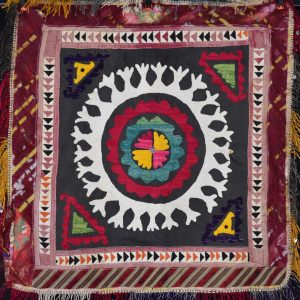
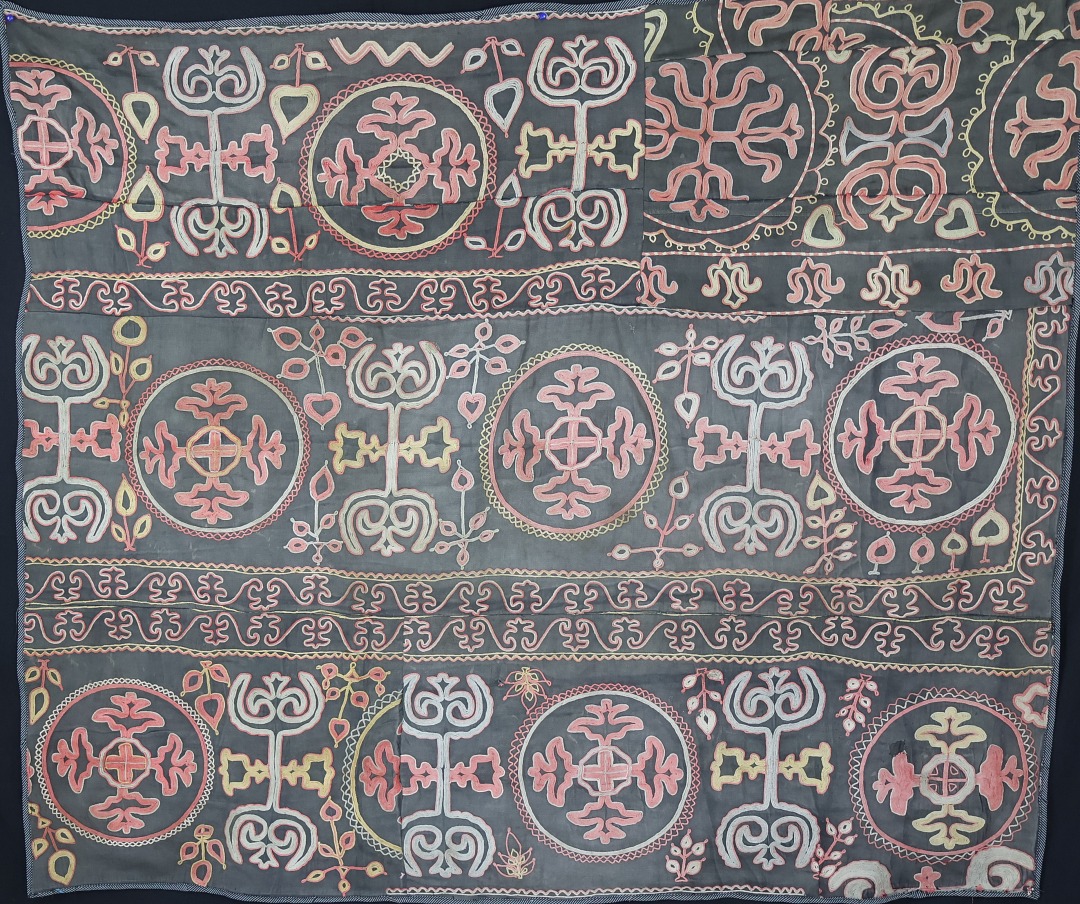
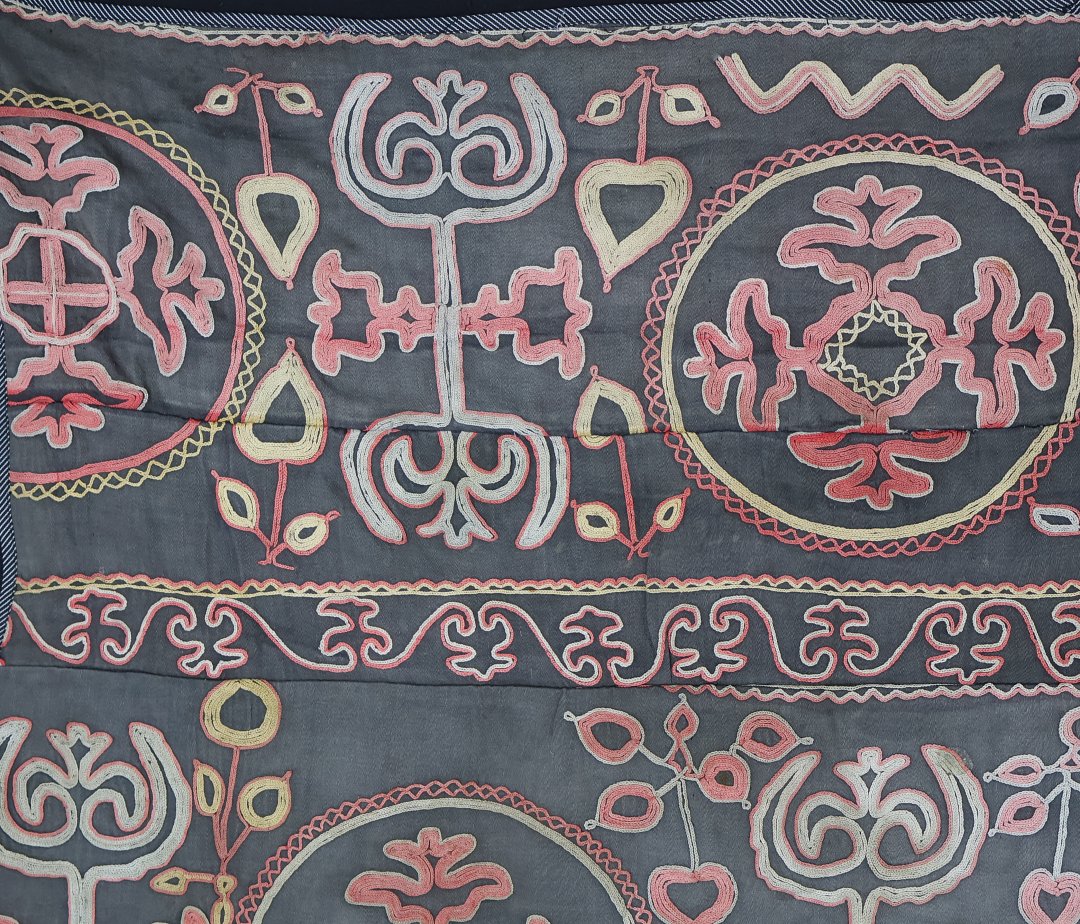
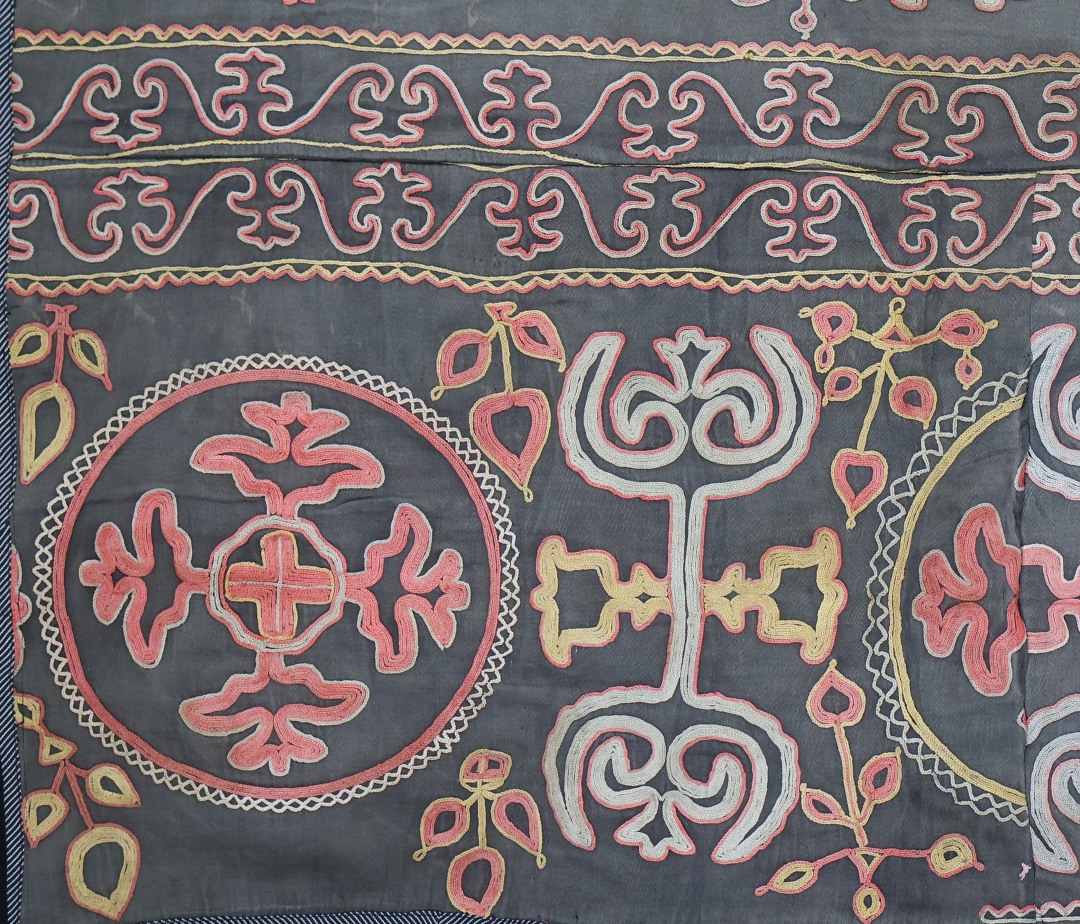
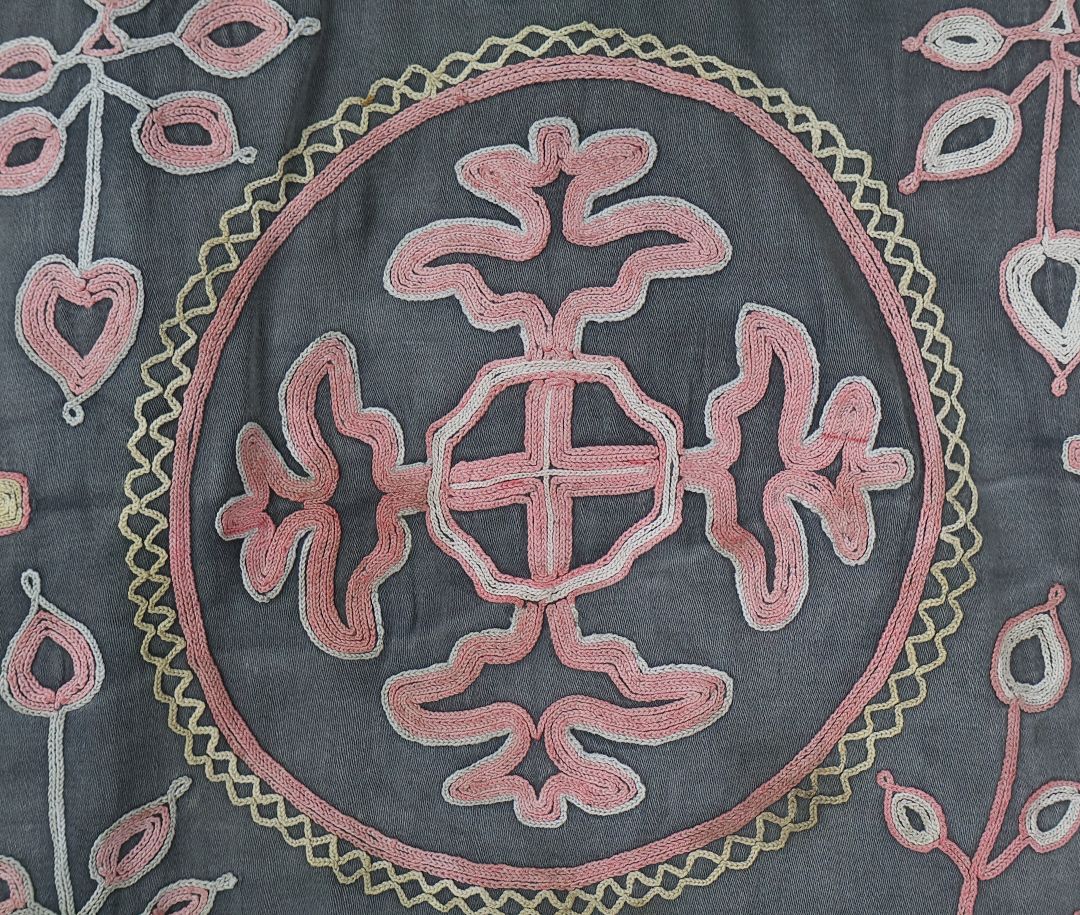
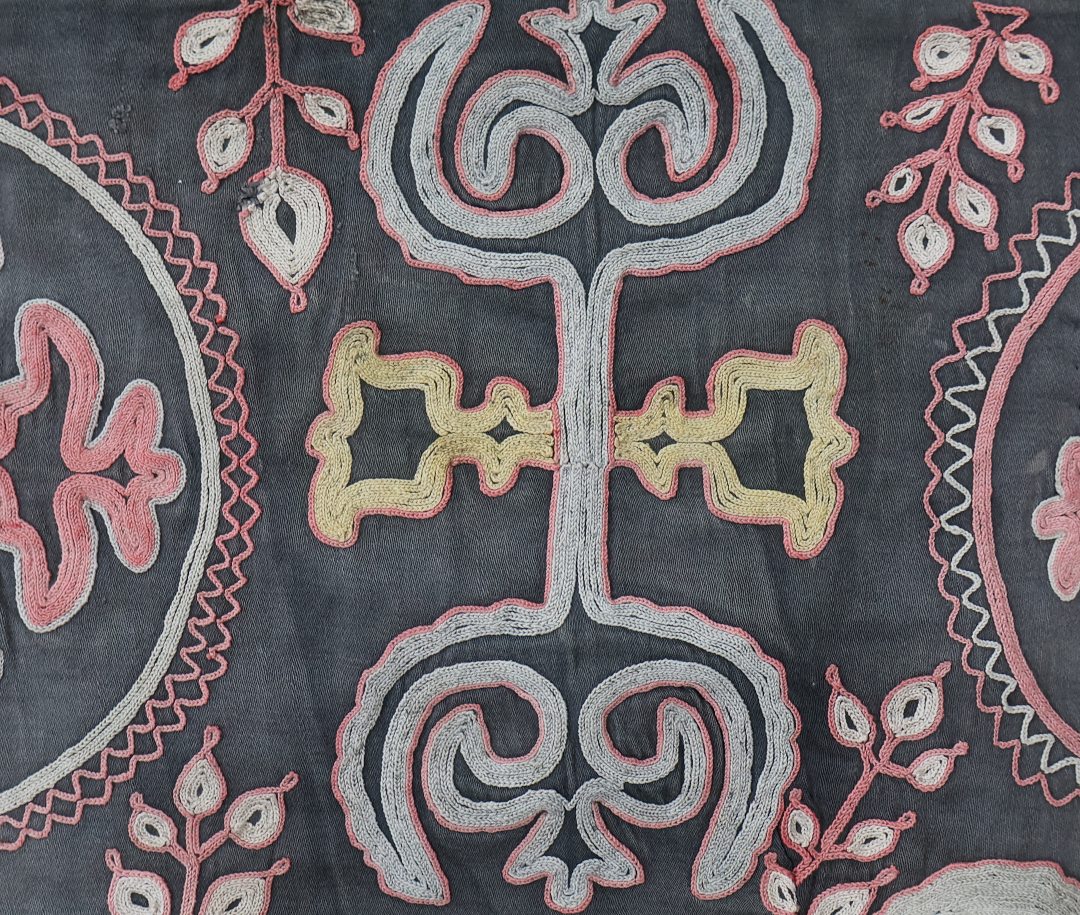
Kyrgyz embroidery (keste, oymo) is traditionally created by women and appears on clothing, headdresses, household textiles, and especially tush kyiz—large, elaborately embroidered wall hangings made to celebrate a marriage. These pieces are heirlooms, often taking years to complete, and are rich with motifs that encode blessings, protection, and lineage.
Embroidery is also intertwined with felt-making, a craft considered sacred in Kyrgyz culture. Felt is believed to offer both physical and spiritual protection, and many embroidered items are appliquéd onto felt or paired with felted surfaces.
Key Forms of Kyrgyz Embroidery
1. Tush Kyiz (Туш кийиз) — Marriage Wall Hangings
- Hung above the marriage bed inside the yurt
- Created by female relatives to honour the bride and groom
- Designs express fertility, prosperity, protection, and family pride
- Often signed and dated—rare in Central Asian textile traditions
2. Shyrdak & Ala-kiyiz (Felt Rugs)
While primarily feltwork, these rugs often incorporate embroidered edging or appliqué motifs. They remain widely produced because they are both functional and marketable.
Motifs & Symbolism
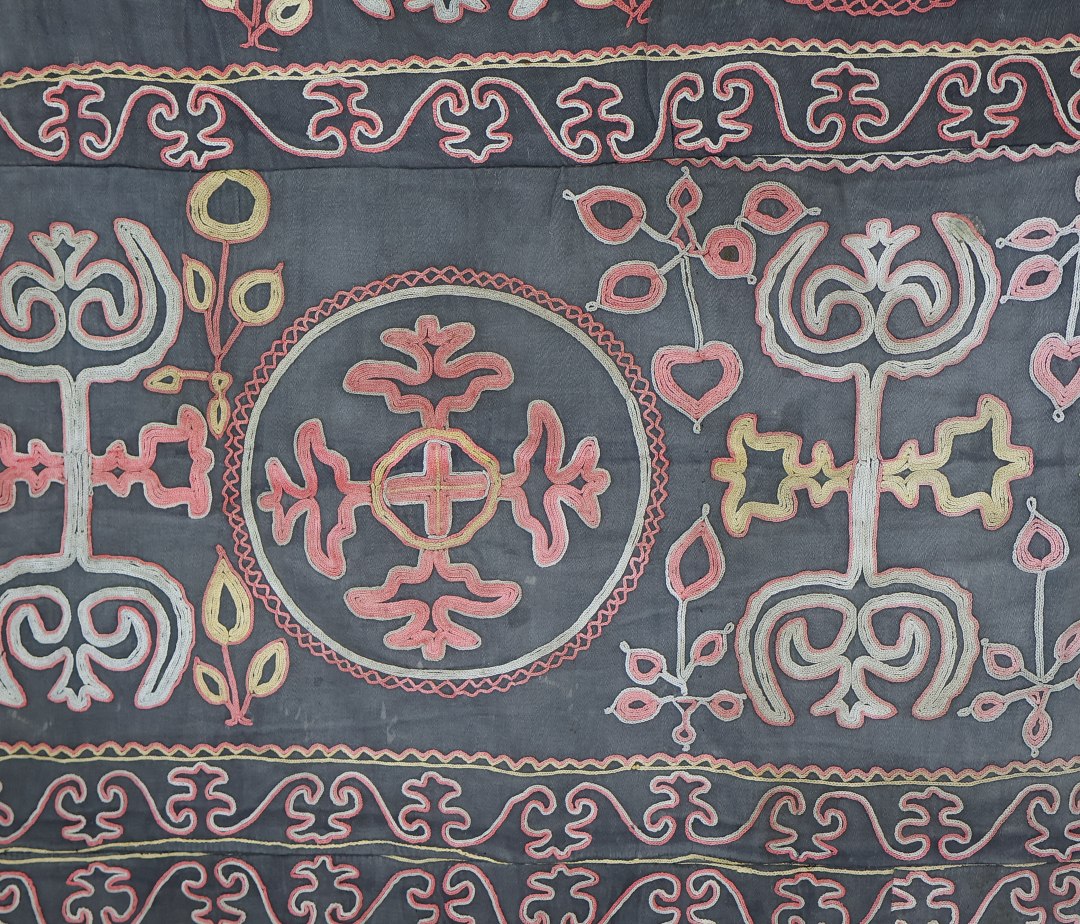
Kyrgyz embroidery is a visual language. Some of the most common motifs include:
- Kochoi mujun (ram’s horn) — strength, abundance, male energy
- Floral and plant forms — fertility, continuity of life
- Birds — messengers between worlds, good fortune
- Sun and star motifs — cosmic order, protection
- Amuletic shapes — guarding the household and the newlyweds
These motifs often appear in swirling, interlocking compositions that echo the movement of nomadic life and the circular cosmology of the yurt.
Materials & Techniques
- Threads: wool, silk, cotton
- Grounds: felt, cotton, velvet
- Techniques: chain stitch, couching, satin stitch, appliqué
- Palette: traditionally deep reds, blacks, indigos, and natural wool tones; modern artisans may introduce brighter contrasts
The tactile quality is essential—Kyrgyz embroidery is meant to be felt as much as seen.